

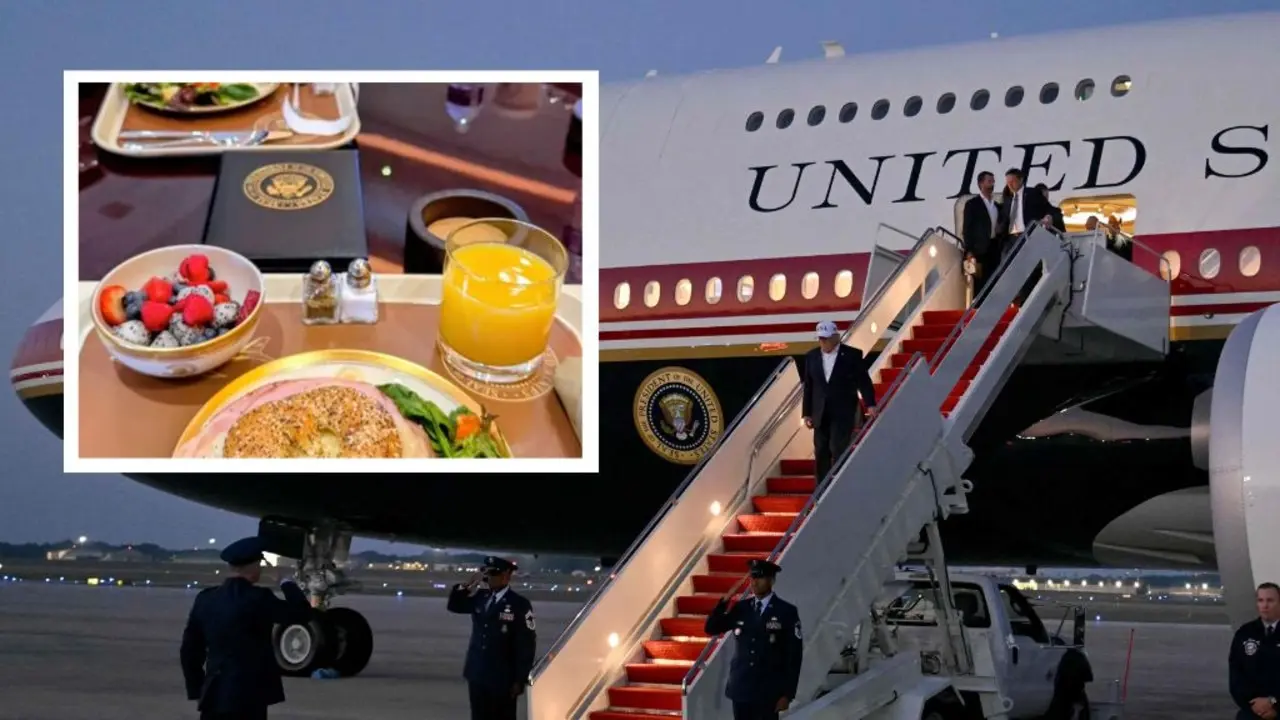
Donald Trump has taken the first official flight aboard a sparkling new Air Force One, a $580 million 'flying palace' that was gifted by an ally to much controversy. The aircraft, which replaces the aging fleet, boasts state-of-the-art communication systems, luxurious interiors, and advanced defensive capabilities. Critics have questioned the ethics of accepting such a lavish gift from a foreign power, while supporters hail it as a symbol of American strength and generosity.
Behind-the-Scenes Spat with Saudi Crown Prince
Details have emerged of a tense behind-the-scenes dispute between Donald Trump and Saudi Crown Prince Mohammed bin Salman during the Iran War. According to reports, the conflict erupted shortly after Trump announced Project Freedom, a mission to have US military forces guide commercial ships through the Iranian-blocked Strait of Hormuz in early May. The Saudis, blindsided by the announcement, denied America the use of their airspace.
US Central Command was caught by surprise when officials from Saudi Arabia said American forces could not use the kingdom’s airspace for the mission, which the Pentagon was calling Project Freedom. The Americans had not consulted the Saudis.
That set off a flurry of tense and urgent phone calls between Washington and Crown Prince Mohammed bin Salman. An outraged Trump spoke with him on May 4, the first day of the operation, and on the next two days as well. Vice President J.D. Vance also spoke to the prince, as did Steve Witkoff, the special envoy to the Middle East, and Jared Kushner, Trump’s son-in-law. Marco Rubio, the White House national security adviser, spoke to his counterpart. But the crown prince stood his ground, fearing that the American plan could reignite war. The Trump administration was forced to shut down Project Freedom less than 48 hours after it had begun.
The incident highlights the fragile nature of US-Saudi relations, which have been strained by the Iran War, oil politics, and the contentious relationship between Trump and MBS. Saudi Arabia, a key US ally in the region, has its own interests in containing Iran, but the kingdom is wary of being drawn into a prolonged conflict. The denial of airspace was a significant setback for the Pentagon, forcing a rapid reassessment of military strategy in the Persian Gulf.
Project Freedom had been a centerpiece of Trump’s policy of maximum pressure on Iran, aimed at choking off the regime’s oil revenues and halting its nuclear program. The mission involved deploying US Navy destroyers and Marine Corps units to escort commercial vessels through the Strait of Hormuz, through which about 20% of the world’s oil passes. However, without Saudi air cover, the operation became logistically untenable, and the US was forced to withdraw.
Experts suggest that the collapse of Project Freedom emboldened Iran, which has since continued its attacks on shipping and expanded its nuclear enrichment activities. The spat also damaged Trump’s reputation as a dealmaker, as the Saudi prince effectively outmaneuvered the American president. Meanwhile, the administration has struggled to find alternative routes and allies to maintain pressure on Tehran.
Bill to Ban Pregnant Women from Entering US
In a separate development, a MAGA politician has announced he will introduce legislation to ban pregnant women from entering the United States. Tennessee Republican Andy Ogles said he crafted the bill in response to a ruling by the conservative-dominated US Supreme Court, which blocked Donald Trump’s attempt to unilaterally end birthright citizenship by executive fiat.
Under the 14th Amendment to America’s Constitution, anyone born in the US automatically becomes a citizen. This principle, known as jus soli or birthright citizenship, is common in the Americas, where about 30 countries grant citizenship to anyone born on their soil, but it is less common elsewhere in the world. The Trump administration has frequently spoken about what it calls “birth tourism” — the idea that women travel to the United States specifically to give birth, thereby ensuring their child is a citizen.
During a press conference, Ogles explained, “What this bill does is, if you are a pregnant woman, you can’t come into this country.” The proposed law would bar visas for pregnant women and allow border officials to deny entry to those suspected of being pregnant, which has raised immediate constitutional questions about privacy, gender discrimination, and the right to travel. Critics argue that such a blanket ban would violate international human rights norms and would be nearly impossible to enforce without invasive medical examinations at ports of entry.
The bill is the latest salvo in a broader fight over immigration and citizenship in the Trump era. The Supreme Court’s decision to block the executive order on birthright citizenship was a rare rebuke to Trump, but it also energized his base, who see the 14th Amendment as a loophole that allows illegal immigrants to benefit from American citizenship. Ogles’s bill is likely to face fierce opposition from Democrats and civil liberties groups, but it reflects the ongoing debate about who qualifies as an American.
Historical context is important: the 14th Amendment was ratified in 1868, after the Civil War, to grant citizenship to formerly enslaved people. The clause “All persons born or naturalized in the United States, and subject to the jurisdiction thereof, are citizens of the United States” has been interpreted broadly for over a century. In the 1898 case United States v. Wong Kim Ark, the Supreme Court ruled that a child born in the US to Chinese parents was a citizen, setting a precedent that remains the law. Trump’s executive order attempted to reinterpret “subject to the jurisdiction thereof” to exclude children of undocumented immigrants and those on temporary visas, but the courts quickly struck it down.
Ogles’s bill would go further by targeting pregnant women before they can give birth in the US. It would require a fundamental change in immigration law and would likely be challenged on constitutional grounds. The debate over birthright citizenship is likely to be a central issue in the upcoming midterm elections, as both parties vie for control of Congress.
Meanwhile, the Trump administration continues to push for stricter immigration enforcement, including the expansion of detention facilities, increased deportations, and the construction of more border barriers. The new Air Force One, with its $580 million price tag, stands in stark contrast to the administration’s budget priorities, but supporters argue that the aircraft is necessary for both prestige and security.
The ‘flying palace’ is equipped with advanced encryption, secure communications, and defenses against missile attacks. It features a private suite for the president, a conference room, and seating for dozens of staff and journalists. The cost has been criticized, especially as the aircraft was a gift from an ally, raising questions about the donor’s motives. Some have speculated that the ally is Saudi Arabia, given the close ties between Trump and the Saudi royal family, but the White House has not confirmed the source. The controversy over the gift is likely to linger, especially amid the ongoing tensions with Riyadh.
As the world watches the US navigate these complex issues, the debut of the new Air Force One serves as a reminder of the power and prestige of the American presidency, even as the nation grapples with internal divisions and external conflicts.
Source: news.com.au News