

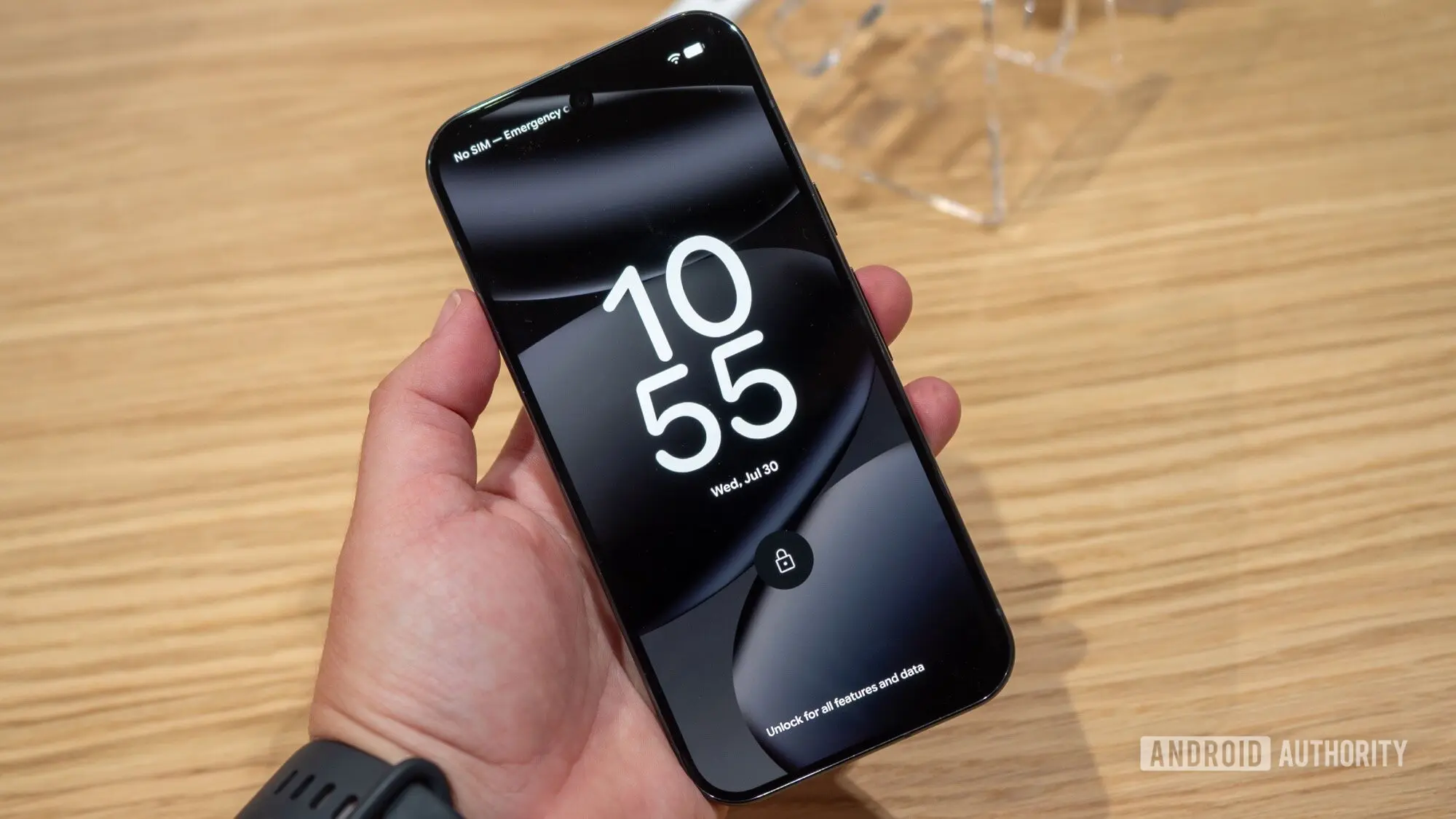
Google is pushing the boundaries of agentic artificial intelligence, and new evidence suggests that Android devices may soon allow trusted apps to see and control the screen even when the device is locked. This capability, uncovered in a teardown of the Companion Device Manager app, could enable seamless task automation and proactive assistance without requiring the user to unlock their phone.
What the Code Reveals
Strings discovered by Nerd's Chalk and corroborated by Android Authority indicate that the Companion Device Manager app is building a 'trust pairing' system. Users would enter a PIN to authorize specific apps to access the screen content and interact with it while the device is locked. The strings mention two primary features: 'Proactive assistance' and 'Screen automation.'
Proactive assistance would use the app's screen content to provide suggestions—similar to Google's Magic Cue functionality. Screen automation goes a step further, allowing the app to see and interact with the screen content to help complete tasks even when the screen is locked. This could be a game-changer for productivity, enabling automated tasks like ordering a ride, checking notifications, or controlling smart home devices without unlocking the phone.
How It Fits Into Google's AI Strategy
This development aligns with Google's broader push into agentic AI, which was highlighted earlier in 2026 with the unveiling of Gemini Intelligence. Gemini is designed to proactively accomplish tasks across apps, and this locked-device capability would remove a major friction point: the need to unlock the device every time an AI agent wants to interact with an app. By allowing trusted apps to operate on a locked screen, Google is making its AI more autonomous and convenient.
The concept of agentic AI is central to the future of mobile computing. Instead of users manually launching apps and performing steps, an AI agent can navigate the interface on their behalf. For example, a user could say 'book a table for two at my favorite Italian restaurant tonight,' and the AI would open the reservation app, fill in details, and confirm—all while the phone remains locked. This requires deep integration with the operating system and explicit user trust.
Security and Privacy Implications
Granting apps access to the screen while locked raises obvious security concerns. Google appears to be addressing this with a PIN-based pairing system. Users must confirm their PIN before an app can gain this capability, and they can turn features on or off in Android settings. This ensures that only trusted apps—likely those with high security and privacy standards—can operate in this mode.
However, the potential for abuse exists. Malicious apps could theoretically exploit such permissions if granted. Google will likely enforce strict vetting for apps that request this capability, possibly limiting it to system apps or those approved through a rigorous review process. The code strings emphasize that the feature is opt-in and transparent, giving users control over which apps can see the locked screen.
Potential Use Cases
Beyond convenience, locked-device automation could transform several scenarios:
- Voice assistants: Google Assistant or Gemini could perform tasks like playing music, setting reminders, or sending messages without unlocking.
- Automated workflows: Apps like Tasker or IFTTT could trigger actions based on time, location, or events—all executed on a locked phone.
- Smart home control: A smart home app could adjust thermostats or lights based on user presence, using screen automation to confirm actions.
- Accessibility: Users with limited mobility could rely on AI agents to navigate apps without needing to physically unlock and interact with the device.
These use cases highlight the potential for a more seamless and accessible user experience. The key is balancing convenience with security.
Comparison with Existing Solutions
Currently, Android offers limited automation on the lock screen. Users can interact with notifications, quick settings, and some widgets. However, full app interaction requires unlocking. Apple's iOS has similar restrictions for security reasons. This new approach would be a significant departure, enabling app-level interactions without unlocking.
Google's implementation appears to be more granular than competing solutions. For instance, some third-party apps offer lock-screen widgets that can perform limited actions, but they cannot see or control the entire screen. By using a system-level trust pairing, Google ensures that only authorized apps with the correct permissions can access the screen content, potentially reducing risk.
Implications for Other Platforms
The code strings do not mention platforms beyond Android phones. However, it's theoretically possible that this capability could extend to other Google ecosystem products, such as Googlebooks—the company's new platform that also leverages Gemini Intelligence. If Googlebooks uses the same underlying agentic AI framework, users might expect similar locked-screen automation on those devices. This would create a consistent experience across tablets, foldables, and possibly even Chromebooks.
Expanding this feature to multiple device types would reinforce Google's vision of an interconnected AI assistant that works everywhere. A user could start a task on their phone and have it completed on their tablet, all without unlocking either device.
Technical Background: How It Might Work
Based on the code strings, the system relies on the Companion Device Manager—an app that manages connections between a primary device and companion devices (like watches or earbuds). But here, it's used to manage trust relationships with apps. The PIN pairing ensures that the app is authenticated locally. Once paired, the app can register for a new permission called 'screen automation' or 'proactive assistance.'
Under the hood, Android would likely provide a secure API for the app to capture screen frames and inject touch events. This is similar to accessibility services but with stricter controls. Accessibility services already have the ability to observe and control the screen, but they require user activation in settings and often raise security warnings. The new system might be an evolution of that, designed specifically for agentic AI use cases.
It's also possible that Google will implement this using the Android Protected Confirmation API, which ensures that the user's PIN entry is cryptographically secure and that the app cannot spoof the user's intent. This would provide a strong guarantee that only a legitimate user can authorize an app.
Challenges and Limitations
Despite the promise, several challenges remain. First, not all tasks are suitable for locked-device automation. Actions that require user discretion—like authorizing a payment or sending a sensitive message—should still require an unlock. The system will need to distinguish between routine tasks and those needing explicit user approval.
Second, battery life could be impacted if apps continuously monitor the screen while locked. Google may restrict screen automation to specific triggers or require the screen to be on (even if locked) before an app can act.
Third, the feature may frustrate users if it fails to complete a task due to a locked phone. The code strings indicate that the feature allows completion of tasks even when locked, but if the AI misinterprets a step or the app crashes, the user might have to intervene anyway.
Finally, adoption will depend on app developers implementing support. Without a critical mass of compatible apps, the feature may remain niche. Google could incentivize development by showcasing the capability in its own apps first, such as Google Messages, Google Home, or Google Maps.
Timeline and Availability
Since the evidence comes from a teardown of an in-development app, there is no official timeline for release. The strings are likely part of an upcoming Android version or a Google Play Services update. It could debut in Android 17 or be added via a system app update. Historically, Google has introduced such features gradually, starting with beta programs for developers.
Given that Gemini Intelligence launched in 2026, it's plausible that locked-device automation could arrive later in the same year or in early 2027. Users with Pixel devices might see it first, as Google often uses its hardware line to showcase new software capabilities.
In summary, the ability to automate tasks on a locked Android device represents a significant step toward truly agentic AI. By pairing convenience with robust security, Google could redefine how users interact with their devices. However, the success of this feature will depend on careful implementation, clear user controls, and strong developer support. As with any new capability, the devil is in the details—and the details are still being written.
Source: Android Authority News