

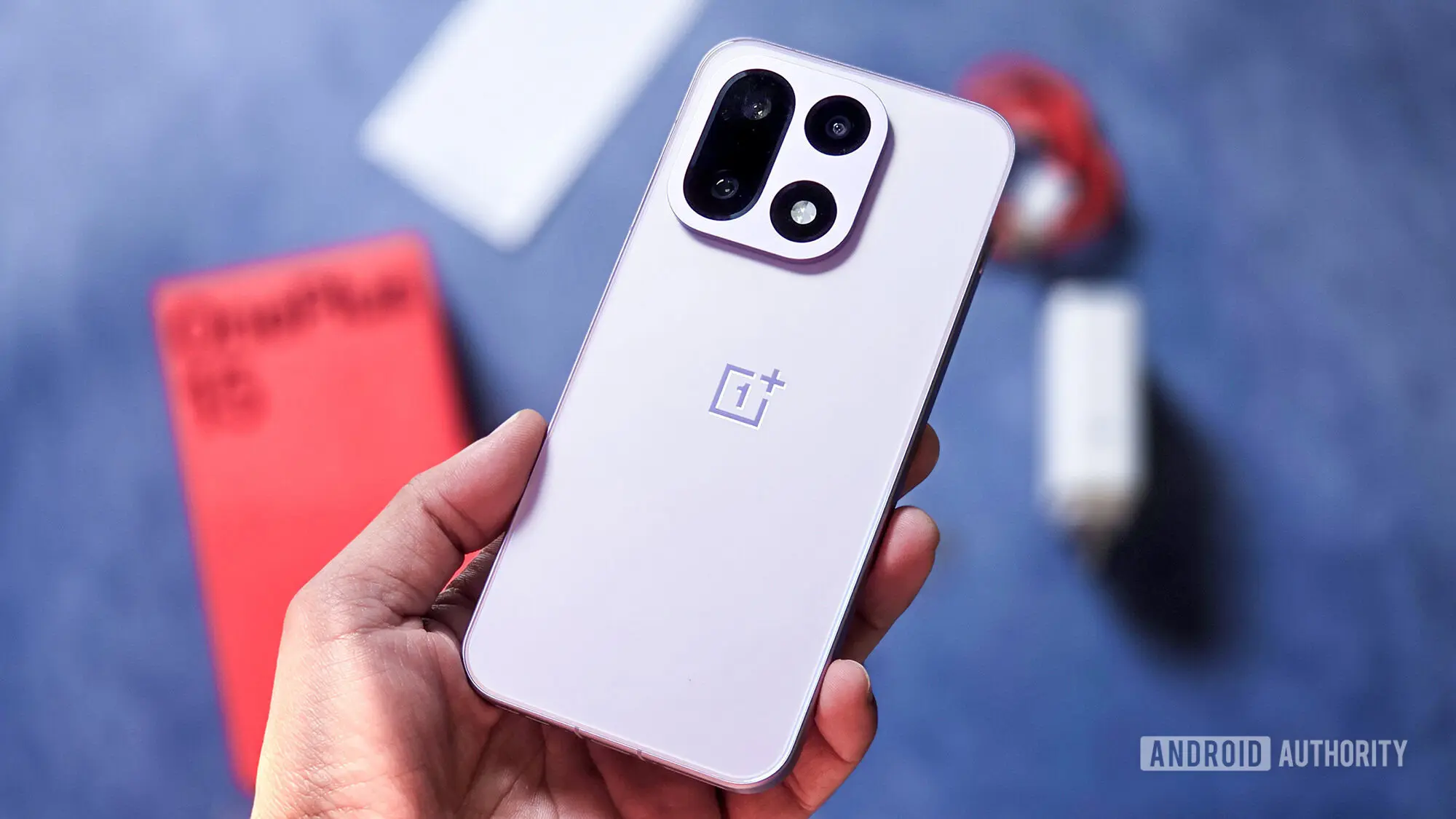
OnePlus has recently confirmed its exit from North America and Europe, ending months of speculation about the brand's future. The company is now focusing exclusively on the Chinese market, but that does not mean it is abandoning flagship development. A new leak from reliable tipster Digital Chat Station has revealed design details for the upcoming OnePlus 16, which is set to be the first major flagship released under this new regional strategy. The leak indicates that the OnePlus 16 will retain the same fundamental design language as its predecessor, the OnePlus 15, which itself introduced a fresh look after several years of circular camera bumps.
Design Continuity and Display
According to Digital Chat Station's recent post on Weibo (translated via machine and verified by Android Authority), the OnePlus 16 will feature a 6.78-inch display with 'ultra-narrow' bezels, continuing the trend of edge-to-edge screens that OnePlus has championed. The camera bump is described as 'small, square' – a signature element of the OnePlus 15 that set it apart from the circular protrusions of earlier models like the OnePlus 12 and 13. This design choice suggests that OnePlus is confident in its current aesthetic direction, which many users praised for its symmetry and minimal footprint. The square bump houses three cameras and possibly a periscope telephoto lens, as seen in previous leaks.
Given that the OnePlus 15 was launched in October 2025 and received positive reviews for its build quality and premium feel, it is no surprise that the company would iterate rather than overhaul. The OnePlus 16's display is expected to be an AMOLED panel with a high refresh rate (likely 144Hz) and possibly LTPO technology for variable refresh rates, ensuring smooth scrolling and power efficiency. The 'ultra-narrow' bezels should make the front almost all screen, likely with a punch-hole selfie camera centered at the top.
Market Strategy: A Shift to China
The most significant change surrounding the OnePlus 16 is not its design but its availability. OnePlus has officially ended sales in North America and Europe, and recent claims from tipster Yogesh Brar suggest that the OnePlus 16 will be 'DOA' (dead on arrival) in India as well. This means the flagship will only be sold in China, contradicting earlier expectations that India might remain a key market. OnePlus's parent company, OPPO, has been consolidating its brands, and this move is seen as a way to reduce overhead and focus on the world's largest smartphone market, where OnePlus once had a strong foothold but has faced intense competition from local giants like Xiaomi, Vivo, and Huawei.
Historically, OnePlus gained fame as a 'flagship killer' in Western markets, offering high-end specs at competitive prices. However, rising costs, trade restrictions, and declining market share forced the company to reassess its global ambitions. The exit from the US and Europe is a dramatic reversal, but it allows OnePlus to streamline operations and perhaps focus on high-end devices in China, where margin pressure is less severe. The OnePlus 16, therefore, will be a test of whether the brand can still command premium pricing in its home market.
Expected Specifications and Performance
Beyond design, previous leaks have painted a picture of a powerhouse. The OnePlus 16 is rumored to be equipped with the Snapdragon 8 Elite Gen 6 Pro chipset, Qualcomm's next-generation flagship SoC expected to debut in late 2026. This chip will likely feature a new architecture with higher clock speeds, improved AI capabilities, and better efficiency. Paired with up to 16GB or 24GB of LPDDR6 RAM and up to 1TB of UFS 4.1 storage, the phone should handle any task with ease.
Camera improvements are also anticipated: a 200-megapixel telephoto periscope lens (likely using the latest Samsung ISOCELL sensor) would overshadow the already impressive 100MP telephoto of the OnePlus 15. The main sensor is expected to remain around 50MP with a large 1-inch type sensor for superior low-light performance. A 9,000mAh battery is another highlight, which would be a massive upgrade from the 6,700mAh battery of the OnePlus 15. Such a capacity, combined with 100W wired charging and 50W wireless charging, would set a new standard for battery life.
It is worth noting that these figures are based on leaks and are not official. OnePlus has not confirmed any specifications, but the consistency across multiple sources—including Digital Chat Station and Yogesh Brar—lends credibility. The battery size, in particular, would be unprecedented for a non-gaming phone, potentially offering over two days of heavy usage.
Software and Ecosystem
The OnePlus 16 will run OxygenOS 16 based on Android 17 (given it launches in late 2026). OnePlus has committed to four major OS upgrades and five years of security updates for its recent flagships, so the OnePlus 16 should receive updates through Android 21. However, due to its limited release in China, the software experience may differ: Chinese models typically ship with ColorOS (a close cousin of OxygenOS) and lack Google Play Services. For international units, if any exist, OxygenOS would be preloaded. Given the new market focus, it is likely that the Chinese version will dominate, with a version of ColorOS customized for the local market.
OnePlus has also been building a cohesive ecosystem of devices, including Buds, watches, and tablets. The OnePlus 16 will likely offer seamless integration with these accessories, leveraging features like Quick Connect, file sharing, and unified notifications. In China, the ecosystem includes products like the OnePlus Pad 2 and the OnePlus Watch 3, which have received favorable reviews.
Historical Context: OnePlus's Journey
To understand the significance of the OnePlus 16, it is helpful to look back at the brand's evolution. Founded in 2013 by Pete Lau and Carl Pei, OnePlus initially disrupted the market with the OnePlus One, offering flagship specs at an affordable price. The company cultivated a cult following through invite-only sales and community engagement. Over the years, OnePlus expanded its portfolio to include mid-range Nord series phones and premium T and Pro variants. However, as the flagship smartphone market matured, OnePlus faced challenges: prices rose, margins shrank, and competition from Samsung, Apple, Google, and Chinese rivals intensified.
The merger with OPPO in 2021 blurred the lines between the two brands, leading to a unified software experience and shared hardware development. By 2025, OnePlus's global market share had dwindled, and the company announced its withdrawal from key regions. The OnePlus 16, therefore, marks a new chapter where the brand no longer competes on a global stage but instead focuses on a single, fiercely competitive market. It remains to be seen whether this strategy can revive the brand's fortunes or if it will be the last flagship from OnePlus.
Launch Timeline and Pricing
Digital Chat Station originally claimed a September launch for the OnePlus 16 but has now revised it to October 2026, matching the OnePlus 15's release window. The delay may be due to supply chain adjustments or chipset availability. In China, pricing is expected to be competitive given the market dynamics—likely starting around ¥4,999 (approximately $700) for the base variant, similar to the OnePlus 15's launch price. However, with the upgraded cameras and battery, a slight increase is possible.
In the absence of international sales, the OnePlus 16 will be available through OnePlus's own website, JD.com, and other e-commerce platforms in China. Enthusiasts in other regions might still be able to purchase the device via grey-market importers, but they will lose warranty support and face compatibility issues with local network bands and Google services. This is a sharp departure from the brand's original mission of bringing affordable flagships to the world.
Despite the limited availability, the OnePlus 16 remains a highly anticipated device for those who follow the brand. It represents the culmination of nearly a decade of hardware evolution and a final bow in the global smartphone arena. Whether it can excite the Chinese market enough to sustain the company's future will be closely watched.
The leaks surrounding the OnePlus 16 paint a picture of a refined flagship that builds on past successes while acknowledging the brand's new reality. With a consistent design, massive battery, and cutting-edge internals, it has the potential to be a standout device in China. However, the absence from major markets like the US, Europe, and India means that many loyal fans will be left without an official path to ownership. As the smartphone industry continues to consolidate, OnePlus's story serves as a cautionary tale about the challenges of competing globally.
Source: Android Authority News