

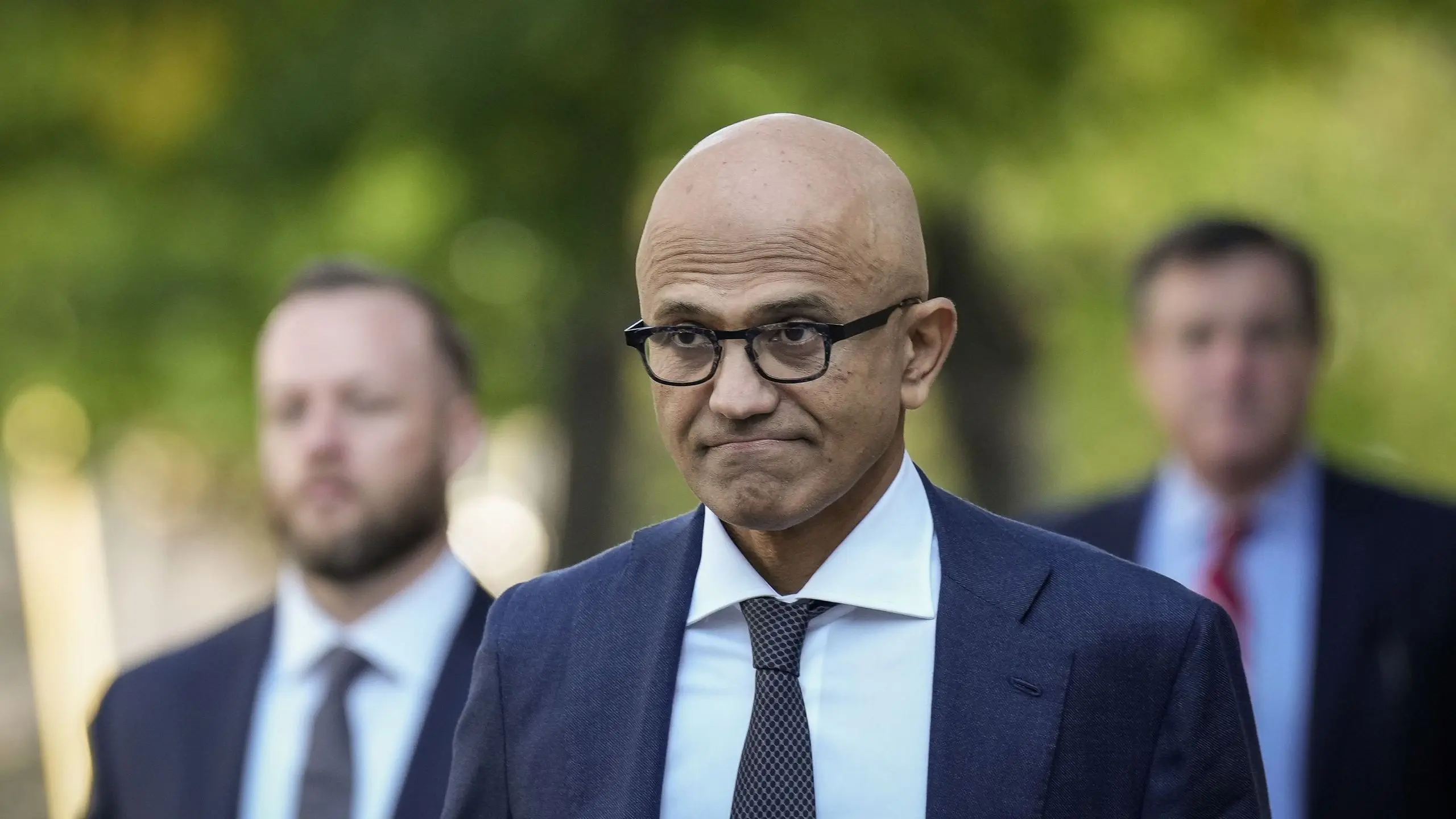
In a world increasingly shaped by artificial intelligence, Microsoft CEO Satya Nadella has delivered a powerful message: the benefits of AI must be distributed widely, not hoarded by a handful of giant firms. Speaking to a technology audience, Nadella cautioned that without deliberate effort, AI could become another tool for concentrated economic power, allowing a few companies to 'eat up the economy.' His comments come at a time when governments, regulators, and the public are grappling with how to ensure AI serves humanity broadly.
Nadella's vision is rooted in a belief that technology, when deployed responsibly, can be a great equalizer. He has frequently cited Microsoft's mission to 'empower every person and every organization on the planet to achieve more.' However, he acknowledged that the current trajectory of AI development risks repeating the mistakes of previous technological revolutions, where the gains flowed disproportionately to the top. 'We need to make sure that AI is not just another tool for the few to get richer, but a platform that lifts everyone,' Nadella said.
The CEO's remarks specifically addressed the concentration of AI capabilities among a small number of large corporations. He argued that open innovation, shared infrastructure, and broad access to AI tools are essential to prevent a new form of digital feudalism. 'If we only have a few firms that control the most advanced AI models, and they use that to dominate markets, we will see a repeat of the platform monopolies of the past, but on steroids,' he warned.
Nadella's perspective is informed by Microsoft's own AI strategy, which includes significant investments in research, partnerships, and the democratization of AI through products like Azure AI, Copilot, and open-source contributions. Microsoft has also been a major backer of OpenAI, the creator of ChatGPT, but has maintained that AI development must be governed by principles of safety, fairness, and inclusivity. The company has published responsible AI guidelines and advocates for public-private collaboration to establish norms and regulations.
The broader context of Nadella's statement is the global debate over AI regulation. The European Union's AI Act, the White House's executive order on AI, and ongoing discussions at the United Nations all reflect concerns about job displacement, bias, privacy, and the concentration of power. Nadella has consistently argued for a balanced approach: promoting innovation while establishing guardrails. He has also called for upskilling workers and investing in education to prepare society for an AI-driven economy.
Historically, Microsoft has navigated antitrust scrutiny, most notably in the late 1990s and early 2000s. Nadella's leadership has been marked by a shift toward cloud computing and a more collaborative stance with competitors and regulators. His comments on AI echo his earlier calls for a 'digital Geneva Convention' to protect the internet from cyber threats and his advocacy for a 'common sense' approach to data privacy.
Nadella's warning also touches on the economic implications of AI. Studies have shown that AI could double annual economic growth rates in some countries, but that the benefits are likely to be unevenly distributed. A report from the McKinsey Global Institute estimates that AI could add $13 trillion to global output by 2030, but it also predicts significant disruption for workers in routine-intensive jobs. Nadella argues that the solution is not to slow AI development, but to ensure that the productivity gains are reinvested in social safety nets, education, and retraining programs.
Microsoft itself has committed to training millions of people in digital skills, including AI-related competencies, as part of its corporate social responsibility efforts. The company's AI for Good initiative supports projects in environmental sustainability, accessibility, and humanitarian action. Nadella sees these efforts as part of a broader responsibility for tech leaders to shape the direction of AI.
The debate over AI concentration is not new. Economists like Daron Acemoglu and James Robinson have warned that new technologies can lead to extractive institutions if the gains are captured by elites. Nadella's message resonates with this line of thinking, urging a more inclusive model. He has emphasized the importance of competition policy, data portability, and open standards to prevent lock-in effects that entrench dominant players.
In practice, Microsoft has taken steps to make AI more accessible. The company has launched AI tools for small businesses, non-profits, and government agencies, often at lower cost or for free. Its partnership with OpenAI has also led to the creation of the Microsoft AI for Accessibility program, which funds projects that use AI to assist people with disabilities. Nadella has also championed the concept of 'frictionless' AI, where the technology works seamlessly in the background to empower users without requiring deep technical expertise.
Looking forward, Nadella envisions an AI ecosystem that includes many players—startups, researchers, academia, and civil society—not just a few large corporations. He has called for increased investment in public sector AI capabilities and for international cooperation to set norms for military and surveillance uses of AI. 'We have a rare opportunity to get this right,' he said. 'The way we build and deploy AI today will determine the shape of our society for generations.'
Critics, however, argue that Microsoft's own market power raises questions about its commitment to decentralization. The company's cloud and AI services are deeply integrated, giving it significant influence over how AI is used by enterprises and governments. Nadella acknowledges this tension but insists that Microsoft's scale also allows it to invest in safety and broad access in ways that smaller players cannot. 'We have to be part of the solution,' he said. 'But we also need to be held accountable. That's why we support regulation and transparency.'
The conversation about AI and inequality is likely to intensify as the technology matures. Nadella's intervention is significant because it comes from the leader of one of the world's most valuable companies, which is also one of the largest investors in AI. His words carry weight in Silicon Valley and beyond, and they signal that even the beneficiaries of the current AI boom are aware of the risks of unchecked concentration.
In the end, Nadella's call for inclusive AI is both a moral imperative and a practical necessity. If AI is seen as a tool that only benefits the powerful, public trust will erode, and regulation may become more restrictive. By advocating for broad-based benefits now, Nadella hopes to shape a future where AI truly works for everyone—not just a few firms eating up the economy.
Source: Windows Central News