

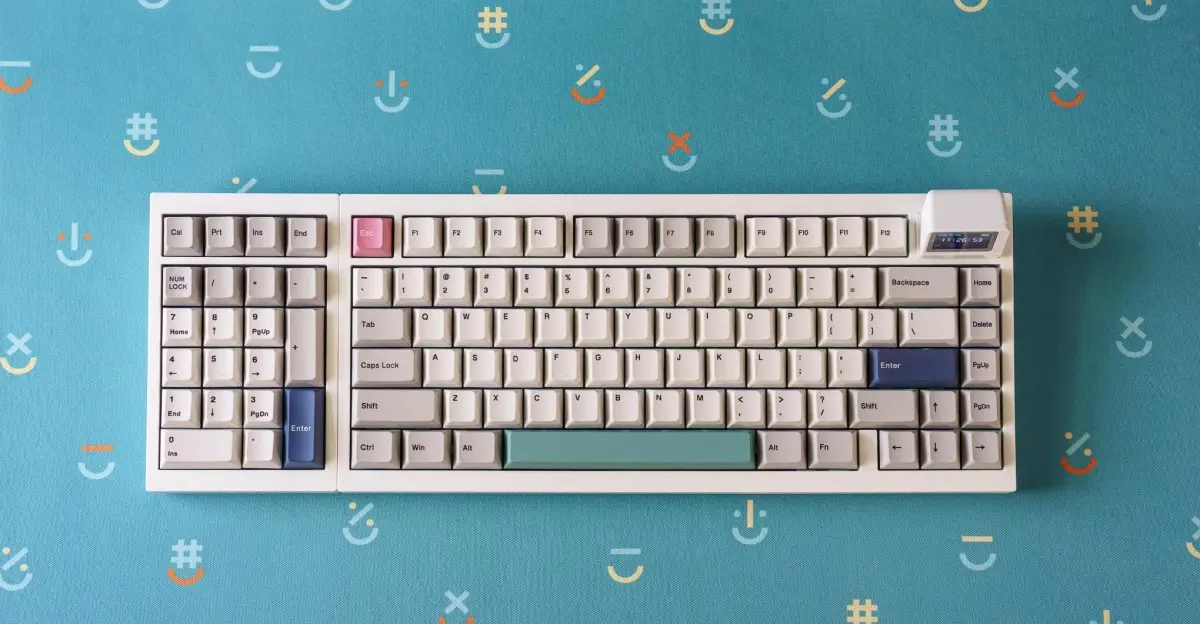
The world of mechanical keyboards is vast and varied, with enthusiasts constantly seeking the perfect balance of form, function, and feel. Among the many offerings, the Epomaker RT98 stands out with a distinctive retro aesthetic and a clever modular numpad that can be moved to either side. This feature alone addresses a long-standing debate among keyboard users: left or right numpad? The RT98 offers a rare compromise, allowing users to customize their layout without sacrificing functionality.
At first glance, the RT98 evokes nostalgia with its beige keycaps and rounded edges, reminiscent of vintage computing equipment. The included PBT keycaps, while visually appealing with a warm, creamy tone, have dye-sub printed legends that lack sharpness—a minor drawback in an otherwise charming design. The keyboard is available in two switch options: Epomaker's Sea Salt Silent V2 linear switches for quiet operation, and Creamy Jade linear switches for a richer, marble-like acoustic profile. Both types deliver a solid typing experience, thanks to a gasket-mounted internal design with foam layers that enhance sound and feel. However, the plastic chassis feels less premium than some aluminum counterparts at a similar price point.
The standout feature is undoubtedly the modular numpad. Changing its position requires removing screws, opening the case, and swapping internal cables—a process that takes about 30 minutes following Epomaker's video guide. While the procedure is not overly complex, it involves delicate ribbon cables and plastic clips that can feel fragile. Most users will likely set and forget their preferred orientation, but the flexibility is appreciated for those who occasionally want to change their setup. The numpad connects via a ribbon cable to the main board, and the keyboard includes a small hex wrench and spare switches for customization.
Typing Experience and Acoustics
The RT98 is designed with modern enthusiast features: a gasket mount, foam between the PCB and case, and a stiff polycarbonate plate without flex cuts. This results in a sharper typing feel compared to softer, more bouncy boards. With the Sea Salt Silent V2 switches, typing is smooth and quiet—ideal for shared office spaces or late-night use. However, the plate-mounted stabilizers for larger keys (space bar, enter, shift) produce a slightly louder sound that can be noticeable. For a truly silent experience, dedicated modifications might be needed, but out of the box it performs well.
Switching to the Creamy Jade linears transforms the acoustic character. These switches produce a crisp, marble-like tone that many enthusiasts describe as 'creamy.' The sound is deeper and richer than similarly priced boards like the Aula F75 Max, making the RT98 a compelling choice for those who prioritize audio feedback. The keycaps, while not exceptional, are functional and comfortable for long typing sessions. The keyboard supports QMK/VIA software for full key remapping, allowing users to tailor the layout to their workflow.
Detachable Screen and Software
A playful addition is the detachable CRT-style screen located near the top right. It can display the date, time, connection status, or custom GIFs. The screen connects via magnetic pogo pins and a small cable, and it can be removed entirely if not needed. Through Epomaker's web-based driver, users can upload three custom GIFs and sync the clock. While this feature is more of a novelty than a productivity tool, it adds personality to the board. The ability to load silly animations offers a unique customization avenue, though the screen's utility is limited to visual flair.
Epomaker has not confirmed whether future accessories will attach to the magnetic connector, but the possibility hints at an expandable ecosystem. For now, the screen remains a fun gimmick that enhances the retro vibe without detracting from core functionality. The driver itself is straightforward, though some users may prefer offline software for privacy reasons. Overall, the screen is a minor addition that contributes to the RT98's character.
Comparison with Competitors
At $119, the RT98 sits in a competitive segment where aluminum-bodied keyboards like the Wobkey Rainy75 offer better build quality and keycaps. Similarly, the Aula F75 provides a similar creamy typing experience at a lower price. The RT98's main value proposition is its modular numpad, which is rare in the market. Previous attempts, such as the Asus ROG Claymore and Mountain Everest Max, were gaming-focused and more expensive. The RT98 targets a broader audience with its understated design and practical flexibility.
However, the plastic construction and finicky numpad movement process may deter buyers who prefer simplicity or premium materials. The lack of detailed instructions in the box (relying instead on a video tutorial) is a minor inconvenience. For users who do not need the modular feature, other options may offer better value. Still, for those who want the ability to switch between left- and right-handed numpad layouts, the RT98 is a unique and reasonable choice.
Performance and Connectivity
The RT98 connects via USB-C and includes a simple nylon-wrapped cable. It supports both Windows and macOS, with alternate Mac keycaps included. The keyboard does not offer wireless connectivity, which might limit its appeal for users seeking a clutter-free desk. However, the wired connection ensures low latency and consistent performance. The board's polling rate is standard for mechanical keyboards, suitable for both typing and gaming. The stabilizers are pre-lubed but may benefit from additional tuning for optimal feel.
In daily use, the RT98 performs admirably. The keycaps, while not high-end, are comfortable and resist shine over time. The sound profile is pleasing, especially with the Creamy Jade switches. The modular numpad, once set, functions seamlessly with no wobble or connectivity issues. The screen adds a touch of whimsy without interfering with typing. Overall, the RT98 is a well-rounded keyboard that caters to a niche—users who value numpad flexibility and retro aesthetics.
Value and Audience
Given its $119 price point, the RT98 is aimed at intermediate enthusiasts who appreciate customization but are not yet ready for high-end builds. It offers a stepping stone into the world of modular keyboards without breaking the bank. The included switches are decent, but users can easily swap them out thanks to the hot-swappable PCB. The VIA compatibility further extends its lifespan, as users can remap keys to suit evolving needs.
The keyboard's primary weakness is its plastic build, which feels less solid than metal alternatives. However, the weight and stability are adequate for desk use. The numpad movement process, while manageable, may discourage frequent changes. Most buyers will likely commit to one orientation, but the option remains for those who want to experiment. The retro design may not appeal to everyone, but it successfully evokes a sense of nostalgia that resonates with fans of classic computing.
Source: The Verge News