

Anyone with a web browser and an internet connection can tune into the strangest corners of the radio spectrum. Using online software-defined radios (SDRs) scattered around the globe, listeners can pick up signals that have traveled thousands of miles, including mysterious buzzers, military messages, and number stations that read coded numbers in calm voices. These broadcasts have sparked decades of speculation, folklore, and genuine curiosity.
Shortwave radio, also known as high-frequency (HF) radio, operates between 3 and 30 MHz. Unlike FM or VHF signals that travel in straight lines, shortwaves can bounce off the ionosphere and return to Earth far from their origin. This phenomenon, called skywave propagation, allows a receiver in one country to hear a transmitter on another continent. Online SDR receivers make this accessible to anyone without requiring expensive equipment or a license.
What Makes Shortwave Radio So Creepy?
The raw, unpolished nature of shortwave gives it a unique atmosphere. The static, fading signals, and occasional bursts of strange sounds create an audio landscape that feels like a relic from another era. Unlike the polished content of modern streaming, shortwave feels alive and unpredictable. Anyone with a transmitter can broadcast, and many of those broadcasts have no clear purpose or explanation. This mystery is what draws people in.
The Russian Buzzer (UVB-76)
The most famous shortwave mystery is UVB-76, commonly called The Buzzer. Transmitting on 4625 kHz in Upper Sideband (USB) mode, it produces a monotonous buzzing sound that can be heard 24/7. The signal has been active since at least the 1970s and is believed to be a Russian military channel. Occasionally, the buzzing stops and a Russian voice reads brief messages. The internet has turned UVB-76 into doomsday folklore, though experts consider it a functional military command link. To hear it, connect to any KiwiSDR that hasn't blocked the frequency due to pirate interference.
The Buzzer's real purpose remains unknown, which adds to its allure. It has changed callsigns several times and occasionally broadcast electronic sounds or snippets of music, such as Tchaikovsky's Swan Lake, during rare interruptions. These anomalies only deepen the mystery.
Skyking: Do Not Answer
Another iconic signal is the Skyking broadcast on the US High Frequency Global Communications System (HFGCS). Frequencies like 4724, 8992, and 11175 kHz carry encrypted messages to US military aircraft. The phrase "Skyking, Skyking, do not answer" is transmitted during high-priority broadcasts, instructing all other stations to remain silent. Recordings of Skyking have circulated online since the early days of WebSDR. While not inherently creepy, the implication of encrypted communications from airborne command posts adds a layer of tension.
Listening to HFGCS can be tedious—hours of silence punctuated by brief test counts or Emergency Action Messages (EAMs). But for those patient enough, the payoff is hearing a real piece of military communication infrastructure.
Number Stations: The Spies' Radio
Number stations are shortwave broadcasts that transmit sequences of numbers, letters, or phonetic words. They are widely believed to be one-way messages to intelligence operatives in foreign countries. The voices are often calm, deliberate, and robotic, which gives them an unnerving quality. Two of the most active number stations are HM01 (Cuban) and E11 (Oblique, English).
HM01 broadcasts on frequencies like 9330, 10345, and 11435 kHz in AM mode. It mixes Spanish voice groups with bursts of digital data, making it both audible and visible on a waterfall display. E11 uses a female English voice and follows a strict schedule, changing frequencies based on the day of the week. The sheer regularity of these transmissions, combined with the inability to decode them, makes number stations one of the most fascinating and creepy aspects of shortwave radio.
The Priyom organization maintains detailed logs and schedules for number stations, allowing hobbyists to track when and where to listen. Their work has cataloged dozens of active and historical stations, preserving a unique part of radio history.
Other Weird Signals Worth Hearing
Beyond number stations and buzzers, there are many other signals that add to shortwave's mystique. The Pip (5448 kHz by day, 3756 kHz at night) produces a repetitive pip sound, occasionally interrupted by Russian voice messages. The Squeaky Wheel (5367 kHz day, 3363.5 kHz night) emits a two-tone high-pitched squeak that quickly becomes grating. Both are thought to be military-related, but their exact purposes remain ambiguous.
Time stations like WWV (USA) and CHU (Canada) provide continuous time announcements and are useful for calibration. While not creepy, they serve as reliable beacons for testing reception and understanding propagation. The CHU station broadcasts at 3330, 7850, and 14670 kHz, with spoken time in English and French.
Using WebSDR for Signal Hunting
Online SDRs are the best way to explore these signals without investing in hardware. Websites like rx-tx.info aggregate SDR receivers worldwide, showing their location, type, and current activity. Purple markers indicate KiwiSDRs, green for OpenWebRX, and blue for WebSDR receivers. By selecting receivers in nighttime areas (where skywave propagation is stronger), listeners can maximize their chances of catching distant signals.
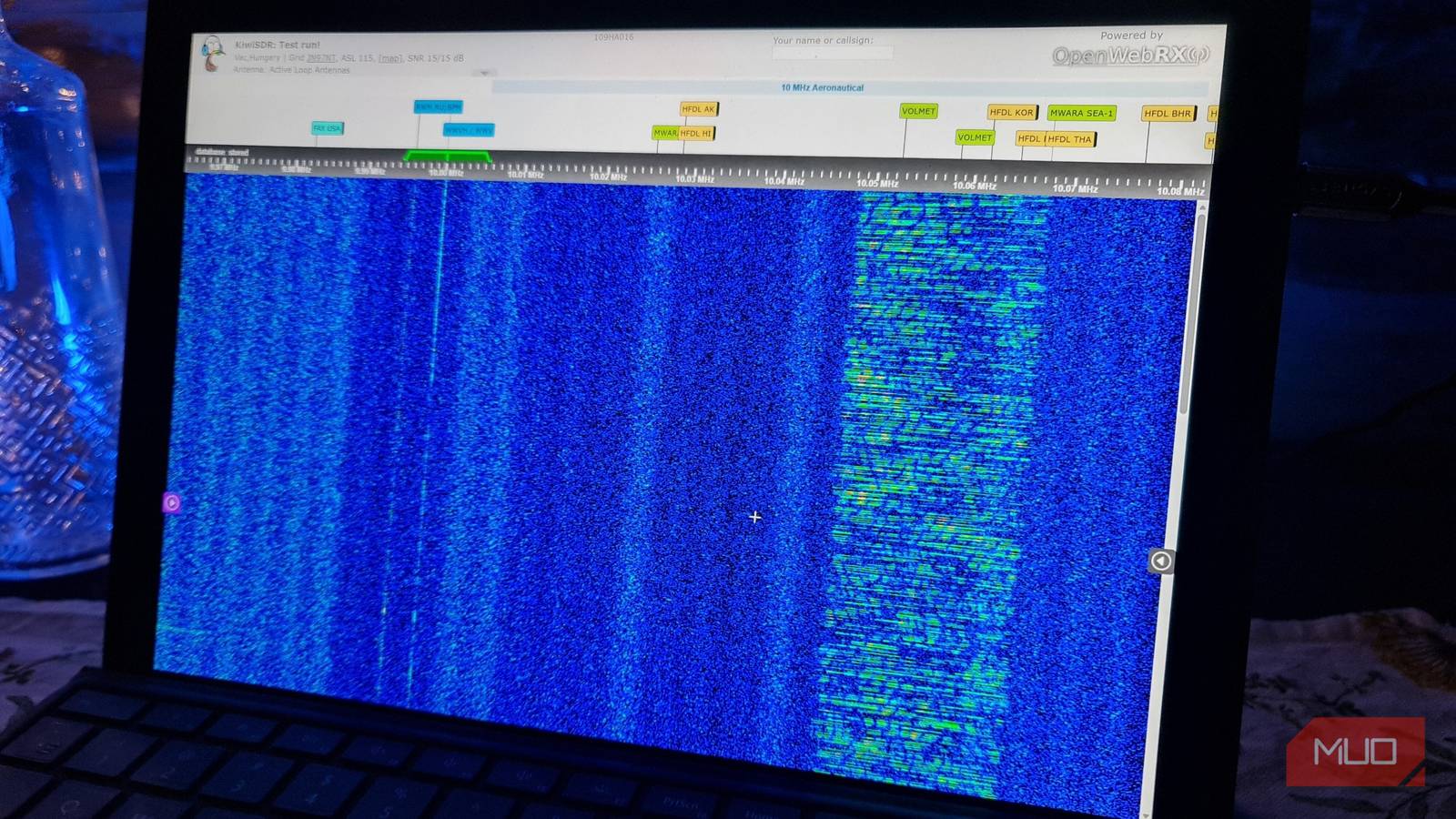
The waterfall spectrogram is essential for finding signals in the noise. It displays frequency over time, making data bursts, steady carriers, and voice broadcasts visually distinct. With practice, hunters can identify the signature of a number station or a military channel at a glance.
The active nature of modern shortwave makes it far more interesting than dusty legends. These broadcasts are happening right now, every day, waiting to be discovered. The combination of technical utility and unexplained purpose creates a unique listening experience that continues to captivate a new generation of radio enthusiasts.
For those who want to dive deeper, the Priyom database offers schedules and background on almost every known number station. The thrill of hearing a real, ongoing mystery from the comfort of home is an experience that no other medium can replicate.
Source: MakeUseOf News