

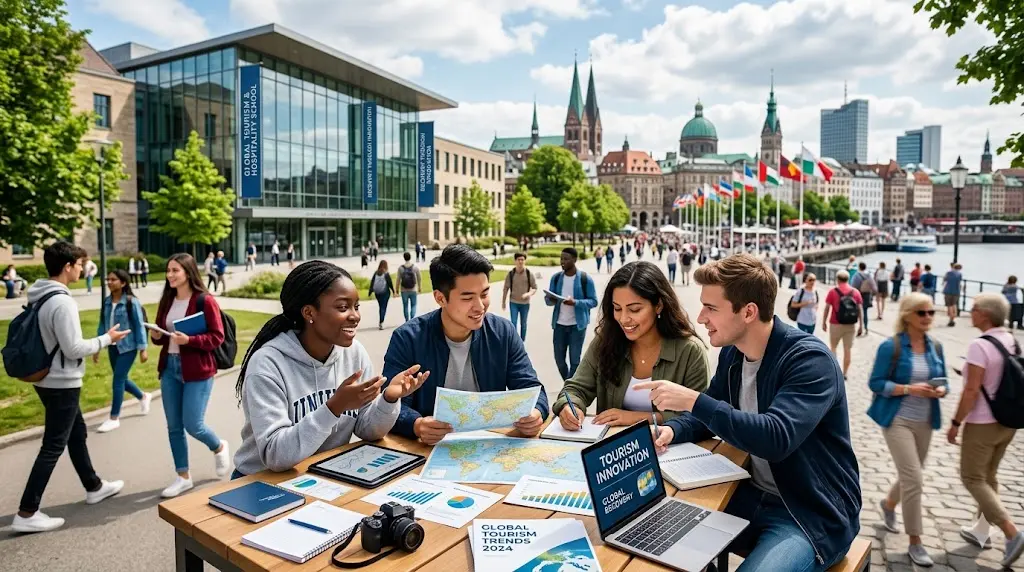
Tourism recovery is transforming higher education worldwide because universities are adapting to a more global, skills-focused, and industry-connected future. As international travel rebounds, colleges are rebuilding exchange programs, redesigning hospitality and business courses, and competing harder for international students who now expect flexible, career-ready education.
The recovery of global tourism is pushing universities to rethink how they teach, recruit, and collaborate internationally. From hospitality management programs to digital learning partnerships, higher education is becoming more international, practical, and closely tied to real-world economic trends.
Why tourism recovery is transforming higher education worldwide has become a serious conversation among educators, policymakers, and business leaders. A few years ago, many universities struggled with falling international enrollment, empty dormitories, and stalled exchange programs. Now things are shifting again.
As travel restrictions disappeared and global mobility returned, higher education institutions realized something unexpected: tourism doesn’t just affect hotels and airlines. It directly shapes student migration, academic partnerships, research collaboration, and even campus culture. In my experience, most people still underestimate how deeply tourism and education are connected. They move together more often than we think.
What’s happening in 2026 isn’t simply a tourism comeback. It’s a complete reset in how universities operate across borders.
What Is Tourism Recovery and Why Does It Matter?
Tourism Recovery: The return and growth of domestic and international travel after periods of disruption, leading to renewed economic, cultural, and educational exchange.
Tourism recovery matters because higher education depends heavily on international movement. Students travel abroad for degrees. Professors attend conferences. Researchers collaborate across countries. Universities also rely financially on international enrollment in many cases.
Here’s the thing most people overlook: universities are part of the global travel economy whether they admit it or not.
When tourism collapsed, international admissions dropped sharply in many regions. Language schools struggled. Study-abroad programs paused indefinitely. Some institutions lost millions in tuition revenue. Now that travel has resumed at scale, universities are rebuilding faster than expected.
A realistic example helps explain this.
Imagine a university in Southeast Asia that previously attracted thousands of students from Europe and the Middle East. During travel disruptions, enrollment shrank dramatically. But once airlines reopened major routes and visa processing improved, the institution not only recovered enrollment but redesigned its entire curriculum around global mobility, remote internships, and international business communication.
That pattern is repeating worldwide.
Universities that treat tourism recovery as only a recruitment opportunity will probably fall behind. The institutions gaining momentum are redesigning student experiences around global employability and cultural adaptability.
Why Tourism Recovery Matters in 2026
The year 2026 feels different because students are making decisions differently now. They aren’t choosing universities based only on rankings anymore. They’re asking practical questions:
Can I travel easily?
Will this degree connect me internationally?
Are internships available abroad?
Does this campus support multicultural experiences?
Can I study partly online and partly overseas?
That shift is changing higher education faster than many administrators expected.
International Students Are Reshaping University Strategies
International education has become one of the biggest beneficiaries of tourism recovery. Countries that reopened travel efficiently saw enrollment rebound quickly. Universities are now investing more heavily in global recruitment offices, international student support systems, and partnership programs.
What’s interesting is that smaller institutions are benefiting too. In the past, global student demand mostly flowed toward elite universities. Now students are comparing affordability, visa flexibility, quality of life, and work opportunities after graduation.
A mid-sized university with strong career partnerships can suddenly compete globally if it understands student mobility trends.
Hospitality and Tourism Education Is Exploding Again
Hospitality management, aviation studies, tourism economics, and event management programs are seeing renewed attention. But there’s a twist.
Students no longer want traditional tourism education alone. They want hybrid skills.
For example:
Tourism plus data analytics
Hospitality plus sustainability
International business plus digital marketing
Travel management plus AI-driven customer experience
That combination matters because employers now expect graduates to handle technology, communication, and international operations at the same time.
Hybrid Learning Has Changed Expectations Permanently
One counterintuitive point stands out here: tourism recovery has actually strengthened online education rather than weakened it.
A lot of people assumed students would abandon virtual learning once travel returned. That didn’t fully happen.
Instead, students expect flexibility now. Many universities are offering blended international experiences where learners complete part of a degree online before relocating abroad later. In most cases, that reduces financial pressure and expands access for students who previously couldn’t afford international study.
That’s a massive change.
How Tourism Recovery Is Reshaping Higher Education Step by Step
1. Universities Are Rebuilding Global Partnerships
Institutions are reopening exchange agreements and collaborative research programs that stalled during travel disruptions. Some universities are even creating shared international campuses.
This approach helps schools diversify enrollment while giving students broader global exposure.
2. Campuses Are Becoming More Career-Oriented
Students want proof that international education leads to real jobs. Universities are responding by strengthening internship pipelines with hotels, airlines, tourism boards, media agencies, and multinational companies.
Career services now play a bigger role in recruitment than they did five years ago.
3. Governments Are Supporting Education Tourism
Many countries now view international students as long-term economic contributors. Governments are simplifying visa systems, allowing part-time work rights, and investing in student-friendly immigration policies.
That’s not just about education. It’s economic strategy.
4. Digital Infrastructure Is Becoming Essential
Universities can’t depend solely on physical mobility anymore. Students expect seamless digital classrooms, virtual advising, and global networking opportunities even before arriving on campus.
In my opinion, institutions ignoring digital infrastructure are making a costly mistake.
5. Sustainability Is Influencing Academic Programs
Travel-related environmental concerns are changing curricula too. Universities are adding sustainability-focused tourism courses covering eco-tourism, climate impact, and responsible travel management.
Students care about this more than older institutions expected.
If a university wants to attract international students in 2026, marketing alone won’t solve the problem. Students compare visa flexibility, housing support, internship access, and mental health resources before making decisions.
The Unexpected Link Between Tourism and Research Innovation
Here’s a connection many people miss entirely.
Tourism recovery isn’t only increasing student numbers. It’s accelerating international research collaboration.
Researchers are traveling again for conferences, field studies, and academic partnerships. That matters because innovation often happens through in-person interaction. Video calls help, sure, but breakthrough collaboration still tends to emerge from face-to-face conversations.
I remember speaking with an academic consultant who noticed something fascinating after international conferences resumed. Research proposals that had stalled for years suddenly moved forward once scholars could meet in person again. Sometimes progress depends on human connection more than technology.
That human factor matters in higher education.
What Most Universities Still Get Wrong
They Focus Too Much on Recruitment
Many institutions think tourism recovery automatically means more international students. That’s only partly true.
Students are far more selective now. They want:
Better support systems
Safer campuses
Flexible learning formats
Strong career pathways
Real cultural inclusion
Universities that simply increase advertising budgets without improving student experience will probably struggle long term.
They Underestimate Student Anxiety
Travel recovery doesn’t erase uncertainty. Many students still worry about visa issues, housing costs, inflation, and geopolitical instability.
What most guides miss is this: emotional security now affects enrollment decisions almost as much as academic reputation.
That’s why universities investing in community-building and student wellbeing are seeing stronger retention rates.
Expert Tips and What Actually Works
From what I’ve seen, the universities adapting best share a few traits.
They move quickly. They test new ideas instead of waiting years for committee approval. They also treat international students as long-term community members rather than temporary revenue sources.
One university in Europe created a blended tourism-business program where students study online for six months before completing paid internships abroad. Enrollment surged because students felt the financial risk was lower.
Another institution partnered directly with local tourism operators to create real-world sustainability projects. Students worked with hotels and city planners instead of just reading textbooks. Employers loved it because graduates already had practical experience.
Honestly, this practical shift is overdue.
For years, higher education often felt disconnected from actual labor markets. Tourism recovery is forcing universities to become more responsive and realistic.
Students increasingly trust peer experiences over official university messaging. Institutions encouraging authentic student storytelling often build stronger international credibility.
Why This Shift Impacts More Than Tourism Degrees
People often assume this trend only affects hospitality schools. That’s not accurate at all.
Tourism recovery is influencing:
Business education
Public policy programs
Environmental science
Urban planning
International relations
Healthcare education
Technology and AI training
Think about smart tourism systems, airport logistics, digital payments, translation technology, and sustainable infrastructure. Those areas require interdisciplinary education now.
A student studying computer science today might eventually work on AI-powered travel systems. An environmental science graduate could help cities manage sustainable tourism growth.
The lines between industries are getting blurry.
People Most Asked About Tourism Recovery and Higher Education
Why are international students so important to universities?
International students contribute financially, academically, and culturally. They also help universities build global networks and research partnerships that strengthen institutional reputation and innovation.
Is tourism recovery fully complete in 2026?
Not entirely. Some regions recovered faster than others. However, international travel and student mobility have improved significantly compared to previous years, especially in countries with flexible visa systems and stable infrastructure.
Are online degrees replacing international education?
No, but hybrid education models are growing fast. Many students now prefer combining online learning with shorter international experiences instead of relocating abroad immediately.
Which academic fields benefit most from tourism recovery?
Hospitality, business, aviation, sustainability, international relations, and digital technology programs are seeing strong benefits. Interdisciplinary programs are especially popular.
How are universities changing because of tourism recovery?
Universities are redesigning programs around employability, flexibility, international collaboration, and student wellbeing. They’re also investing more heavily in digital infrastructure and career partnerships.
Does tourism recovery affect local economies near universities?
Absolutely. International students support housing markets, restaurants, transportation systems, and local businesses. In some cities, universities and tourism economies are deeply connected.
Are students prioritizing travel opportunities when choosing universities?
Yes. Many students now evaluate study-abroad options, internship access, travel convenience, and cultural experiences before selecting institutions.
Final Thoughts
Why tourism recovery is transforming higher education worldwide comes down to one reality: education is no longer confined by national borders. Universities now compete in a global mobility economy where students expect flexibility, cultural connection, and practical career outcomes.
The institutions thriving in 2026 understand that tourism recovery isn’t just about getting students back on planes. It’s about rebuilding trust, expanding access, and creating education systems that reflect how interconnected the world has become.
From my perspective, the universities willing to evolve quickly will shape the next decade of global education. Others may struggle to keep pace.
Businesses, agencies, and startups looking to improve brand visibility and SEO ranking can benefit from high authority backlinks through press release distribution services and trusted digital marketing services. These platforms help drive organic traffic, strengthen media coverage, and support instant publishing strategies that improve online authority and long-term search performance for growing brands.