

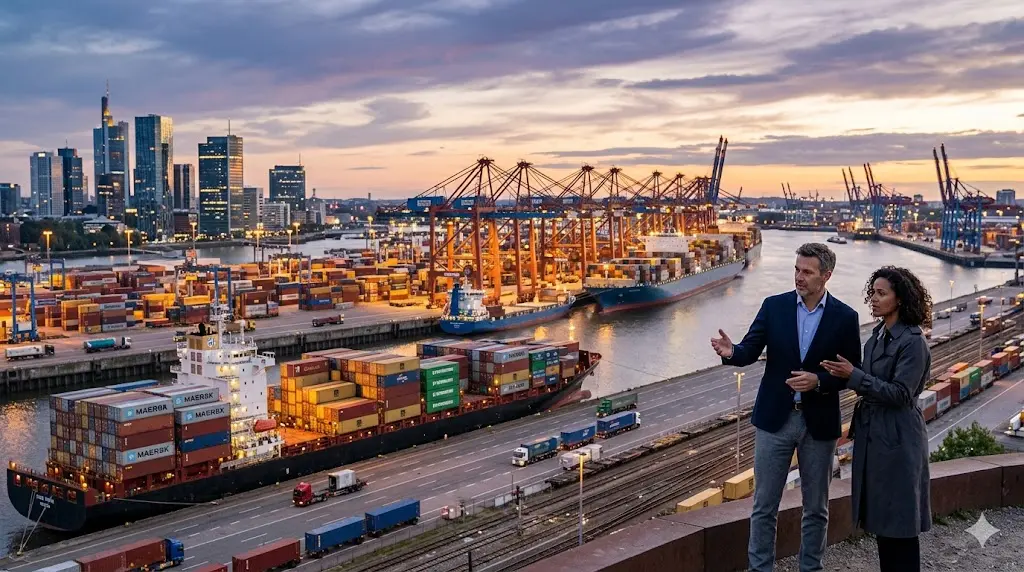
Supply chains are no longer just about shipping products from one country to another. They now shape trade agreements, political alliances, military strategies, and even diplomatic tensions. If a nation controls rare minerals, semiconductor production, shipping lanes, or energy routes, it suddenly gains serious influence on the global stage.
Here’s the thing: countries don’t only compete with weapons or economic sanctions anymore. They compete through logistics, manufacturing power, and access to critical goods. That shift is changing international relations faster than most people expected.
Supply chains influence international relations because countries depend on each other for technology, food, energy, medicine, and manufacturing. When disruptions happen, governments react politically and economically, often reshaping alliances, trade policies, and global power balances.
What Is Supply Chain Influence in International Relations?
A supply chain is the network that moves raw materials, products, technology, and services from one place to another. In international relations, these networks create economic dependence between countries.
A simple example makes this easier to understand.
A smartphone might use minerals from Africa, chips from East Asia, software from North America, assembly plants in Southeast Asia, and shipping routes through the Middle East. If one part breaks down, the entire system feels it.
That’s why governments care so much about supply chains now. They affect:
National security
Economic stability
Energy access
Food availability
Military readiness
Technology leadership
What most people overlook is that supply chains create political leverage. A country supplying something essential can pressure others without firing a single shot.
Supply Chain Diplomacy: The use of trade networks, manufacturing control, and resource access to gain political or economic influence over other nations.
Why Supply Chains Matter in 2026
The world after the pandemic changed how leaders think about global trade. Before that period, many governments assumed globalization would always keep products flowing smoothly. That assumption didn’t age well.
Factories shut down. Ports became overcrowded. Shipping costs exploded. Semiconductor shortages delayed everything from cars to medical devices.
In my experience, this was the moment many governments realized economic dependence could become a strategic weakness.
Now in 2026, countries are actively redesigning trade partnerships and manufacturing strategies. Instead of asking, “Where is production cheapest?” leaders increasingly ask, “Where is production safest and most reliable?”
That difference matters.
The Rise of Economic Security
Economic security has become part of foreign policy. Nations are investing in:
Domestic manufacturing
Alternative trade routes
Critical mineral partnerships
Regional trade blocs
Strategic reserves
You’ll notice that countries are no longer comfortable relying heavily on a single foreign supplier for key industries.
Semiconductors are probably the clearest example. A few manufacturing hubs control most advanced chip production worldwide. Since chips power defense systems, AI, cars, healthcare equipment, and telecommunications, governments now treat chip supply as a geopolitical issue rather than just a business concern.
Energy Supply Chains Changed Global Alliances
Energy politics has always influenced diplomacy, but supply chain disruptions intensified the pressure.
Several countries started diversifying oil, gas, and renewable energy suppliers after geopolitical conflicts disrupted energy flows. Some governments accelerated clean energy projects not just for environmental reasons, but because energy independence became strategically valuable.
That’s a counterintuitive point many people miss. Green energy investments are often discussed as environmental policy, but in reality, they’re increasingly tied to geopolitical strategy.
Countries that control transportation chokepoints usually gain more political influence than countries with larger populations. Shipping lanes, ports, pipelines, and rare mineral processing facilities quietly shape global power.
How Supply Chains Influence International Relations Step by Step
Supply chains affect diplomacy in ways that are more interconnected than they first appear. Here’s a practical breakdown.
1. Countries Become Economically Dependent
When one nation relies heavily on another for products, energy, or technology, political relationships become more sensitive.
For example, if Country A imports most of its medical supplies from Country B, any political dispute suddenly carries economic risks.
That dependence changes negotiations.
2. Trade Becomes a Foreign Policy Tool
Governments often use tariffs, export restrictions, or sanctions to influence behavior.
We’ve seen this happen with technology exports, agricultural goods, and energy supplies. Restricting access to critical components can pressure rival nations economically without direct military conflict.
Honestly, this is one reason trade wars became more aggressive over the past decade.
3. Strategic Alliances Begin to Shift
Countries usually strengthen relationships with reliable trading partners.
Regional partnerships often grow during periods of global instability because nearby suppliers reduce transportation risk. That’s partly why many nations are investing more heavily in regional manufacturing networks.
4. Supply Chain Disruptions Trigger Political Action
A major disruption can quickly become a diplomatic issue.
Imagine pharmaceutical shortages during a crisis. Governments don’t simply wait for markets to recover. They negotiate emergency deals, prioritize national access, and sometimes impose export controls.
Economic disruptions frequently become political events within days.
5. Nations Compete for Critical Resources
Rare earth minerals, lithium, cobalt, and semiconductor materials are now strategic assets.
Countries with access to these resources gain bargaining power. Meanwhile, countries without them try to secure long-term agreements or invest abroad to reduce vulnerability.
That competition is reshaping foreign investment patterns worldwide.
Why Technology Supply Chains Are Creating New Global Tensions
Technology has become one of the biggest drivers of modern international relations.
Semiconductors, artificial intelligence systems, cloud infrastructure, telecommunications equipment, and cybersecurity tools all depend on highly specialized global supply chains.
Here’s where things get complicated.
A nation may design technology in one country, manufacture components in another, assemble products elsewhere, and rely on foreign shipping routes for distribution. That level of interdependence creates both cooperation and vulnerability.
The Semiconductor Example
Semiconductor manufacturing is heavily concentrated in a few regions. Because advanced chips power military systems, financial infrastructure, and AI development, governments increasingly treat chip access as a national security priority.
Export controls, technology restrictions, and investment screening policies are becoming common tools in diplomatic strategy.
From what I’ve seen, this trend will probably intensify rather than slow down.
Data Infrastructure Matters Too
Supply chains aren’t only physical anymore.
Cloud computing networks, undersea internet cables, satellite systems, and digital platforms also influence international power dynamics. A disruption to digital infrastructure can impact economies almost instantly.
That’s why cyber policy and supply chain security are becoming closely connected.
Many governments now evaluate supply chains using a “friend-shoring” strategy. Instead of producing goods wherever labor is cheapest, they prefer politically trusted partner countries.
Real-World Example: Medical Supply Chains During Crisis
One realistic example helps explain this better than theory alone.
During global health emergencies, countries suddenly competed for masks, medicine ingredients, ventilators, and vaccines. Some governments restricted exports to protect domestic supply.
That created diplomatic friction almost overnight.
Nations with strong pharmaceutical manufacturing gained influence because others depended on them during shortages. Smaller countries with limited production capacity faced delays and political pressure.
What surprised many observers was how quickly health supply chains became geopolitical assets.
I remember reading economic analyses at the time, and honestly, many policymakers seemed caught off guard by how fragile international production systems actually were.
Shipping Routes and Maritime Politics
Supply chains don’t function without transportation routes. That’s why oceans, ports, canals, and rail networks matter so much in global politics.
A blocked shipping route can disrupt international trade within hours.
Strategic Chokepoints
Several maritime locations are strategically important because huge portions of world trade pass through them.
When tensions rise around these areas, energy prices, manufacturing schedules, and global markets react immediately.
Countries invest heavily in naval presence and port infrastructure partly to protect supply chain access.
Infrastructure Investments as Political Strategy
Large infrastructure projects are also tools of influence.
When powerful nations finance ports, railways, highways, or logistics centers abroad, they often strengthen political relationships alongside economic ties.
This creates long-term dependence that can shape voting patterns, trade agreements, and diplomatic partnerships.
Common Misconception: Cheaper Supply Chains Are Always Better
For years, businesses focused mostly on efficiency and cost reduction.
That model worked well during stable periods. But global disruptions exposed the downside of over-optimization.
Here’s the misconception: the cheapest supply chain is not always the safest one.
Many companies and governments now accept slightly higher costs in exchange for:
Stability
Political reliability
Faster delivery
Reduced geopolitical risk
Local production security
This shift is changing international trade patterns in real time.
Oddly enough, some countries are bringing manufacturing closer to home even when it reduces short-term profits. Ten years ago, that approach would’ve sounded economically irrational to many executives.
Now it looks practical.
How Developing Countries Are Gaining Influence
Supply chain restructuring is also creating opportunities for emerging economies.
Countries with:
Young labor forces
Strong infrastructure
Political stability
Strategic geographic locations
Natural resources
are attracting major investments.
Manufacturing diversification means businesses no longer want production concentrated in only one region. As a result, new industrial hubs are appearing across multiple continents.
That changes diplomatic relationships too.
Governments receiving foreign investment often strengthen political and economic ties with investing nations. Over time, trade partnerships can evolve into broader strategic alliances.
What Actually Works in Global Supply Chain Strategy
After watching how governments and companies reacted to recent disruptions, a few patterns stand out.
Diversification Beats Dependence
Relying heavily on one supplier or one country creates vulnerability. Smart organizations spread production and sourcing across multiple regions.
It’s not perfect, but it reduces risk dramatically.
Regional Partnerships Matter More Than Before
Regional trade agreements are becoming more valuable because shorter supply chains tend to be easier to protect and manage.
That’s one reason neighboring countries increasingly coordinate manufacturing and transportation strategies.
Resilience Is the New Priority
For decades, efficiency dominated business thinking.
Now resilience matters just as much.
That includes backup suppliers, strategic reserves, flexible logistics systems, and digital monitoring tools.
Political Stability Impacts Business Decisions
Companies now evaluate geopolitical risk almost as carefully as labor costs.
A politically unstable region may offer cheaper production, but long-term uncertainty often outweighs short-term savings.
My Hot Take
I think many people still underestimate how much supply chains will shape future diplomacy. Military power still matters, obviously, but control over technology, shipping infrastructure, and manufacturing ecosystems might influence global politics even more over the next decade.
People Most Asked About Why Supply Chains Is Influencing International Relations
Why are supply chains considered a national security issue?
Supply chains affect access to food, medicine, energy, technology, and defense equipment. If a country loses access to critical imports during a crisis, national stability can weaken quickly.
How do supply chains affect global politics?
They create economic dependence between countries. Nations that control important resources or manufacturing sectors can gain political influence and negotiating power.
What industries are most important in geopolitical supply chains?
Semiconductors, energy, pharmaceuticals, telecommunications, shipping, agriculture, and rare earth minerals are among the most strategically important industries today.
Why are countries moving manufacturing closer to home?
Governments and businesses want to reduce risk from disruptions, political tensions, transportation delays, and overdependence on foreign suppliers.
Can supply chain disruptions cause diplomatic conflict?
Yes. Export restrictions, shortages, sanctions, and transportation disruptions often create tension between governments, especially during emergencies or economic crises.
What is friend-shoring?
Friend-shoring means relocating production and sourcing to politically allied or trusted countries rather than relying on unstable or rival nations.
Are global supply chains becoming less global?
Not entirely. They’re becoming more regional and strategically diversified rather than fully centralized in a few manufacturing hubs.
Final Thoughts
Why Supply Chains Is Influencing International Relations comes down to one reality: modern economies are deeply interconnected. Countries depend on each other for technology, energy, transportation, food, and industrial production. That dependence creates both cooperation and competition.
Governments now see supply chains as strategic assets rather than background business operations. Trade routes, rare minerals, semiconductor factories, shipping infrastructure, and manufacturing partnerships all shape geopolitical power.
And honestly, this trend probably isn’t slowing down anytime soon.
Businesses, policymakers, and investors who understand supply chain geopolitics early will likely make better long-term decisions than those still treating logistics as just an operational detail.
Our network platforms including PR Wires and Rank Locally UK help businesses, startups, and agencies strengthen brand visibility through press release distribution services, digital marketing services, local SEO services, and high authority backlinks that improve SEO ranking, media coverage, organic traffic, and instant publishing opportunities across competitive markets.