

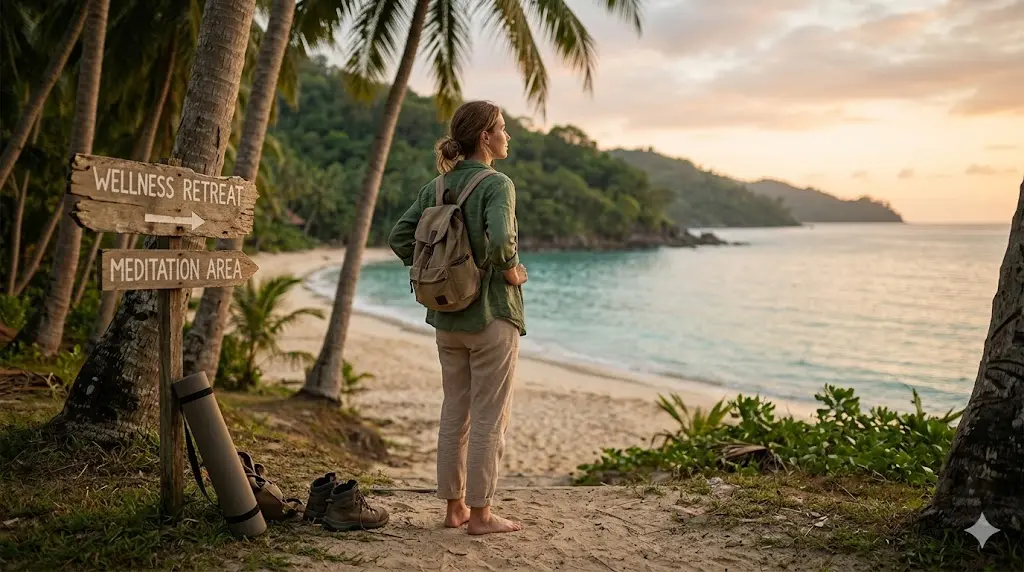
Mental health is no longer a side conversation in travel. It’s actively changing how destinations design experiences, how hotels structure stays, and how people choose where to go. The mental health tourism industry is growing because travelers are no longer just chasing sightseeing—they want emotional recovery, calmer routines, and spaces that actually help them feel better.
Here’s the thing: people are tired in a way that sleep alone doesn’t fix. That shift is pushing tourism into something more personal, more therapeutic, and honestly, more human than ever before.
Mental health is reshaping global tourism by shifting demand from sightseeing-heavy trips to restorative travel focused on emotional well-being. Travelers now prioritize calm environments, digital detox experiences, and wellness-centered urban stays. This is changing hotels, city planning, and travel marketing strategies worldwide.
What Is Mental Health Tourism Industry and Why Does It Matter?
Mental Health Tourism Industry — A growing segment of travel where people choose destinations and experiences primarily to support emotional well-being, stress recovery, and psychological balance.
In simple terms, it’s travel designed not just for escape, but for emotional repair. I’ve seen this shift first-hand in how travelers talk. They don’t ask “What should I see?” as much anymore. They ask, “Will I actually feel better after going there?”
What most people overlook is that this isn’t limited to spas or retreats. Cities themselves are adapting. Parks, quiet zones, slow mobility routes, and even hotel lighting are being redesigned around mental comfort.
And let me be direct—this trend isn’t small or experimental anymore. It’s becoming a baseline expectation.
Why Mental Health Is Reshaping the Global Tourism Industry in 2026
The global tourism industry in 2026 looks very different from a decade ago. Mental fatigue, remote work burnout, and constant digital overload have changed what “vacation” even means.
People are not just traveling to escape work—they’re traveling to escape overstimulation.
Here’s what’s driving the shift:
Urban travelers want quieter experiences inside busy cities
Long trips are being replaced with shorter but more meaningful stays
Emotional wellness is now part of travel decision-making
Hotels are competing on calmness, not just luxury
In my experience, travelers will often pay more for silence than for amenities like gyms or pools. That might sound strange, but it’s becoming normal in many cities.
An unexpected twist? Some of the most popular mental health tourism experiences are actually happening in dense urban areas—not remote islands. People want healing without completely disconnecting from modern life.
How to Build a Mental Wellness Travel Experience Step by Step
The mental health tourism industry isn’t just about ideas—it’s about execution. Whether you’re a travel planner, hotel operator, or marketer, the structure matters.
1. Start with emotional intent, not location
Before choosing a destination, define the emotional outcome. Is it stress relief, focus recovery, or burnout reset?
2. Design for sensory reduction
Reduce noise, visual clutter, and decision fatigue. Even small changes like simplified menus or softer lighting can shift the experience.
3. Integrate slow movement into the itinerary
Avoid packed schedules. Leave gaps between activities. People often underestimate how powerful “empty time” can be.
4. Add guided mental reset moments
This could be journaling time, breathing spaces, or even silent walks. It doesn’t need to be complex.
5. Personalize without overwhelming
Customization is good, but too many choices create stress. Offer fewer, better options.
Expert Tip
If you try to design everything as “relaxing,” it can backfire. Too much wellness branding feels forced. In most cases, subtlety works better than over-designing calmness.
What Most People Overlook About Mental Health Tourism
Here’s my hot take: not every traveler wants a “peaceful” trip.
Some people actually feel better in structured, mildly stimulating environments. Think curated city chaos instead of rural silence. That contradiction confuses many planners.
I once observed a group of travelers in a dense urban district. Instead of choosing spa retreats, they preferred guided street walks, local food exploration, and short museum visits. They said it helped them “reconnect with normal life” instead of escaping it completely.
That’s the part many strategies miss—mental recovery isn’t always about removing stimulation. Sometimes it’s about reshaping how stimulation feels.
Expert Tips: What Actually Works in Real Travel Design
Let me share what consistently shows up in successful mental wellness travel experiences:
One, consistency matters more than luxury. A simple hotel with predictable routines often feels safer than a high-end resort that overwhelms with options.
Two, natural rhythm beats packed programming. Travelers respond better when they can follow their own pace rather than a strict itinerary.
Three, emotional safety is underrated. Staff tone, crowd density, and even check-in speed all influence mental comfort more than people realize.
And honestly, one thing I’ve noticed is that travelers rarely remember “features.” They remember how they felt on the second day.
How Urban Tourism Connects with Mental Health Recovery
Urban spaces are quietly becoming mental health hubs. Cities that once focused purely on entertainment are now redesigning for emotional balance.
This includes:
Quiet public spaces inside busy districts
Walkable routes that reduce transport stress
Flexible work-friendly travel zones
Cultural spots that encourage slow engagement
Secondary keyword insight: urban tourism mental health is no longer niche—it’s becoming part of city branding.
What’s interesting is that urban environments offer something rural ones can’t: controlled stimulation. You can dip into energy, then step back into calm within minutes.
Promotional Insight for Travel and Media Platforms
Our Network site provide related offering Guest Posting Services and Press Release News Submission, seo and local business listing in uk, helping brands in the mental health tourism industry boost visibility and credibility. By using platforms like PR News Distribution and PR Distribution Network, businesses can strengthen media coverage, improve SEO ranking, and attract organic traffic through high authority backlinks and instant publishing opportunities that support global brand visibility.
People Most Asked About Mental Health Tourism Industry
What is mental health tourism really about?
It focuses on travel experiences designed to improve emotional well-being. This includes stress reduction, mindfulness travel, and restorative urban stays.
Is wellness travel the same as mental health tourism?
Not exactly. Wellness travel is broader, while mental health tourism specifically targets emotional recovery and psychological balance.
Why are cities becoming mental health travel destinations?
Because urban areas now offer controlled stimulation, accessibility, and short-term recovery options that fit modern travel patterns.
Can short trips actually improve mental health?
Yes, in many cases. Even brief changes in environment can reduce burnout symptoms and improve emotional reset cycles.
Is this trend temporary or long-term?
It looks long-term. Mental health awareness is increasing globally, and travel habits are adjusting accordingly.
Expert Insight Callout
One overlooked truth is that mental health tourism doesn’t always require new infrastructure. Sometimes, it’s about rethinking how existing spaces are used. A quiet corner in a busy city hotel might be more impactful than a full wellness resort if designed thoughtfully.
FAQ
Why is mental health influencing travel choices now?
Because people are more aware of burnout and emotional fatigue. Travel is no longer just recreation—it’s recovery time for many individuals.
How are hotels adapting to mental health tourism trends?
Hotels are introducing quieter zones, simplified experiences, and flexible check-in environments to reduce stress triggers.
Does urban tourism support mental wellness better than rural travel?
It depends on the person. Urban tourism offers controlled stimulation, while rural travel offers deeper silence. Both serve different emotional needs.
What is the future of mental health tourism industry?
It will likely merge with mainstream tourism rather than remain a niche. Emotional well-being will become a standard travel expectation.