

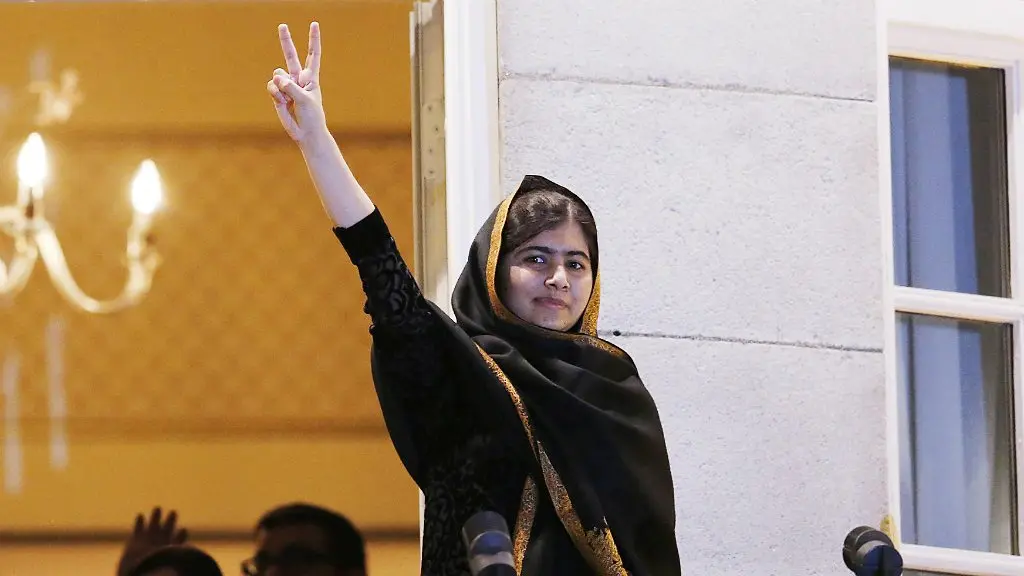
Malala Yousafzai, the Pakistani schoolgirl and education activist, has been jointly awarded the Nobel Peace Prize with Indian child rights campaigner Kailash Satyarthi. At 17, she became the youngest Nobel laureate in history, a testament to her extraordinary courage and unwavering commitment to ensuring every child has access to education. The Nobel Committee recognized her struggle against the suppression of children and young people, and for the right of all children to education.
Born on July 12, 1997, in Mingora, Swat Valley, Pakistan, Malala grew up in a region where the Taliban often banned girls from attending school. Her father, Ziauddin Yousafzai, was an educator and ran a school, instilling in her a deep belief in the power of learning. In 2009, at age 11, Malala began writing an anonymous blog for the BBC Urdu service about life under Taliban occupation and her desire to attend school. Her poignant words brought global attention to the plight of girls in Swat.
As her activism grew, she became more outspoken, speaking out against the Taliban's edicts. In October 2012, a Taliban gunman boarded her school bus and shot her in the head. The attack shocked the world and sparked an outpouring of support. Malala survived after undergoing multiple surgeries and rehabilitation in the United Kingdom. Rather than silencing her, the assassination attempt strengthened her resolve. She continued her advocacy, co-authoring the memoir 'I Am Malala' and establishing the Malala Fund with her family.
Malala Yousafzai said she was there to stand up for the rights of forgotten and frightened children, and raise their voice rather than pity them. Her words resonate deeply with millions who face oppression. Alyse Nelson, CEO of Vital Voices, an organisation that provides training and mentoring to women throughout the world, worked with Malala to set up the Malala Fund, which raised more than £600,000 and is already funding the education of 40 girls in Pakistan's Swat Valley. Alyse said: 'She's a girl who's extremely determined, she's on a mission and she does not look backwards. I think that bullet didn't silence her, it did make her stronger.'
The Malala Fund continues to expand its reach, investing in local education activists and advocating for policy changes. Malala has addressed the United Nations, met with world leaders, and inspired countless individuals to support girls' education. In 2014, she won the Nobel Peace Prize alongside Kailash Satyarthi, an Indian activist who has rescued thousands of children from child labor and trafficking.
Kailash Satyarthi, born in 1954, has been a relentless crusader for children's rights in India since the 1980s. Through his organization, Bachpan Bachao Andolan (Save the Childhood Movement), he has liberated over 80,000 children from exploitation. The joint award highlighted the collaborative spirit needed to tackle global issues, transcending political and religious divides. The Nobel Committee emphasized that the prize should be seen as a powerful message for peace and understanding between India and Pakistan, two nuclear-armed neighbors.
Malala's educational journey took her to the University of Oxford, where she studied Philosophy, Politics, and Economics (PPE). Graduating in 2020, she continues to be a vocal advocate for education, gender equality, and human rights. Her story is one of resilience, bravery, and unyielding optimism. In her speeches, she often emphasizes that education is the only way to fight poverty, ignorance, and extremism.
The impact of Malala's work extends far beyond Pakistan. Her fund has supported projects in countries like Nigeria, Kenya, and Lebanon, helping refugee girls and marginalized communities. She has also collaborated with organizations such as UNICEF and Plan International. In 2021, she launched an online campaign called 'Girls' Education Act' to pressure governments to prioritize girls' education in post-pandemic recovery plans.
Critics sometimes accuse Malala of being a Western tool or of oversimplifying complex issues, but she remains steadfast. Her response is always rooted in her experience: 'I speak not for myself but for those without a voice.' She continues to engage with grassroots activists, ensuring that her platform amplifies local voices. Her autobiography, 'I Am Malala: The Girl Who Stood Up for Education and Was Shot by the Taliban,' has been translated into over 40 languages.
In popular culture, Malala has been the subject of documentaries, including 'He Named Me Malala,' directed by Davis Guggenheim. The film provides an intimate look at her life, family, and activism. She has received numerous honorary degrees and awards, including the United Nations Human Rights Prize. Her face has appeared on magazine covers, from Time to Vogue, symbolizing a new generation of leadership.
The Swat Valley, once a tourist destination known for its natural beauty, was under Taliban control from 2007 to 2009. During that time, hundreds of schools were destroyed, and girls were forbidden from attending classes. Malala's family was forced to flee after the assassination attempt, living in exile in the UK. While she has not returned to Pakistan full-time, she has visited several times, meeting with government officials and young students. Her foundation's work on the ground continues through local partners who rebuild schools, provide scholarships, and train teachers.
The 2014 Nobel Peace Prize ceremony in Oslo was a landmark event. Malala's acceptance speech, delivered with poise, included a call to action: 'Let us pick up our books and our pens. They are our most powerful weapons.' Kailash Satyarthi also spoke movingly about the millions of children denied their childhood. Together, they represented a bridge between South Asian nations and a shared commitment to children's rights.
In the years since, Malala has evolved from a symbol into an active policymaker. She meets with world leaders, speaks at the United Nations, and uses her social media presence to highlight crises, such as the displacement of Rohingya children or the education of Afghan girls under the Taliban. In 2020, she launched an initiative called 'The Malala Fund's Solar-Powered Schools' to provide sustainable energy for learning centers in remote areas.
Malala's influence on young people is profound. She responds to letters from children around the world, many of whom see her as a role model. Her simple message — 'One child, one teacher, one book, one pen can change the world' — inspires activism at grassroots levels. She encourages students to stand up against injustice, even if they are afraid. 'When the whole world is silent, even one voice becomes powerful,' she says.
The legacy of Malala Yousafzai is not just about one girl's survival; it is about the power of education to transform lives. Her collaboration with Kailash Satyarthi showed that peace and progress require crossing borders. As Alyse Nelson noted, Malala does not look backwards; she is on a mission. That mission continues to gain momentum, driven by the belief that every girl deserves 12 years of free, quality education.
In a world where 130 million girls remain out of school, Malala's work is far from over. The Malala Fund has set a goal of ensuring that every girl can complete secondary education by 2030. Through advocacy, grants, and partnerships, the fund works to dismantle barriers such as poverty, child marriage, and violence. Malala's story is a testament to the fact that even in the darkest circumstances, hope can prevail. She has shown that a single individual, armed with conviction and courage, can indeed change the world.
Source: BBC News