

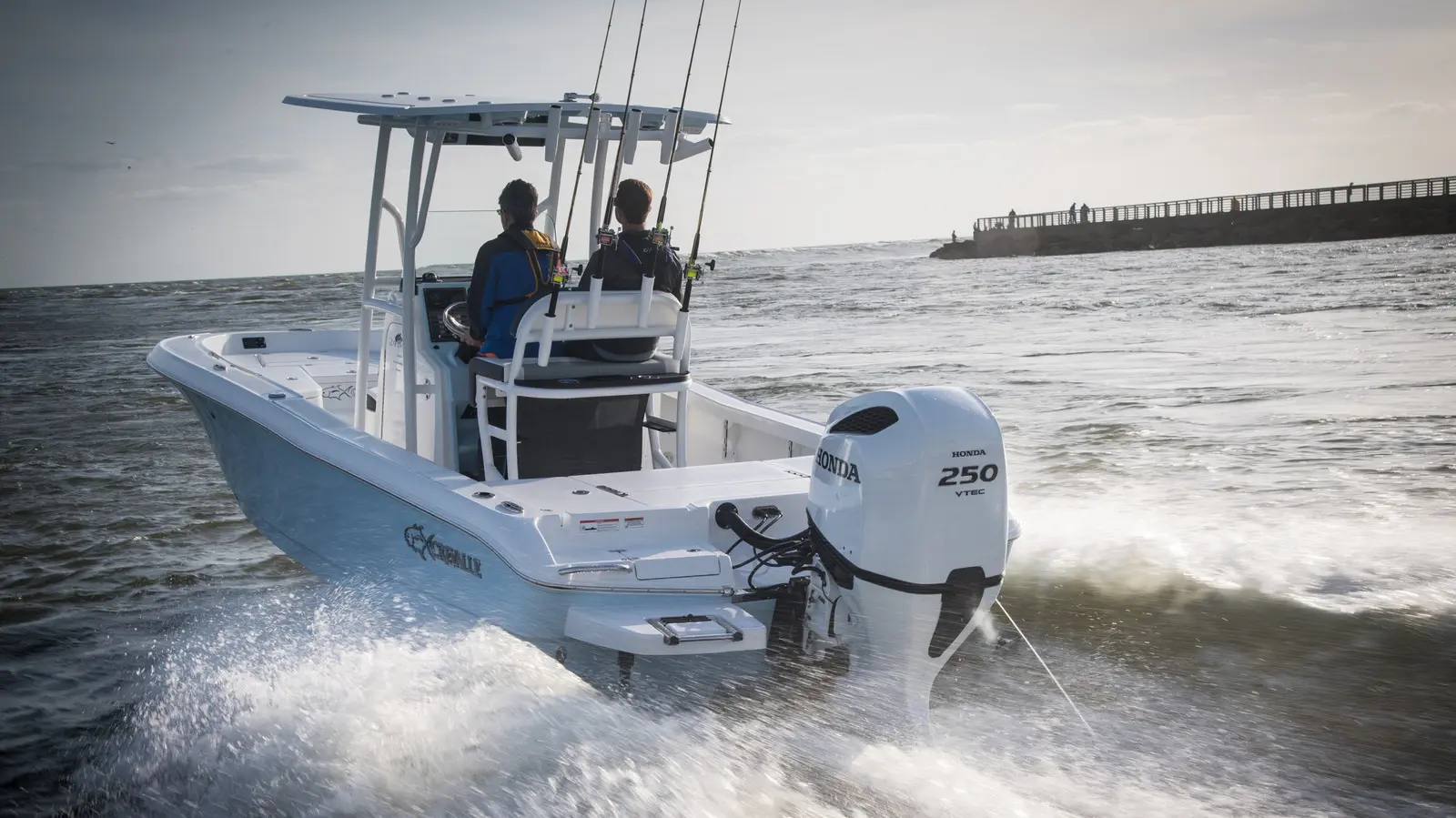
Compared to a car engine, a marine engine, especially an outboard motor, has a very rough life. Of course, it's subjected to a lot of water—and sometimes saltwater at that—and it's constantly being jostled around bumping up and down on the waves. Your average Yamaha outboard motor, especially the most powerful models, has a much harder life than a car engine. Unlike a car engine's life which is measured in miles, an outboard's life is measured in hours. It's a little like the life of a lawnmower or tractor. In the past, your run-of-the-mill outboard motor would only live to see about 800 to 1,000 hours before needing major work or an entire rebuild. Of course, there is no hard and fast number when it comes to hours.
These days, that's not the case as boat engines have gotten more advanced, more efficient, and more resistant to corrosion. Now, a modern outboard motor's lifespan can be measured in thousands of hours. The shift from older two-stroke designs to modern four-stroke engines has brought about significant improvements in durability and fuel efficiency. Four-stroke outboards operate with cleaner oil systems and better cooling, which reduces wear on internal components. Additionally, advancements in metallurgy and the use of high-grade stainless steel and aluminum alloys have made outboards more resistant to the corrosive effects of saltwater. Manufacturers have also improved sealing technologies to keep water out of critical areas like the powerhead and lower unit.
One of the most critical factors determining how long an outboard will last is maintenance. Well-maintained engines can log thousands, or even tens of thousands of hours because the operator adheres to maintenance schedules borderline religiously. Keeping up with maintenance is the same reason you'll see an old F-150, Chevy Tahoe, or Toyota Camry climb to 300,000 or 400,000 miles before complaining. But not everyone relies on their boat engines professionally. For the average boater who just goes out on the water recreationally, a gas-powered marine engine will run for about 1,500 hours before needing a lot of work or a rebuild. This number can vary widely based on usage patterns: an engine used in freshwater and stored indoors will last much longer than one exposed to saltwater and left uncovered in harsh weather.
Still, new outboard engines like those made by Honda offer a five-year warranty for commercial outboard engines that cover anything catastrophic like a defect in the engine. Honda's warranty is even transferrable if you're buying a used engine. High-performance brands like Mercury Marine offer warranties of up to three years for its motors. The bottom line is: if you want your outboard motor to last, keep it maintained. Beyond just following the manufacturer's service intervals, there are several specific practices that can dramatically extend the life of your outboard.
Regular Oil Changes and Fluid Checks
Just like in a car, the lifeblood of an outboard motor is its oil. For four-stroke outboards, regular oil changes every 100 hours or once a season—whichever comes first—are essential. Using the correct viscosity and grade of oil as specified by the manufacturer ensures proper lubrication and cooling. Two-stroke outboards require careful mixing of oil with fuel, and using high-quality TC-W3 rated oil can reduce carbon buildup and wear. Additionally, checking the gearcase oil (lower unit oil) is critical; if it appears milky or contains water, the seals may be compromised, and immediate service is required. Transmission fluid, power steering fluid, and coolant levels should also be inspected periodically.
Flushing the Engine After Every Use
Saltwater is the enemy of any marine engine. Flushing the engine with fresh water after each outing removes salt, sand, and debris that can corrode internal passages and impede cooling. Most modern outboards have a freshwater flush port that makes this process simple. Even in freshwater, flushing helps remove weeds, mud, and other contaminants. A thorough flush should run for at least five to ten minutes with the engine running at idle, allowing clean water to circulate through the water pump and powerhead. This simple step can double or triple the lifespan of an outboard motor.
Winterization and Storage
For boaters in colder climates, proper winterization is non-negotiable. If water freezes inside the engine block, it can crack costly components like the cylinder head or exhaust manifold. Winterization typically involves draining the cooling system, adding antifreeze, fogging the cylinders to prevent rust, and stabilizing the fuel. Fuel left untreated over winter can turn into varnish and clog carburetors or fuel injectors. Storing the outboard in a vertical position with the engine tilted down prevents water from pooling in the exhaust passages. For long-term storage, removing the propeller and applying grease to the prop shaft can prevent corrosion. And if possible, storing the boat indoors or under a covered shelter shields the outboard from UV rays and moisture.
Propeller and Lower Unit Care
The propeller and lower unit are the parts of the outboard that endure the most physical abuse. Striking underwater obstacles can damage propeller blades, bend the propeller shaft, and even break the gearcase. Regular inspection for nicks, bends, or missing material is important. A damaged propeller can cause vibration that stresses the engine mounts and drivetrain. Replacing or repairing a propeller promptly can avoid more expensive repairs. The lower unit also contains the gearcase oil and seals; checking for leaks or water intrusion during each oil change helps catch problems early. Additionally, the sacrificial anodes (zincs) on the lower unit should be replaced when they are 50% consumed; these anodes corrode instead of the aluminum components, protecting the gearcase and trim tabs.
Fuel System Maintenance
Modern outboards use precise fuel injection systems that are sensitive to contaminants. Using fresh, ethanol-free fuel when possible reduces the risk of phase separation and corrosion. Adding a fuel stabilizer can keep fuel fresh for up to a year. Fuel filters should be changed annually, and the fuel water separator should be drained regularly. Water in the fuel can cause injector failure and internal engine damage. For older carbureted outboards, cleaning the carburetor every few years is often necessary to remove deposits from evaporated fuel. Ethanol-blended fuels absorb moisture, which can cause corrosion in the fuel system; using a fuel additive designed to combat ethanol issues is highly recommended.
Cooling System and Impeller Replacement
The water pump impeller is a rubber component that pushes water through the engine for cooling. Over time, impeller blades become brittle and can break off, potentially blocking cooling passages and causing the engine to overheat. Most manufacturers recommend replacing the impeller every two to three years or every 300 hours, whichever comes first. A telltale sign of a failing impeller is a weak or no stream of water from the engine's cooling indicator. If ignored, overheating can warp cylinder heads and ruin piston rings. Replacing the impeller is a relatively inexpensive maintenance task that can prevent catastrophic engine failure. Flushing the engine also helps prolong the life of the impeller by keeping it lubricated and free of debris.
Electrical and Corrosion Protection
Outboard motors have complex electrical systems including ignition coils, sensors, and wiring harnesses. Salt spray and moisture can cause corrosion at connectors, leading to intermittent failures and poor performance. Applying dielectric grease to all electrical connections during maintenance helps prevent corrosion. The battery should be kept charged and terminals cleaned regularly. Many boaters also install battery disconnect switches to prevent parasitic drains during storage. For the engine block, applying a corrosion inhibitor spray to exposed metal surfaces after each saltwater use can reduce the risk of galvanic corrosion. Using a sacrificial anode on the engine itself (in addition to the lower unit) provides an extra layer of protection.
Usage Patterns and Their Impact
How you use your outboard dramatically affects its lifespan. Engines that are run at moderate speeds for long periods tend to last longer than those that are repeatedly accelerated hard or run at wide-open throttle for extended durations. Idling for extended periods can lead to carbon buildup, while never running the engine at operating temperature can cause condensation and sludge accumulation. The type of water also matters: a freshwater lake with low mineral content is much gentler on cooling systems than brackish or saltwater. Additionally, engines used on boats that are trailered and stored out of the water suffer less from bottom growth and corrosion than those that remain in slips year-round. Frequent engine usage is actually beneficial—it keeps seals lubricated and prevents internal components from seizing due to neglect.
Choosing the Right Outboard for Longevity
When purchasing a new or used outboard, certain brands and models have reputations for reliability and long life. Yamaha and Honda are often cited as the most durable outboards, with many owners reporting 3,000 to 5,000 hours before major overhauls. Mercury and Suzuki also produce robust engines, though some models with complex electronic systems may require more specialized maintenance. The horsepower rating should match the boat's weight and purpose; an overworked engine that is constantly at high throttle will have a shorter life. For commercial applications, such as fishing guides or patrol boats, outboards are often rebuilt after 3,000 to 4,000 hours as a preventive measure. These engines are run daily, so meticulous maintenance records are kept. For recreational users, a well-maintained outboard can easily last 20 to 30 years with proper care.
In summary, the average lifespan of an outboard motor has increased dramatically over the past two decades. Where 1,000 hours once represented the end of life, modern outboards can exceed 3,000 hours with diligent maintenance. The most critical factors are regular oil changes, freshwater flushing after each use, proper winterization, and careful attention to the cooling system. Brands like Yamaha, Honda, Mercury, and Suzuki offer robust products, but no engine can survive neglect. By following the manufacturer's service intervals and employing the best practices outlined above, boaters can expect their outboard to provide reliable service for many years and thousands of hours on the water.
Source: SlashGear News