

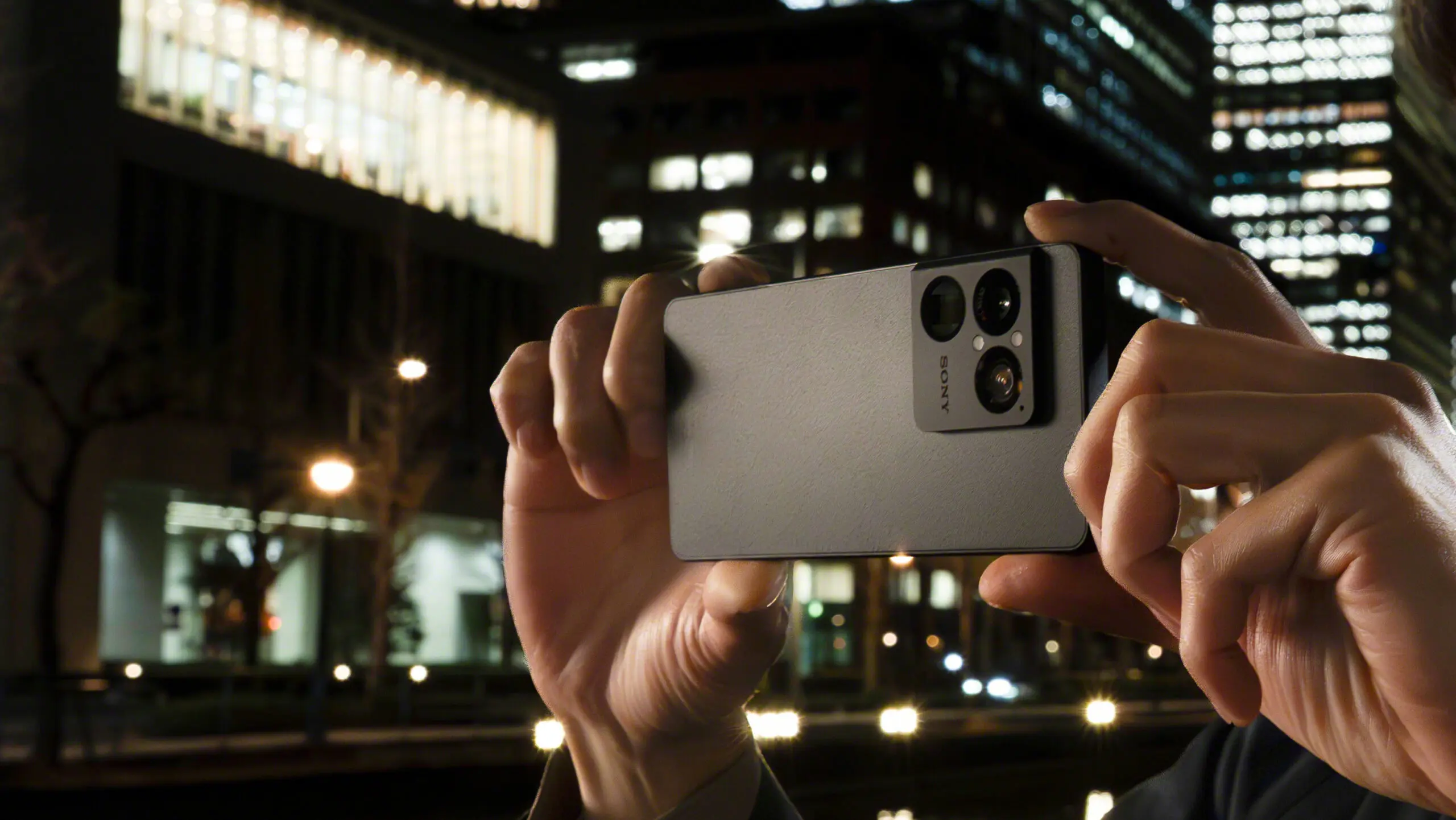
Sony officially launched the Xperia 1 VIII earlier this week, marking the company's latest attempt to capture a slice of the premium smartphone market. The device features a significant redesign and a new telephoto sensor that is nearly four times larger than its predecessor. However, the spotlight has quickly shifted from hardware upgrades to a controversial new software feature: the AI Camera Assistant.
This AI-powered tool is designed to offer suggestions for more expressive photos, ostensibly helping users capture memorable images with creative adjustments. Sony prominently advertised the feature on the Xperia 1 VIII's product page, showcasing side-by-side comparisons of original photos and the AI-enhanced versions. But instead of impressing potential buyers, these comparisons have sparked widespread mockery and disbelief.
The Marketing Mishap
In the shared comparison shots, the AI Camera Assistant's suggestions appear noticeably washed out and overexposed compared to the original images. In all three examples provided by Sony, the AI-altered photos lack contrast, have blown-out highlights, and demonstrate a loss of detail that many professional and amateur photographers would consider detrimental. The original shots, by contrast, are well-exposed with accurate colors and balanced highlights.
Social media reactions were swift and unforgiving. One user on X (formerly Twitter) wrote, “Best Anti-AI ads ever, thank you Sony.” Another commented, “If Sony, yes THAT SONY, doesn’t know what a good photograph looks like, then we’re definitely cooked as a society.” A third user questioned, “What the heck is going on with Sony? Who even approved this post? The AI photos look insanely bad.” The backlash highlights a fundamental disconnect between Sony’s marketing message and the actual output of its AI feature.
Background: Sony’s Camera Credentials
Sony has long been a dominant force in the camera industry. Its Alpha series mirrorless cameras are beloved by professionals and enthusiasts alike, and the company’s image sensors are used in a vast array of smartphones from competitors like Apple and Samsung. Given this pedigree, one might expect Sony’s own smartphone cameras to be among the best in the business. Yet, despite consistently putting impressive hardware into its Xperia devices, the company has struggled to translate that into commercial success in the mobile space.
The Xperia line has often been praised for its manual controls and professional-grade features, but criticized for inconsistent image processing, particularly in point-and-shoot scenarios. The addition of AI Camera Assistant seemed intended to address this gap by offering automated creative assistance. However, the poorly chosen sample images suggest that Sony's algorithm may still need significant refinement. The incident also raises questions about the team responsible for vetting marketing materials. In an era where every detail is scrutinized by an informed audience, presenting obviously flawed examples is a costly mistake.
The Role of AI in Smartphone Photography
AI has become a cornerstone of modern smartphone photography. Apple's Deep Fusion, Google's HDR+ with Pixel Neural Core, and Samsung's Scene Optimizer all use machine learning to enhance images—usually by improving dynamic range, reducing noise, and optimizing color. These systems are designed to produce more natural-looking results that appeal to the average user. Sony's approach with the Xperia 1 VIII seems different: it aims for “expressive” options, but the execution appears to sacrifice basic image quality for a heavy-handed, stylized look.
Experts in computational photography argue that AI should enhance—not replace—the underlying quality of a camera's output. Over-processing can lead to artifacts, unnatural skin tones, and loss of texture. In the case of Sony’s AI Camera Assistant, the examples show a clear regression: the AI brightens shadows and lifts mids, but in doing so, it clips highlights and desaturates colors. This strategy might work for certain artistic genres (e.g., high-key portraiture) but as a default suggestion, it fails to serve most users.
Historical Context: Sony’s Mobile Camera Journey
To understand why this controversy is particularly damaging, one must look back at Sony's mobile camera history. The Xperia Z series, launched in 2013, introduced a 20.7-megapixel sensor with excellent low-light capabilities, but software processing often fell short. Subsequent models like the Xperia XZ Premium boasted super slow-motion video and predictive capture, yet market share remained low. With the Xperia 1 series, Sony focused on cinema-grade features like 21:9 aspect ratio, CineAlta color tuning, and real-time eye AF. These features appealed to videographers but did little to win over mainstream consumers who prioritize computational photography simplicity.
The Xperia 1 VIII's new telephoto sensor—advertised as nearly four times larger than the previous generation—addresses a key hardware limitation. Telephoto lenses in smartphones often suffer from smaller sensors, resulting in poor light capture. A larger sensor should theoretically improve low-light zoom performance. However, hardware improvements can be undermined by poor post-processing. The AI Camera Assistant controversy suggests that Sony may be prioritizing gimmicks over fundamentals, at least in its marketing strategy.
User Reactions and Industry Implications
The online mockery extends beyond casual observers. Photography tech reviewers and industry analysts have weighed in, noting that Sony’s approach risks alienating its core audience of imaging enthusiasts. Many Xperia buyers are drawn to the brand precisely because of its no-oversharpening, natural look—an approach that stands in contrast to the heavy processing of competitors. By showcasing AI-altered images that are inferior, Sony inadvertently reinforces the perception that it doesn’t understand its own user base.
On platforms like Reddit and X, users have created memes comparing Sony’s AI outputs to amateur Photoshop filters. Some have even used Sony’s own AI suggestions as examples of “what not to do” in photo editing. The irony is not lost: Sony, a company known for producing some of the world’s best image sensors, is being lampooned for producing one of the worst AI photo enhancements seen in recent marketing.
What This Means for the Xperia 1 VIII's Success
The Xperia 1 VIII faces significant competitive pressure from the Samsung Galaxy S25 Ultra, the iPhone 16 Pro Max, and the Pixel 9 Pro. These devices have refined their computational photography over years, and any stumbles in software could be fatal. While the Xperia 1 VIII's hardware specs are impressive—including a Snapdragon 8 Gen 4 processor, a 4K OLED display, and improved haptics—the camera is still the main differentiator.
If Sony cannot convincingly demonstrate that its AI Camera Assistant adds value, potential buyers may dismiss the entire camera system as flawed. This is especially critical given that the Xperia line does not have the brand recognition or ecosystem lock-in of Apple or Samsung. A single marketing blunder, while not catastrophic, can amplify existing doubts about Sony’s mobile strategy.
It remains to be seen whether Sony will issue a statement or adjust the feature before the phone ships to customers. The company has not responded to the backlash publicly, and the product page still displays the original sampling. This steadfastness suggests either a belief that the images are indeed attractive to some users, or an unwillingness to admit a mistake. Either way, the controversy has generated attention—albeit largely negative—for the Xperia 1 VIII's camera system.
Broader Lessons for AI in Marketing
This incident also serves as a cautionary tale for other companies leveraging AI in their marketing. The temptation to showcase AI-generated enhancements can backfire if the output is not meticulously vetted. Consumers are increasingly knowledgeable about photography and can spot over-processing or degradation. The key to successful AI marketing is to show clear improvements: better dynamic range, more natural colors, and preserved detail. Sony’s failure to do so undermines confidence not just in this feature, but in the company’s overall camera expertise.
In the end, Sony’s Xperia 1 VIII may still be a capable smartphone with excellent hardware. But the AI Camera Assistant debacle casts a shadow over its launch. To recover, Sony needs to either refine the AI tool based on user feedback or refocus its marketing on the genuine strengths of the device: the large telephoto sensor, the manual controls, and the video-centric features that have long distinguished the Xperia line from its rivals. As of now, the company seems committed to its messaging, despite the online scorn. Whether that decision will hurt sales remains to be seen, but one thing is certain: the conversation about Sony’s camera phone has become much more animated than the company probably intended.
Source: Android Authority News