

Bitcoin held above $61,000 on Thursday, gaining nearly 5% over the past 24 hours, as a softer-than-expected U.S. jobs report and dovish comments from Federal Reserve officials boosted risk appetite. The cryptocurrency climbed past $62,000 earlier in the session before settling near $61,500, still up about 2.7% on the day. The move occurred against a backdrop of sharp declines in momentum stocks, particularly those tied to artificial intelligence and bitcoin mining infrastructure.
Bitcoin and Yen Strengthen Together
Bitcoin’s rally was accompanied by a strengthening Japanese yen, which rose from a 40-year low of 162.84 to 161.20 per dollar on Thursday. The yen’s sudden upswing during European hours sparked speculation that the Bank of Japan may have intervened to support its weakening currency. From a crypto perspective, bitcoin and the yen have developed a strong positive correlation in recent weeks, as both assets benefit from a weakening U.S. dollar. The correlation reflects shared sensitivity to Federal Reserve policy expectations: when the dollar falls on dovish Fed signals, both bitcoin and the yen tend to gain.
Fed Chair Kevin Warsh told the ECB forum in Sintra on Wednesday that inflation risks have come down, marking a notably softer tone from the hawkish June dot plot that had triggered weeks of ETF outflows and a bitcoin selloff from $71,000 to below $58,000. “Rate hikes are not happening,” wrote Leeker Capital CIO Quinn Thompson, adding that the recent labor market stabilization showed its first signs of cooling and that inflation will cycle lower in coming months. The dovish repricing lifted Treasury bonds, with the 10-year yield dipping four basis points to 4.46% after the jobs report.
U.S. Jobs Data Disappoints
The government’s Nonfarm Payrolls report released Thursday morning showed the U.S. added just 52,000 jobs in June, far below economist forecasts of 110,000. May’s gain was also revised down to 129,000 from an originally reported 172,000. The unemployment rate, however, dipped to 4.2% from 4.3%, but that decline occurred alongside a sizable drop in the labor force participation rate to 61.5% from 61.8%. The soft print reinforced expectations that the Federal Reserve will not raise interest rates at its July or September meetings, a scenario that had been priced in earlier this month after strong job gains in May.
Bitcoin reacted positively to the data, holding near $61,300 immediately following the release. Matt Mena, senior crypto research strategist at 21Shares, said the weaker-than-expected report strengthens the case for bitcoin as easing labor market conditions reduce pressure on the Fed to raise rates. He noted that bitcoin is “well positioned for a constructive second half of the year” and that a combination of improving technicals, supportive July seasonality and stronger on-chain fundamentals puts $100,000 “increasingly within reach” by year-end if current trends persist.
Momentum Stocks Plunge: AI Chips and Miners Hit Hard
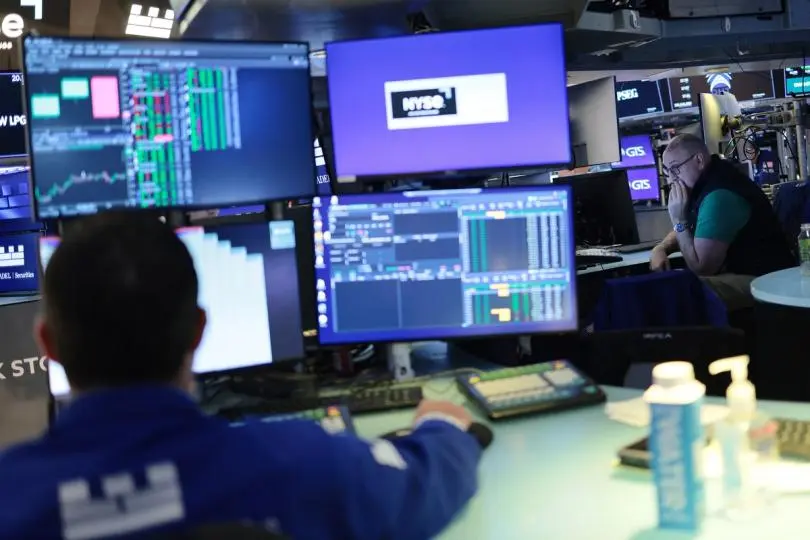
While bitcoin rallied, the broader stock market saw a dramatic reversal in momentum-driven sectors. Goldman Sachs’ U.S. High Beta Momo basket—which includes high-flying memory and chip stocks such as Micron, SanDisk, Intel, and Lam Research—plunged again on Thursday, bringing the two-day loss to more than 23%. That marked the worst two-day decline for the group since the 2020 Covid market selloff. The Nasdaq, which opened higher, reversed and fell 0.6% in late morning trade, with AI-related favorites like Micron (MU), AMD (AMD), SanDisk (SNDK), and Intel (INTC) dropping 4% to 10%.
The selloff extended to bitcoin miners that have repositioned as AI compute providers. Cipher Mining (CIFR), IREN (IREN), and TeraWulf (WULF) each fell roughly 10%, and are now down as much as 40% from their respective all-time highs. Core Scientific (CORZ), Hut 8 (HUT), and Riot Platforms (RIOT) were also lower by closer to 10%. The selling pressure was intensified by a Bloomberg report that Meta (META) is creating a new business unit called “Meta Compute” to commercialize excess GPU capacity by selling it to third-party customers. The report challenged the long-held assumption that AI compute capacity is scarce, raising the prospect of a more competitive supply environment for these neocloud companies.
Some digital asset bulls have suggested that this sort of reversal in what has been an historic momentum trade might be necessary to send capital back into crypto. With AI chip stocks and their mining infrastructure cousins falling sharply, investors may rotate into alternative risk assets like bitcoin, which had already corrected about 14% in June.
Uniswap Surges 15% on Robinhood Integration
Amid the broader market turbulence, Uniswap (UNI) stood out with a 15% gain over the past 24 hours, much of it occurring after Uniswap went live on Robinhood’s blockchain as primary automated market maker. The integration allows Robinhood users to access decentralized exchange liquidity directly, marking a significant step for DeFi adoption by traditional brokerages. Geoffrey Kendrick, head of digital asset research at Standard Chartered, wrote in a note to clients that “these are exactly the type of partnerships I expect to come to DeFi over the next several quarters, and Uniswap specifically. The market is massively underestimating the potential for these partnerships on quality trusted DeFi protocols.”
The move also highlights the growing trend of tokenization and onchain finance. Securitize (SECZ), a tokenization specialist that brings stocks and funds onchain with partners like BlackRock and Apollo, made its public debut on the NYSE on Thursday, trading up 8% in the opening minutes. The debut could serve as a litmus test for investor appetite for pure-play tokenization, one of the hottest trends in crypto and finance.
Other Notable Developments
Billionaire hedge funder Dan Loeb tweeted “HODL” in a one-word message, sparking speculation of renewed interest in bitcoin. Loeb’s firm Third Point earlier this year revealed a stake in Hut 8, but that investment was more about the company’s data center business rather than a bet on bitcoin mining. Third Point lost $60 million years ago when it invested in FTX before the exchange’s collapse.
Meanwhile, Michael Saylor’s Strategy saw its common stock (MSTR) rise 8.15% to $101, recovering from a low of $81 one week ago, while its preferred stock (STRC) rose 3% to above $90 after falling to $71 last week.
Binance, the world’s largest crypto exchange, experienced over $2 billion in net outflows over the past seven days, according to CoinMarketCap data. CryptoQuant analyst Darkfost noted that BTC inflows of less than 1 BTC on Binance have fallen to a monthly average of 329 BTC per day, the lowest level in the exchange’s history, compared with 2,690 BTC per day at the 2021 cycle peak and 3,700 BTC per day in 2018. Binance is no longer serving some EU users after missing the July 1 deadline to secure authorization under Europe’s Markets in Crypto-Assets framework.
Labor Market and Fed Outlook
The disappointing jobs report adds to the narrative that the U.S. economy is cooling, which could allow the Fed to begin cutting rates as early as September. One month ago, as markets were freaking out over May’s blowout 172,000 jobs gain (since revised down to 129,000), investment strategist Rosanna Prestia said it was a one-off due to hospitality hires for the World Cup. Now, with June’s miss, doves are taking a victory lap. “Cuts are the base case now,” Prestia said Thursday morning.
The 10-year Treasury yield fell about four basis points to 4.46%, and the 2-year yield fell five basis points. Lower bond yields typically support bitcoin and other risk assets by reducing the opportunity cost of holding non-yielding assets.
Bitcoin’s rally above $62,000 briefly was its first time above that level in about 10 days, though it remains about 13% lower on a month-over-month basis. The cryptocurrency had been under pressure from ETF outflows, hawkish Fed rhetoric, and the unwind of the AI momentum trade. However, the combination of dovish policy signals, a weaker dollar, and the potential for capital rotation out of overhyped tech stocks could provide tailwinds for the rest of the third quarter.
As the session progressed, the Nasdaq remained near its session low, off 1.5%, while bitcoin held above $61,600. The yen continued to trade near 161, with traders watching for further BOJ intervention. The next major catalyst will be Friday’s U.S. jobs report, but Thursday’s print has already shifted expectations significantly.
Source: Coindesk News