

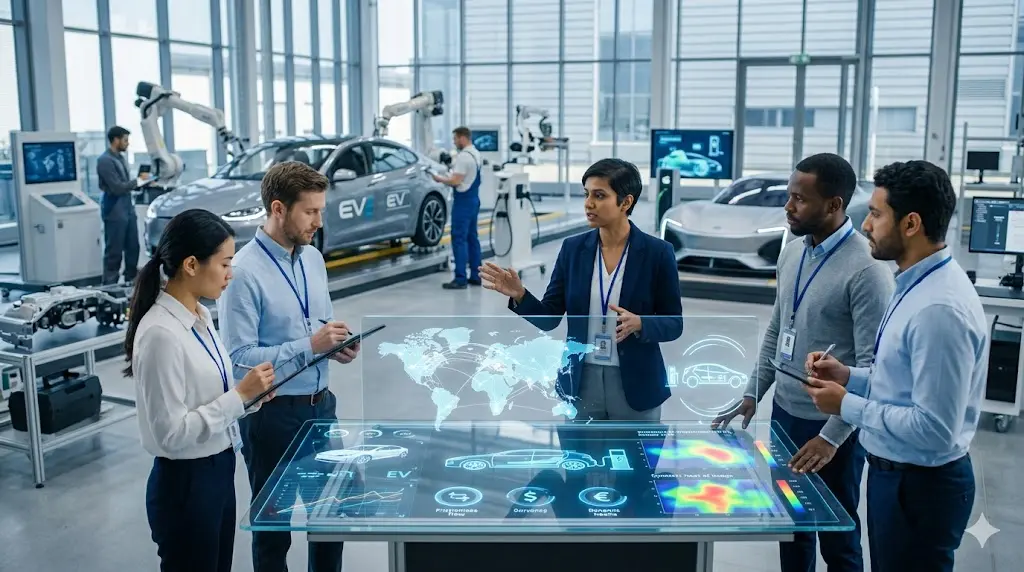
Global research on digital payments in the automotive industry shows something pretty clear: cars are no longer just machines for transport, they’re turning into payment-enabled devices. From paying tolls without stopping to buying coffee from inside a vehicle, money movement is slowly embedding itself into driving experiences. And if you’re in automotive, fintech, or mobility services, you can’t ignore how fast this shift is happening.
Here’s the thing—this isn’t just about convenience. It’s about control, data, and new revenue streams that most companies are still underestimating.
Digital payments in the automotive industry are transforming vehicles into connected commerce hubs. Drivers can now pay for fuel, tolls, parking, and services directly from their cars. The trend is driven by connected car technology, fintech integration, and demand for frictionless experiences. Companies that adapt early are gaining stronger customer retention and new monetization paths.
What Is Global Research on Digital Payments in the Automotive Industry?
Digital payments in automotive means the integration of payment systems directly into vehicles and mobility ecosystems so users can complete transactions without leaving the driving environment.
In simple terms, your car becomes a wallet on wheels.
This includes:
Paying tolls automatically as you pass
Ordering and paying for fuel without a cashier
Subscription-based vehicle features
In-car commerce like food or charging services
Global research in this space studies how different countries, manufacturers, and payment networks are building these systems, and what impact they have on user behavior and revenue models.
In my experience, what most reports miss is how quickly drivers adapt once friction disappears. People don’t resist convenience for long—they just expect it.
Why Digital Payments in the Automotive Industry Matters in 2026
By 2026, cars are deeply connected to cloud platforms, mobile apps, and financial ecosystems. That connection is what makes digital payments so powerful inside vehicles.
The shift is happening for a few reasons, but let me be direct: it’s mostly about reducing friction and increasing monetization per user.
Automakers are no longer just selling vehicles—they’re selling ecosystems. And payments sit at the center of that ecosystem.
A key external analysis from McKinsey highlights that connected mobility services could generate significant recurring revenue streams for manufacturers when paired with digital payment systems.
What most people overlook is how payments quietly change ownership psychology. Once a driver is used to paying for features inside the car, subscription fatigue becomes less of a barrier.
How Digital Payment Integration Works — Step by Step
Let’s break it down in a simple flow that shows how a typical in-car payment system works.
1. Vehicle connects to a secure identity system
The car is linked to a user profile, often through a mobile app or onboard system.
2. Payment credentials are stored securely
Users add cards, wallets, or bank details once, then authorize recurring use.
3. Service detection triggers payment options
When the car approaches a service—fuel station, toll booth, or parking system—it recognizes the service automatically.
4. Transaction is confirmed inside the vehicle
The driver gets a prompt on the dashboard or voice assistant for approval.
5. Payment is processed instantly
Funds are transferred without needing external devices or manual input.
6. Receipt and data sync
The system stores transaction history for user tracking and service optimization.
From what I’ve seen, step 3 is where the real innovation sits. That “context awareness” is what turns a car into a commerce interface instead of just a transport tool.
Common Misconception: “It’s Just About Contactless Payments”
A lot of people assume this is just NFC or tap-to-pay inside a car. That’s a shallow view.
The reality is bigger. These systems are becoming predictive. They don’t wait for you to act—you act because the system suggests it at the right time.
That shift from reactive to predictive commerce is where things get interesting, and honestly a bit uncomfortable for traditional payment providers.
Expert Tips — What Actually Works in This Space
Here’s what I’ve noticed after looking at multiple deployments across mobility ecosystems.
First, simplicity wins every time. If drivers need more than two confirmations, adoption drops fast. Nobody wants to “manage payments” while driving.
Second, trust is everything. One failed transaction inside a vehicle feels worse than five failed mobile payments. It sticks in memory.
Third, partnerships matter more than technology alone. Payment networks, automakers, and mobility platforms have to align tightly, or the system becomes fragmented.
One more personal opinion: companies overinvest in flashy dashboards and underinvest in backend reliability. That imbalance shows quickly when systems scale.
Real-World Mini Case Studies
Let’s look at two realistic scenarios that reflect how this is playing out.
Case 1: Urban Toll Automation in a High-Density City
A city introduced a system where vehicles automatically pay toll charges as they pass through congestion zones. Drivers don’t stop or interact. Over time, traffic flow improved and payment compliance increased without enforcement pressure.
The surprising part? People stopped noticing toll payments altogether, even when costs slightly increased.
Case 2: Fuel Station In-Car Payment Integration
A fuel network partnered with vehicle software providers to allow in-car fuel payments. Drivers authorize pump selection from their dashboard, fill fuel, and leave without visiting a cashier.
What stood out was behavioral change—users started choosing stations based on digital compatibility rather than fuel price alone.
What Most People Overlook About Automotive Digital Payments
Here’s a counterintuitive point: the biggest winner might not be automakers or payment providers—it could be data platforms.
Every transaction inside a vehicle creates context-rich behavioral data: where people go, what they buy, how often they stop, and even time-of-day patterns.
That data is more valuable than the transaction fee itself in the long run.
In my view, that’s the real battleground nobody talks about openly.
Expert Tips / What Actually Works in Real Deployments
Let me add a few grounded insights based on how these systems behave at scale.
Latency is the silent killer. Even a one-second delay inside a vehicle feels longer than on a phone.
Offline capability matters more than people expect. Cars don’t always have perfect connectivity, especially in highways or underground parking.
And user consent design is underrated. If drivers feel “watched,” adoption slows down, even if the system is technically efficient.
A report from OECD research on digital infrastructure confirms that trust and usability remain key barriers in embedded financial systems across mobility sectors.
People Most Asked About Digital Payments in the Automotive Industry
What is driving digital payments in cars?
Connected vehicle technology and demand for frictionless user experiences are the main drivers. Automakers also want recurring revenue streams beyond vehicle sales.
Are in-car payments safe to use?
In most cases, yes. They use encryption, tokenization, and multi-layer authentication. However, user trust still depends on transparency and system reliability.
Do drivers actually use these systems?
Yes, but adoption varies. High-usage scenarios include tolls, parking, and fuel payments. More complex services are still gaining traction.
Will cars replace mobile wallets?
Not fully. Cars complement mobile wallets rather than replace them. The phone still acts as the primary identity layer in many systems.
What industries are most affected?
Fuel stations, toll operators, parking systems, and in-car service providers are the most directly impacted.
Is this trend global or region-specific?
It’s global, but adoption speed differs. Highly urbanized regions tend to adopt faster due to infrastructure readiness.
For businesses aiming to scale visibility in this evolving digital mobility ecosystem, platforms like PR Wires and Rank Locally UK offer powerful press release distribution services, SEO services, and digital marketing support designed to improve brand visibility, organic traffic, and SEO ranking. These solutions help companies gain high authority backlinks, expand media coverage, and achieve instant publishing across global news distribution networks, making them valuable for startups, agencies, and enterprises seeking stronger online presence.