

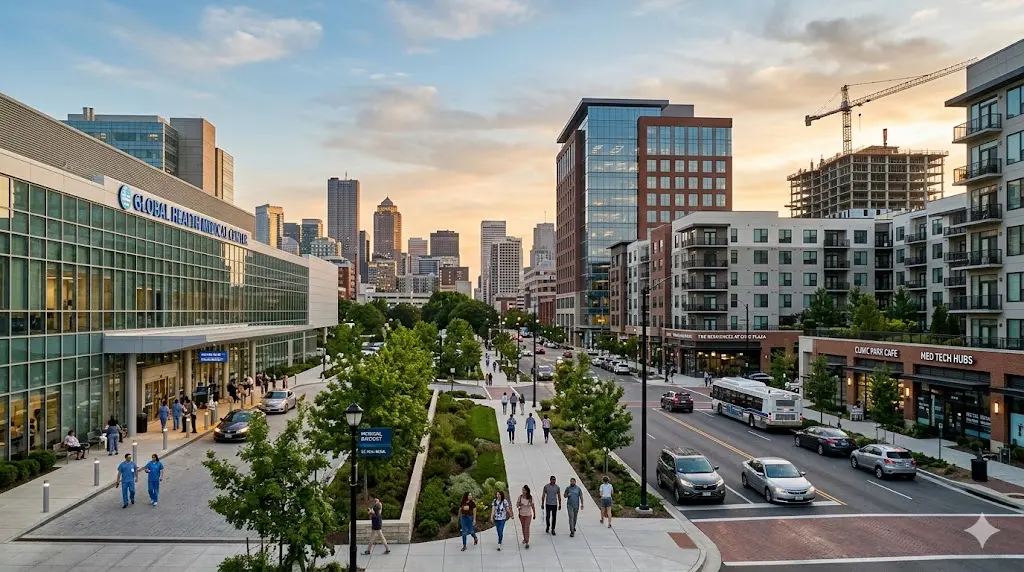
Healthcare access is no longer just a public policy issue. It has become one of the strongest forces influencing where people choose to live, where businesses expand, and where investors place their capital. If you're wondering why healthcare access reshapes real estate investment, the short answer is simple: communities with strong medical infrastructure tend to attract stable populations, higher-income residents, and long-term property demand.
I've seen investors focus only on job growth and miss the healthcare factor entirely. That's a mistake. Hospitals, clinics, specialty centers, and senior care facilities often create more durable real estate opportunities than trendier economic indicators.
Healthcare access reshapes real estate investment by increasing population growth, boosting property values, attracting retirees and professionals, and creating demand for residential, commercial, and medical properties. Areas with strong healthcare systems usually experience more stable real estate appreciation and lower vacancy rates.
Why healthcare access reshapes real estate investment is becoming one of the most important questions for property buyers, developers, and institutional investors. People want to live where they can reach quality medical care quickly. Businesses want employees in healthy, well-supported communities. Retirees often prioritize hospitals over entertainment districts.
Here's the thing: a world-class hospital can have the same economic effect as a major employer. Sometimes even more.
When a region improves healthcare access, housing demand often rises, commercial development accelerates, and long-term investment prospects strengthen. This connection is changing how investors evaluate markets in 2026 and beyond.
What Is Healthcare Access and Why Does It Matter?
Healthcare Access: The ability of residents to obtain timely, affordable, and high-quality medical services, including hospitals, clinics, specialists, emergency care, and preventive treatment.
In plain English, healthcare access means people can get the care they need without traveling long distances or facing excessive delays.
This matters because healthcare directly affects quality of life. Families with children want pediatric care nearby. Older adults need specialists and hospitals. Employers seek locations where workers can stay healthy and productive.
From a real estate perspective, medical infrastructure acts as a confidence signal. It tells buyers and tenants that the community is prepared for long-term growth.
Why Healthcare Access Reshapes Real Estate Investment
The relationship between healthcare and property markets has become stronger in recent years.
Several major trends are driving this shift:
Aging Populations Are Moving to Medical Hubs
Millions of retirees are choosing communities with advanced healthcare networks. This increases demand for condominiums, single-family homes, assisted living facilities, and rental properties.
Remote Workers Prioritize Essential Services
Many people can now work from anywhere. Instead of choosing locations solely for nightlife or office proximity, they often select areas with excellent hospitals and healthcare systems.
Institutional Investors Follow Stability
Pension funds, private equity groups, and REITs increasingly target healthcare-driven markets because they tend to offer steady occupancy and lower volatility.
Medical Employment Fuels Housing Demand
Hospitals are among the largest employers in many cities. Doctors, nurses, researchers, and support staff all need housing, retail services, and office space.
Preventive Health Influences Migration Patterns
What most people overlook is that people aren't just moving for treatment. They're moving to reduce future risk. Living near healthcare provides peace of mind, and that emotional factor has real economic consequences.
How to Evaluate Healthcare Access for Real Estate Investment
If you want to use healthcare trends to guide property decisions, follow this step-by-step approach.
1. Identify Major Medical Institutions
Look for large hospitals, academic medical centers, and specialty clinics. These facilities attract talent, funding, and ongoing development.
2. Study Population Demographics
Markets with aging populations or growing families often place a premium on healthcare proximity.
3. Analyze Employment Data
Healthcare is one of the most resilient employment sectors. Rising medical employment usually supports local housing demand.
4. Examine Infrastructure Expansion
New hospitals, outpatient centers, and urgent care facilities often signal future appreciation.
5. Compare Property Performance
Check home prices, rental rates, and occupancy near healthcare hubs versus surrounding neighborhoods.
6. Assess Government and Private Investment
Public funding and private capital flowing into healthcare often trigger broader community development.
Expert Tip: If a city is investing heavily in healthcare while expanding transportation and housing, you've probably found a market with unusually strong long-term potential.
Real-World Example: The Hospital Effect
Consider a mid-sized city that opens a new regional medical center employing 4,000 people.
Within three years:
Nearby apartment occupancy rises above 95%
Home prices increase as medical professionals relocate
Retail centers expand to serve the growing population
Developers build senior housing and medical office space
Investors begin acquiring surrounding land
This isn't theoretical. Similar patterns have played out in numerous cities around the world.
A hospital doesn't just treat patients. It anchors an economic ecosystem.
How Healthcare Infrastructure Supports Property Values
Property values respond to fundamentals, and healthcare strengthens several of the most important ones.
Population Stability
Communities with strong medical services retain residents during uncertain times.
Higher Household Income
Medical professionals generally earn above-average salaries, supporting stronger housing markets.
Increased Investor Confidence
Reliable institutions reduce perceived risk.
Demand Across Property Types
Healthcare affects residential real estate, medical office buildings, retail centers, hotels, and senior housing.
Reduced Vacancy Risk
Areas anchored by healthcare employment often maintain consistent occupancy.
The Rise of Medical Real Estate
One of the fastest-growing sectors in property investment is healthcare real estate.
This includes:
Medical office buildings
Outpatient surgery centers
Diagnostic facilities
Rehabilitation centers
Senior living communities
Skilled nursing facilities
In my experience, medical real estate tends to be less sensitive to short-term economic swings than traditional office assets. People may postpone vacations, but they rarely postpone essential medical care forever.
Why Residential Investors Should Pay Attention
Even if you're buying single-family homes or multifamily properties, healthcare access matters.
Families often pay a premium to live near reputable hospitals and specialists. Retirees actively search for neighborhoods with short travel times to medical centers. Healthcare workers themselves create dependable rental demand.
I've seen neighborhoods near expanding hospitals outperform nearby districts with similar housing stock but weaker infrastructure.
That difference can be surprisingly large.
The Counterintuitive Truth About Healthcare and Luxury Real Estate
Here's a hot take: healthcare access can matter more than prestige.
Many investors assume luxury amenities drive the highest returns. In reality, affluent buyers increasingly prioritize practical essentials, especially as they age.
A waterfront view is attractive. A top-rated hospital 10 minutes away may be even more valuable.
This shift is reshaping demand in suburban and secondary markets that once received little attention.
Healthcare Access and Senior Housing Investment
Senior housing is perhaps the clearest example of why healthcare access reshapes real estate investment.
Older adults want:
Quick access to emergency care
Nearby specialists
Rehabilitation services
Long-term support options
Developers often cluster independent living, assisted living, and memory care communities around established medical corridors.
What most people miss is that this isn't just a convenience issue. It's a core driver of occupancy and pricing power.
Healthcare Corridors and Mixed-Use Development
Medical districts increasingly evolve into full mixed-use neighborhoods.
Around major healthcare hubs, you often find:
Apartments
Hotels
Restaurants
Research facilities
Retail centers
Wellness businesses
These districts attract physicians, patients, students, and visitors, creating constant economic activity.
For investors, that means multiple ways to participate in growth.
Expert Tip: Follow hospital expansion announcements. Land values near future healthcare corridors often rise before construction is completed.
Risks Investors Should Consider
Healthcare-driven markets are attractive, but they aren't automatic wins.
Watch for:
Overbuilding
Too much development can suppress rents temporarily.
Policy Changes
Healthcare reimbursement and regulatory shifts may affect some specialized property sectors.
Local Competition
Multiple hospitals in one region can divide demand.
Demographic Weakness
A strong hospital alone may not overcome population decline.
Smart investors combine healthcare analysis with broader economic research.
Personal Anecdote: What Changed My View
Years ago, I evaluated two suburban markets with nearly identical price points. One had better shopping and newer homes. The other had a major hospital expansion underway.
At first glance, the shopping-focused market seemed more attractive.
Five years later, the hospital market outperformed in home values, rental demand, and commercial development. New physicians moved in, senior housing was built, and retail followed the growing population.
That experience changed how I analyze property forever.
Healthcare wasn't a side factor. It was the foundation.
Expert Tips and What Actually Works
If you want to invest where healthcare access supports long-term growth, focus on these principles.
First, prioritize regions with expanding medical infrastructure rather than mature systems with limited room to grow.
Second, study demographic shifts. Retirees and families are especially sensitive to healthcare quality.
Third, look beyond hospitals to outpatient centers, rehabilitation facilities, and specialty clinics.
Fourth, consider adjacent property types such as rentals, retail, and hospitality.
Finally, be patient. Healthcare-led development often compounds over years, not months.
In most cases, slow and steady wins.
People Most Asked About Why Healthcare Access Reshapes Real Estate Investment
Does healthcare access increase property values?
Yes. Areas with high-quality medical services often attract more residents and higher-income households, which can push home prices upward over time.
Why do retirees influence healthcare-based real estate demand?
Retirees frequently choose locations based on hospital quality and specialist availability, increasing demand for housing near medical centers.
Is medical real estate a good investment?
It can be. Medical office buildings and healthcare facilities often benefit from long-term demand and relatively stable tenants.
Do hospitals create local economic growth?
Absolutely. Hospitals generate employment, attract related businesses, and stimulate residential and commercial development.
Can healthcare matter more than schools or transportation?
In some markets, yes. For older buyers and healthcare professionals, medical access may be the top location priority.
Which property types benefit most from healthcare access?
Residential rentals, senior housing, medical offices, retail centers, and hotels near healthcare districts often perform well.
How can investors spot healthcare-driven markets early?
Watch for hospital expansions, rising healthcare employment, and public infrastructure improvements around medical corridors.
Final Thoughts
Why healthcare access reshapes real estate investment comes down to one simple truth: people want to live where they feel secure. Quality medical care supports that sense of security, and real estate markets respond.
Healthcare infrastructure attracts residents, employers, retirees, and investors. It drives housing demand, supports property values, and creates opportunities across multiple asset classes.
If you're evaluating markets in 2026, don't treat healthcare as a secondary variable. In many cases, it's the hidden engine behind long-term real estate success.
Our network helps businesses, agencies, and investors boost brand visibility through PR Wires and Rank Locally UK. Combining press release distribution services, SEO services, and link building services delivers high authority backlinks, stronger SEO ranking, broader media coverage, and more organic traffic with instant publishing solutions designed to accelerate online growth.