

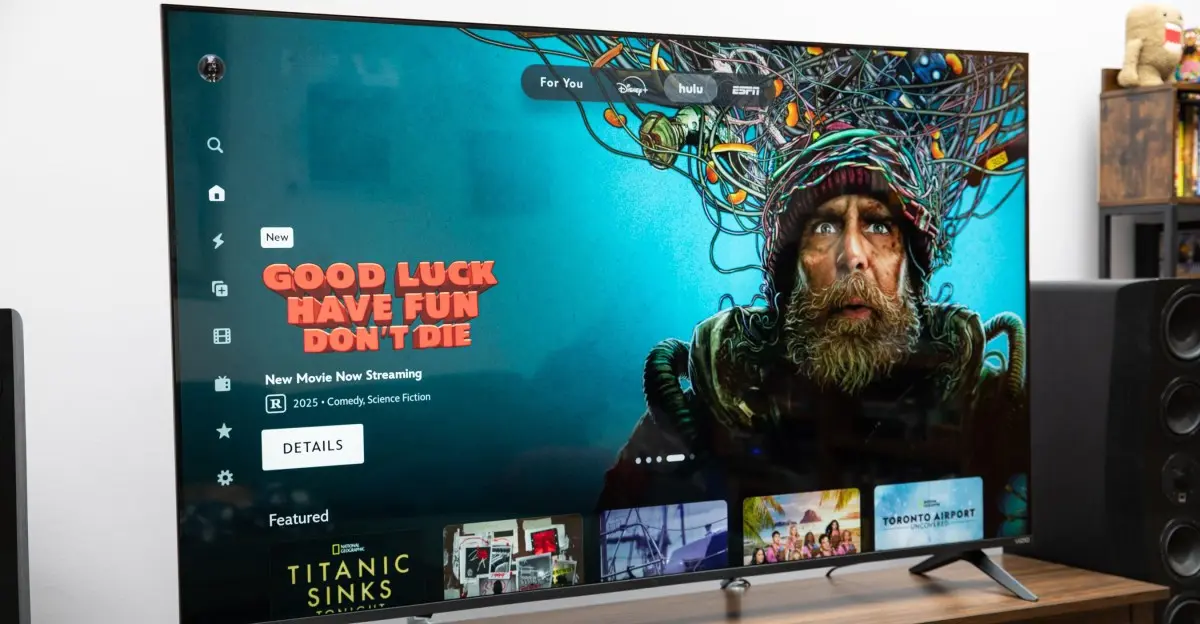
When Vizio launched its 65-inch Mini LED Quantum TV earlier this year, the immediate headline was the price: under $398 for a quantum-dot set, making it the most affordable such television available. Quantum dots, which enhance brightness and color accuracy, are typically reserved for more expensive models. But after spending time with the TV, a different story emerged: Vizio unintentionally created the best dumb TV on the market.
Background: Vizio and Walmart
Walmart acquired Vizio in 2024 primarily for its advertising business. Vizio's ad division had been responsible for all of the company's profits at the time of sale, and the retail giant saw an opportunity to leverage Vizio's operating system for targeted advertising. Consequently, the Vizio OS became the vehicle for data collection. The Mini LED Quantum TV now requires a Walmart account for certain features, and using any streaming apps mandates acceptance of an activity data policy that lets Walmart collect viewing habits. This is not unique; smart TVs from all major brands gather viewing data to serve personalized ads. However, the close integration with a retailer like Walmart raises privacy concerns, as watch history could influence shopping recommendations.
The Accidental Dumb TV
During the initial setup, the television asks users to sign in or create a Walmart account. Skipping this step leads to a warning about missing payment and subscription management. Users can then decline the activity data policy, which enables smart features. After a final warning that skipping means losing access to apps like Netflix and YouTube, one more decline renders the Vizio a dumb TV: no OS, just three HDMI inputs ready for external devices. Even the Wi-Fi can be forgotten entirely, ensuring no data transmission. This level of bypass is unprecedented among smart TVs, which typically force data collection to function.
The irony is that Vizio likely did not design this as a feature. The company's revenue model depends on advertising and data monetization. Allowing users to completely opt out may have been an oversight, but it provides a valuable option for those seeking a television without integrated tracking. For $400, the 65-inch model offers impressive performance: accurate colors in Calibrated Dark mode, a peak brightness of 936 nits in Calibrated mode, and solid HDR support including Dolby Vision and HDR10+. The IPS panel yields good viewing angles, though black levels are not as deep as VA panels, and blooming is visible in dark scenes. Motion handling is decent, though fast sports like Formula 1 can show slight blur.
Expanding the Context
The concept of a dumb TV has gained traction among privacy advocates and enthusiasts who prefer dedicated streaming devices like Apple TV, Roku, or Fire TV. These devices allow users to control data sharing and avoid built-in advertising. Vizio's accidental dumb TV mode fills a gap in the market: most smart TVs require internet connectivity and data acceptance for even basic features. The Mini LED Quantum, however, can be set up entirely offline. This is particularly appealing for those who want a large, high-quality display without the ecosystem lock-in and tracking.
Historically, Vizio faced backlash in 2017 when it was caught collecting viewing data without consent, settling with the FTC for $2.2 million. The current TV's privacy policy still allows data collection, but the option to skip it entirely reflects a potential shift. However, concerns remain about future software updates; Walmart could patch the loophole, forcing users to accept agreements. Until then, the TV is a unique proposition.
In terms of picture performance, the Mini LED Quantum punches above its price class. In SDR, it reaches about 309 nits in Calibrated Dark, while HDR highlights can hit 579 nits. The Calibrated mode goes up to 936 nits, making it suitable for bright rooms. The reflective screen can be distracting with direct light, but overall image quality satisfies most viewers. Gaming features include 4K/60Hz and 1080p/120Hz on 65-inch and larger sizes, though HDMI 2.0 limits bandwidth. The three ports are sufficient for most setups, and the inclusion of an ATSC 1.0 tuner is a plus for cord-cutters.
The TV's build reflects cost-cutting: a plastic back, wide-set feet with limited adjustment, and poor speaker quality (as is common for thin TVs). The remote is small and functional. Cable management is minimal—only one cable can be routed through each foot's channel. For those who prioritize picture quality over aesthetics, these are acceptable compromises.
If users decide to engage with the Vizio OS, they can limit data collection by disabling Viewing Data in the privacy menu. The OS is straightforward, supports all major apps, and includes AirPlay and Google Cast. However, it can be sluggish, and the default screensaver plays WatchFree+ channels with occasional ads. External streaming devices remain the better choice for a seamless experience.
The ability to turn the Mini LED Quantum into a dumb TV is a rare find. Most consumers are unaware of the option, but for privacy-conscious buyers, it's a game changer. At the current price, the 65-inch model offers exceptional value—$398 at Walmart, with 75-inch and 85-inch versions for $498 and $768 respectively. No other quantum-dot TV comes close to these prices, and the dumb TV capability adds an extra layer of appeal.
In a market flooded with smart TVs that harvest data, the Vizio Mini LED Quantum stands out not for its smart features but for its ability to ignore them entirely. Whether this was intentional or accidental, it meets a genuine need. Buyers must still weigh the risk of future updates, but for now, this is the best dumb TV you can buy—and arguably the best budget quantum-dot TV as well.
Source: The Verge News