

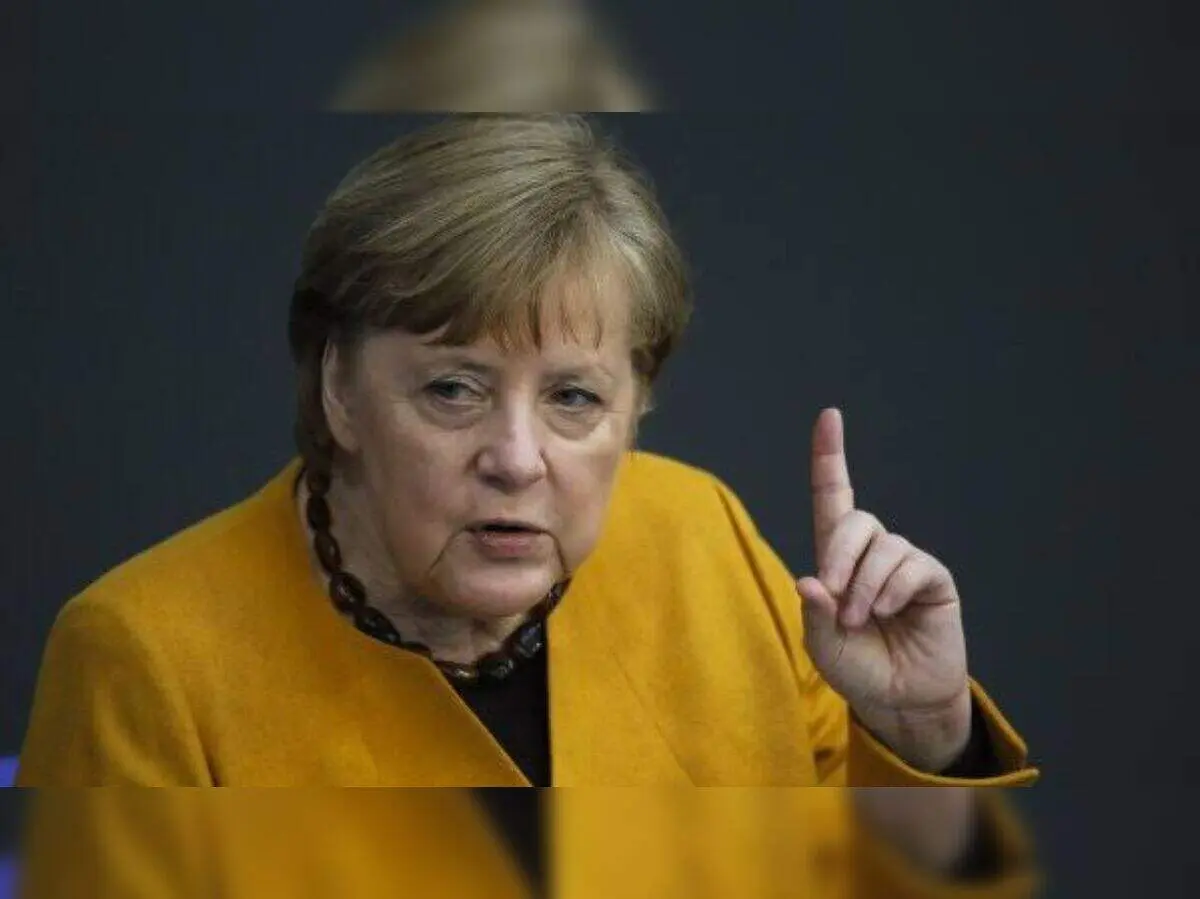
Angela Merkel, who served as Germany's chancellor for 16 years and is widely regarded as one of the most influential leaders of the 21st century, recently shared what she considers the best advice for life. Her message is simple yet profound: 'Anything that seems to be set in stone or inalterable can, indeed, change.' This statement, coming from a woman who grew up behind the Iron Curtain and later led a unified Germany through multiple global crises, carries the weight of lived experience.
Merkel's advice is rooted in the belief that every great change begins in the mind. She argues that our perceptions of what is possible are often the greatest barriers to progress. 'If you believe that something cannot be changed, you will never even try,' she has said in various interviews. 'But if you allow yourself to imagine a different reality, you have already taken the first step toward creating it.' This philosophy has guided her through the fall of the Berlin Wall, the reunification of Germany, the Eurozone debt crisis, the refugee crisis, and the COVID-19 pandemic.
The Power of Mindset in Leadership
Merkel's tenure as chancellor was defined by her calm, analytical approach to problem-solving. Trained as a physicist, she often applied scientific principles to governance: observe the data, consider multiple hypotheses, test solutions, and adapt. But underlying this method was a deep conviction that change is not only possible but inevitable. 'Nothing stays the same forever,' she told a gathering of young leaders. 'The question is whether you will be a passive observer or an active participant in shaping that change.'
Her advice resonates particularly in times of global uncertainty. When faced with challenges that seem insurmountable—be it climate change, geopolitical tensions, or personal setbacks—Merkel encourages a shift in perspective. 'Instead of asking why something is impossible, ask how it might become possible,' she suggests. This reframing unlocks creativity and resilience.
Early Life: Lessons from East Germany
Merkel's own life is a testament to the power of changed mindsets. Born in Hamburg in 1954, she grew up in East Germany, a state where freedom was severely restricted and the future seemed predetermined. Yet she excelled academically, earning a doctorate in quantum chemistry. When the Berlin Wall fell in 1989, she was 35 years old. Rather than accepting the status quo, she seized the moment, joining a new political party and quickly rising through the ranks. Within a decade, she became the first female chancellor of Germany.
Reflecting on that period, Merkel has said that the most important lesson she learned was that 'walls can fall, and borders can dissolve, but only after they have crumbled in people's minds first.' The mental barrier of believing that the East German regime was permanent had to be broken before any physical or political change could occur.
Pragmatism and Incremental Change
While Merkel advocates for visionary thinking, she is also a pragmatist. Her advice does not encourage reckless idealism but rather a steady, step-by-step approach to transformation. 'Big changes rarely happen overnight,' she notes. 'They are the result of many small decisions, each one guided by the conviction that a better outcome is possible.' This incrementalism is evident in her handling of the Eurozone crisis, where she insisted on fiscal discipline and structural reforms over quick fixes.
The idea that 'every great change begins in your mind' is not just a motivational slogan; it is a strategic tool. By mentally rehearsing desired outcomes, individuals and organizations can identify obstacles, devise plans, and build the resilience needed to persevere. Merkel often cites the example of Germany's Energiewende, or energy transition, which started as a vision of a sustainable future and has gradually become a reality through policy, innovation, and public support.
Applying the Advice in Personal Life
Merkel's advice extends beyond politics to everyday life. She encourages people to challenge their own limiting beliefs. 'How often do we tell ourselves that we are not capable of something, or that a situation is hopeless, simply because we have never seen it otherwise?' she asks. Breaking this cycle requires self-awareness and the courage to imagine alternatives. For instance, someone stuck in a dead-end job might begin by visualizing a more fulfilling career, then take small steps—acquiring new skills, networking, applying for positions—to turn that mental image into reality.
Merkel also emphasizes the importance of community in fostering change. 'No one changes the world alone,' she says. 'But when many minds share a belief that change is possible, collective action becomes powerful.' This echoes her approach to European unity: she tirelessly worked to build consensus among diverse nations, believing that cooperative change is more sustainable than unilateral action.
Lessons for Leaders and Citizens
The former chancellor's words offer a blueprint for leaders facing complex challenges. First, cultivate a mindset that embraces possibility rather than resignation. Second, communicate that vision clearly and persistently. Third, break down large goals into manageable steps. Fourth, build coalitions of like-minded people. Finally, maintain patience and perseverance, recognizing that change often unfolds in nonlinear ways.
For ordinary citizens, Merkel's advice is equally relevant. In an age of information overload and constant news cycles, it is easy to feel powerless. But by shifting the focus from what is wrong to what could be better, individuals can reclaim agency. 'You do not have to be a chancellor to make a difference,' she reminds young people. 'Start with your own community, your own job, your own family. Change is contagious.'
Merkel's own career illustrates this. She entered politics at a time when women in leadership were rare in Germany. She faced skepticism and underestimation but persisted, eventually becoming the country's longest-serving chancellor after Helmut Kohl. Her success was not due to charisma or oratory flamboyance but to her ability to see possibilities where others saw only obstacles.
The Role of Failure in Change
Not every attempt at change succeeds, and Merkel is candid about this reality. 'You will fail many times,' she admits. 'But failure is not the opposite of change; it is part of the process.' Each setback provides data for the next attempt. The key is to avoid letting failure reinforce the belief that change is impossible. Instead, treat failures as learning experiences that refine your approach.
During the refugee crisis of 2015, Merkel's decision to keep Germany's borders open was highly controversial. Many predicted it would fail. But she stood by her conviction that Germany could manage the influx and that humanitarian values must prevail. While the situation was messy and imperfect, it also led to integration efforts and policy adjustments over time. Merkel's willingness to take that risk was rooted in her belief that even deeply polarized situations can improve if people are willing to see new possibilities.
Conclusion-Free Final Thought
As the world continues to face unprecedented challenges—from climate change to technological disruption to political instability—Angela Merkel's advice remains a timeless reminder that the first step toward any meaningful transformation is a shift in the mind. The walls we perceive as unbreakable are often just barriers of thought. By daring to imagine that they can fall, we open the door to action. And once that door is open, even the most daunting of obstacles can be overcome, one step at a time.
Source: The Economic Times News