

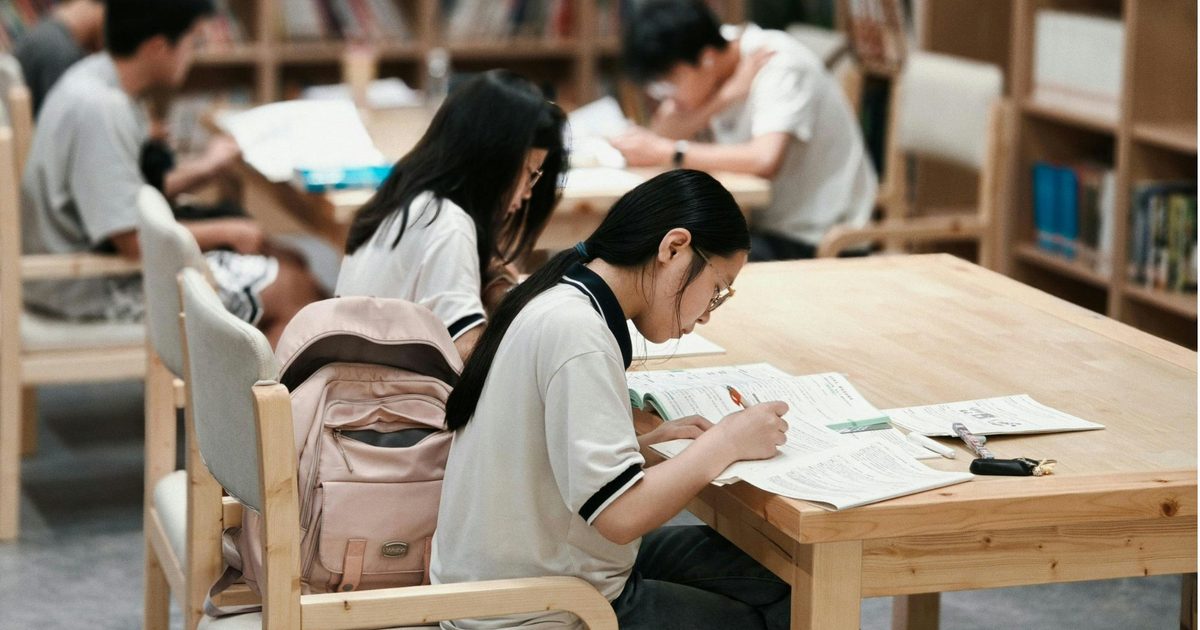
Every summer, roughly 10 million Chinese students confront a life-altering decision under extreme time pressure. After enduring the grueling Gaokao college entrance exam, they have only a few weeks to select their universities and majors, a choice that can dictate their entire career trajectory. Historically, families have relied on expensive expert guidance—paying hefty fees to private consultants, purchasing thick reference books, or following social media influencers—to navigate this critical process. However, a seismic shift is underway: free AI chatbots are quietly but rapidly taking over the college counseling industry.
The Gaokao, a single high-stakes test, determines not only university admission but also the field of study, as Chinese universities rarely allow students to switch majors later. This makes the post-exam decision even more consequential than it is for students in many other countries. For generations, families lacking connections or financial resources often made choices based on incomplete information, relying on word-of-mouth or guesswork. The emotional toll on students and parents alike is immense, leading to a booming market for professional guidance.
How AI chatbots are reshaping college planning
Chinese high schools typically offer little to no career counseling, so families have long sought external help. Now, technology giants have stepped in. Alibaba, ByteDance, Tencent, and Baidu have all launched dedicated AI tools specifically designed for college planning. These chatbots operate on a simple but powerful premise: students input their Gaokao scores, career interests, personality test results, and preferences such as tuition budget, geographic location, and desired campus atmosphere. The AI then cross-references this data against a comprehensive database of universities and programs, generating a personalized list categorized into reach, safety, and backup options based on eligibility criteria and historical admission data.
The scale of adoption is staggering. According to recent reports, Alibaba's Qwen chatbot alone had produced 23 million recommendation reports by early July of the current admissions cycle. Meanwhile, Tencent's Yuanbao bot reported answering over 200 million related questions during the same period. These numbers highlight the immense demand for accessible, data-driven guidance. The tools are available 24/7 on popular messaging platforms and mobile apps, making them far more convenient than scheduling appointments with human consultants who often have limited availability.
Moreover, the AI recommendations are not static. Many chatbots allow iterative refinement: students can adjust preferences, explore alternative career paths, or compare different universities side by side. This interactivity empowers users to make informed decisions without the pressure of a paid advisor steering them toward particular institutions. For many families, the biggest change is that high-quality admissions guidance is no longer reserved for those who can afford expensive consultants. A student from a rural village with a smartphone now has access to the same data and analytics that previously only wealthy urban families could buy.
Impact on the human counseling industry
The rise of AI is putting significant pressure on an industry built around information asymmetry and personal experience. Traditional college counseling in China ranges from individual tutors charging thousands of yuan to large agencies offering comprehensive packages. These consultants often rely on years of accumulated knowledge about university admission trends, hidden requirements, and negotiation strategies. However, AI can process vast amounts of public data—including admission cutoffs, employment outcomes for graduates, and alumni reviews—much faster than any human.
Some admissions consultants are now quietly using AI tools themselves to speed up research and generate initial recommendations. They then shift their focus toward services that require uniquely human skills: emotional support during the stressful decision process, mediating family discussions when parents and children disagree, and providing long-term career planning advice that goes beyond the immediate university choice. This hybrid model may become the norm, where AI handles data processing and human counselors provide empathy and nuanced judgment.
However, the threat to the traditional counseling industry is real. A 2024 survey by a Chinese education consultancy found that 35% of families with students aged 16-18 had used AI for at least part of their college planning, and among those, 70% said they would rely more on AI in the future. This shift is particularly pronounced in lower-tier cities where professional counselors are scarce or unaffordable. The democratization of information may ultimately force many human consultants to reinvent their services or risk obsolescence.
Despite the efficiency, experts caution that AI is not infallible. Chatbots can make mistakes—interpreting ambiguous personality assessments incorrectly, overlooking personal circumstances such as health conditions or family obligations, or failing to account for last-minute changes in university admission policies. The algorithms are only as good as the data they are trained on, and biases in historical data can perpetuate inequalities. For example, AI might recommend traditionally prestigious but restrictive programs to all high-scoring students, ignoring individual creativity or unique talents that don't fit established patterns.
Furthermore, the emotional component of decision-making cannot be automated. Many students experience anxiety, guilt, or pressure from parents, and a human counselor can provide reassurance, ask probing questions, and help align academic choices with long-term happiness. AI lacks the ability to perceive subtle emotional cues or build trust over multiple conversations. Therefore, most experts believe that AI will reshape college counseling rather than replace it entirely. The optimal outcome may involve a partnership: AI for personalized data analysis, humans for support and wisdom.
Another critical issue is the digital divide. While AI tools are free at the point of use, access to reliable internet, smartphones, and digital literacy is not universal. A separate study conducted by researchers at Peking University found that AI awareness and usage still skew heavily toward wealthier, more educated groups in urban areas. Students in remote villages or from low-income families may not know about these tools, or may lack the technical skills to use them effectively. This suggests that free tools alone may not fully level the playing field unless accompanied by educational campaigns and infrastructure investment.
The Chinese government has also begun to take notice. In early 2025, the Ministry of Education issued guidelines encouraging schools to incorporate AI literacy into the curriculum and to provide basic career counseling services. Some provinces are piloting programs that integrate AI recommendations with human-led workshops, aiming to combine the best of both worlds. Meanwhile, the tech companies behind the chatbots continue to refine their algorithms, adding features like voice interaction, multilingual support for ethnic minority students, and real-time updates from universities.
For the millions of students who take the Gaokao each year, the immediate impact is undeniable: admissions guidance is no longer a luxury good. A 17-year-old in a small town can now type their scores into a chatbot and receive within seconds a list of universities that matches their profile—a task that would have taken days of research and cost hundreds of dollars just a few years ago. This democratization of information is changing the landscape of higher education access in China, and its effects will be felt for decades as a generation makes more informed, data-driven choices about their futures.
Source: Digital Trends News