

TL;DR
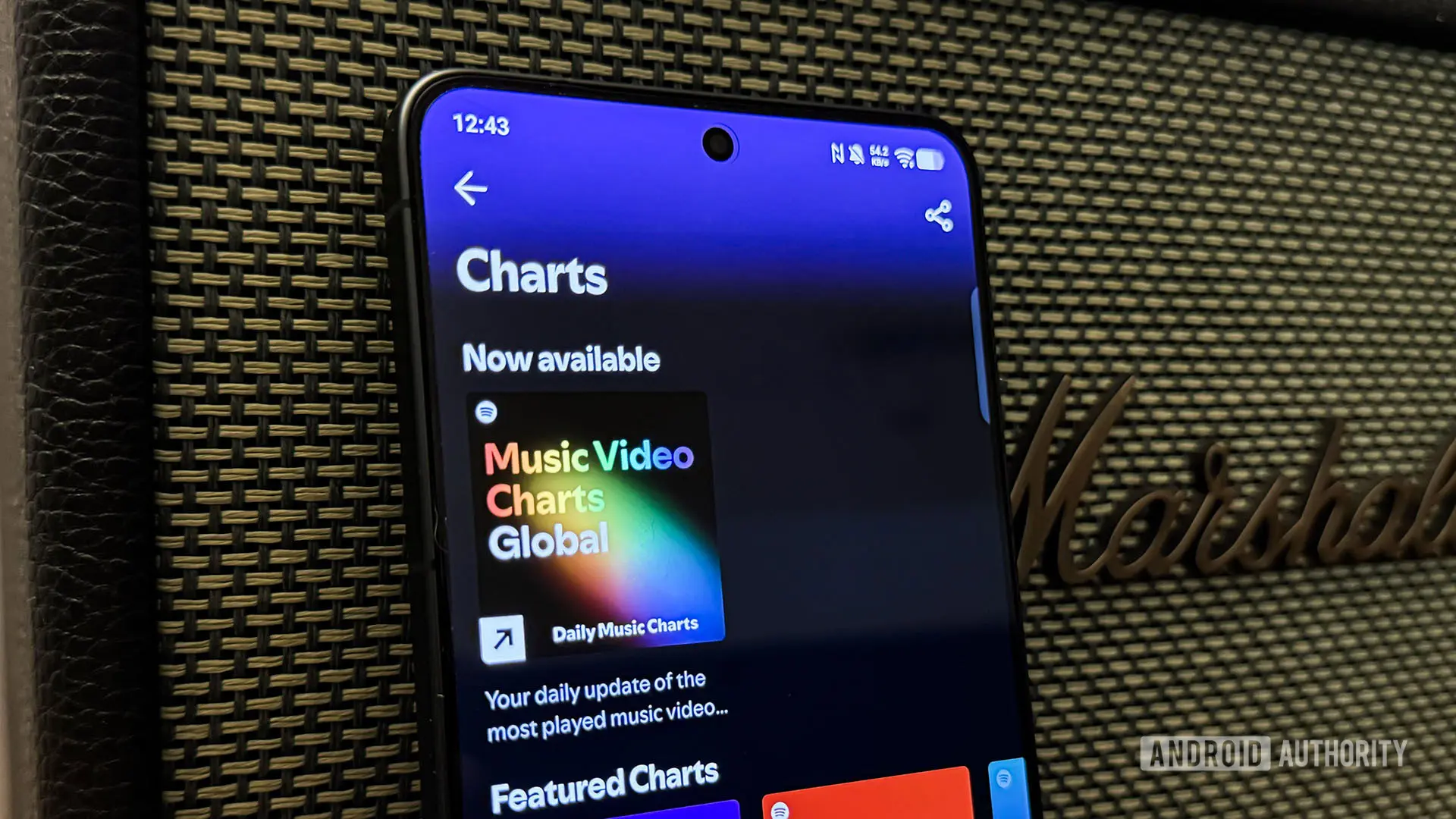
- Spotify has launched a new 'Music Video Charts Global' playlist.
- The new playlist will contain the top 50 most-streamed music videos.
- The playlist will be refreshed every day at 6:00 PM ET.
Spotify started showing music videos to its premium subscribers back in 2024 and gradually expanded the feature to the United States towards the end of 2025. Now, the company is taking a significant step further in its effort to convert loyal YouTube users into Spotify devotees for both music streaming and music video consumption. With the launch of the 'Music Video Charts Global' playlist, Spotify is embracing the visual dimension of music in a way that evokes the golden age of MTV — but in a modern, streaming-first format.
The Rise of Music Videos on Spotify
Music videos have always been a powerful medium for artists to connect with audiences. In the pre-streaming era, MTV revolutionized the music industry by turning videos into a primary promotional tool. Today, YouTube holds that crown, with billions of monthly active users watching music videos. Spotify, traditionally focused on audio-only streaming, recognized the need to incorporate video to retain and attract users, especially younger demographics who expect visual content.
The initial rollout of music videos in 2024 was limited to select markets and a handful of artists. It was a test to gauge user engagement and technical performance. By 2025, the feature reached the U.S., but it still lacked the discoverability and social sharing aspects that make YouTube so sticky. The new Music Video Charts Global playlist is designed to address that gap by providing a curated, data-driven list of the most popular videos on the platform.
How the New Charts Work
The Music Video Charts Global playlist is exactly what it sounds like: a dynamic list of the top 50 most-streamed music videos on Spotify. It updates daily at 6:00 PM Eastern Time, ensuring that the chart reflects the latest trends and viral hits. This frequency is more rapid than many traditional charts (like the Billboard Hot 100, which updates weekly), giving users a real-time snapshot of what's hot.
Spotify will also highlight the top 10 music videos on its social media channels, providing additional promotion for the most popular entries. This move mimics the countdown-style programming that made MTV famous, but with the algorithmic precision and global reach of a digital platform. For artists, landing in the top 10 could mean significant spikes in streams and follower growth.
Empowering Artists with Direct Uploads
One of the most notable changes accompanying the chart launch is the simplification of the video upload process. Previously, artists had to go through their record label or a third-party distributor to get music videos onto Spotify. This added time and complexity, especially for independent artists who wanted to release videos quickly alongside new singles.
Now, artists can upload music videos directly through Spotify for Artists, the company's platform for creators. They can also pitch their videos to Spotify's editorial team for potential inclusion in playlists. The pitch includes an opportunity to share the video's story — its concept, mood, and visual style — helping editors decide if it fits specific playlists or thematic collections. This not only speeds up the upload process but also levels the playing field for independent artists who may not have the resources of a major label.
This direct upload capability is crucial for the music video ecosystem. In the past, many music videos premiered on YouTube days or weeks before appearing on Spotify (if they appeared at all). With direct uploads and the promise of chart inclusion, artists have an incentive to make Spotify the primary destination for their video releases. Spotify has already experimented with early music video releases on its platform to lure fans away from YouTube, and this new chart is another piece of that strategy.
The Impact of Video on Streaming Behavior
Spotify provided some compelling data to back up its investment in music videos. According to the company, after a listener watches a music video on Spotify, they tend to stream the same song 64% more over the following three weeks. Moreover, they stream the artist's catalog 57% more during that period. These numbers suggest that video viewing is not just a passive experience but a catalyst for deeper engagement with an artist's work.
This data aligns with broader research in music consumption psychology: visual stimuli enhance emotional connection and memory retention. When a fan sees an artist's performance, narrative, or visual aesthetic, they are more likely to seek out more of their music. For Spotify, this means that investing in video can drive overall platform stickiness and increase time spent per user — key metrics for a subscription-based service.
For artists, the implications are clear: creating compelling music videos is not just an artistic choice but a strategic one. A well-produced video can elevate a song from a casual listen to a favorite track, and it can introduce listeners to an artist's broader catalog. The new chart provides an additional incentive to prioritize video production.
Spotify vs. YouTube: The Battle for Music Video Dominance
YouTube remains the undisputed leader in music video consumption, with billions of users watching music content daily. Its dominance stems from its vast library, user-generated content, recommendation algorithms, and social features like comments and shares. However, YouTube has faced criticism from artists and labels over low per-stream payouts and the prevalence of ad-blockers. In contrast, Spotify offers higher per-stream royalty rates (though still debated) and a more curated, "lean back" listening experience.
Spotify's new chart is a direct challenge to YouTube's position. By offering a dedicated, daily-updated chart of the most-streamed music videos, Spotify creates a destination for fans to discover what's popular without the noise of unrelated content. The chart also has the advantage of being integrated into Spotify's existing ecosystem of playlists, recommendations, and personalized features like Discover Weekly. A user listening to a playlist can seamlessly switch to watching a music video version of a song without leaving the app.
However, YouTube has its own strengths. Its comment section fosters community, and its integration with Google's ecosystem (including smart displays, Chromecast, and Android TV) makes it accessible on many screens. Spotify's music videos are currently limited to mobile and desktop apps, with support for casting possibly coming later. Additionally, YouTube's algorithm often surfaces older and niche videos, helping them gain traction over time, while Spotify's chart emphasizes current popularity.
Despite these challenges, Spotify is betting that a curated, high-quality video experience — free from ads (for Premium users), with direct artist uploads, and clear discovery paths — will win over a segment of the audience. The company has already seen success with podcast video integration and is now applying similar logic to music videos.
The Evolution of Music Video Consumption
The launch of this chart marks a broader trend in the music industry: the convergence of audio and video streaming. As consumption habits shift, platforms are blending formats to offer all-in-one experiences. Apple Music also supports music videos, but its charts are less prominent. Amazon Music has some video features but is still secondary to its Prime Video service. TikTok, meanwhile, has become a major music discovery platform, but its short-form vertical videos are distinct from traditional music videos.
Spotify's move could pressure competitors to improve their video offerings. For example, Apple Music might create its own daily video chart, or YouTube Music might introduce a similar feature (it already has the YouTube Music Charts based on audio streams, but not separate video charts). The real winner is the consumer, who gets more options and better integration.
Another aspect is the potential for monetization. Currently, music videos on Spotify are ad-free for Premium subscribers. For ad-supported users, videos might include ads (similar to how podcasts work), but Spotify has not detailed that yet. A chart-driven model could attract advertising sponsorships, as brands often want to associate with popular content. This could create new revenue streams for both Spotify and artists - though the latter typically see higher per-stream payouts from audio than from video on various platforms.
Lastly, the chart's daily refresh rate means that it can capture ephemeral trends - songs that go viral on TikTok or Instagram Reels can quickly climb the Spotify video chart, reinforcing the cycle of cross-platform popularity. This responsiveness is something that weekly charts lack.
As Spotify continues to expand its video capabilities, it is clear that the company sees music videos as integral to its future. The new Music Video Charts Global playlist is more than just a list - it's a statement of intent. By giving equal weight to video alongside audio, Spotify aims to become the primary destination for music fandom in all its forms. Whether it can dethrone YouTube remains to be seen, but the early signs - and the data on streaming behavior - suggest that this is a smart bet.
Source: Android Authority News