

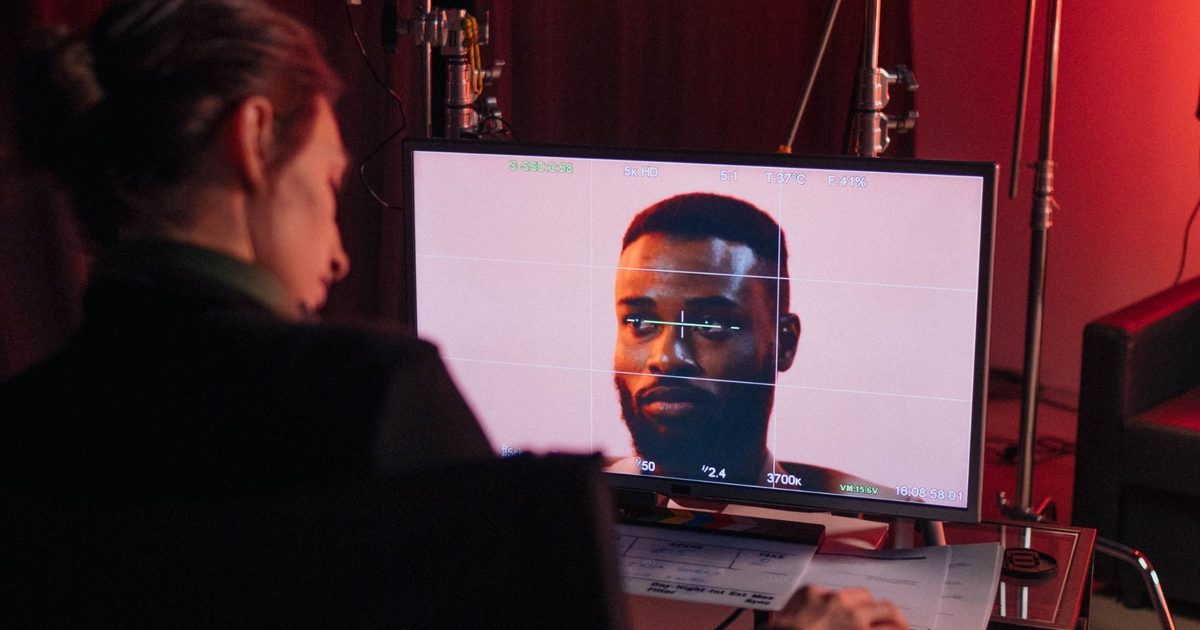
The rapid advancement of generative AI has made it increasingly difficult to distinguish real videos from artificially created ones. While many tools exist to detect fake content, identifying the exact AI model responsible for generating a video remains a significant challenge. Researchers have now developed a novel tool called SAGA that can both detect AI-generated videos and trace them back to the specific model that produced them.
How SAGA Works
At its core, SAGA relies on the concept of digital fingerprints left behind by AI video generators. Each generative model produces unique, subtle artifacts in the videos it creates—much like an individual's handwriting or a printer's distinctive marks. These artifacts arise from the underlying architecture and training data of the model. SAGA captures these idiosyncrasies by analyzing both individual frames and the temporal relationships between them.
The tool employs a technique called Temporal Attention Signatures, which examines how visual elements evolve over time. Different AI generators handle motion, consistency, and temporal coherence in distinct ways. For example, one model might produce slight flickering in textures when objects move, while another might introduce unnatural smoothness in transitions. SAGA learns these patterns across many videos from the same generator, building a robust profile that can be used for attribution.
The researchers tested SAGA against 19 different AI video generators, covering both text-to-video and image-to-video systems. The results showed that the tool could accurately determine whether a video was real or fake, identify whether it originated from text or image input, and pinpoint the specific development team behind the generator. This level of granularity is unprecedented in digital forensics.
The Growing Challenge of Deepfake Identification
As generative AI becomes more accessible, the volume of fake videos online is expected to surge. Simple detection—labeling a video as fake—is no longer sufficient. Knowing the source of a deepfake can provide crucial context for investigators. For instance, if a fake video emerges during an election campaign, tracing it to a particular model could help identify the group behind it and prevent future misuse. Similarly, social media platforms could use attribution information to understand how fake content spreads and adjust their policies accordingly.
Current state-of-the-art detection tools often rely on analyzing spatial artifacts—imperfections in static images. However, videos introduce temporal dimensions that demand more sophisticated analysis. SAGA bridges this gap by treating video as a continuous stream of information rather than a collection of independent frames. The temporal attention mechanism allows the tool to capture subtle inconsistencies that would be invisible when examining frames individually.
The study also highlights the arms race between generation and detection. As AI models improve, they become better at avoiding obvious artifacts. Nevertheless, the researchers believe that certain fundamental traits will always exist because they are intrinsic to the model's design. For example, the way a model handles object persistence—how an object remains consistent across frames—can reveal unique characteristics that are difficult to alter without retraining the entire system.
Practical Applications Beyond Detection
SAGA's capabilities extend beyond simply identifying fake content. Regulators around the world are increasingly demanding transparency from AI developers. Tools like SAGA could help enforce labeling requirements by verifying whether a video was generated by an AI system and which specific model was used. This would hold companies accountable for the content their models produce.
Media organizations could also benefit from this technology. With the rise of synthetic media, journalists need reliable methods to verify the authenticity of user-generated content before publishing. SAGA could serve as part of a larger verification toolkit, providing evidence that a video is either authentic or traceable to a known generative model. This would add a layer of accountability similar to cryptographic signing.
Law enforcement agencies investigating disinformation campaigns could use SAGA to link multiple fake videos to the same AI generator, revealing coordinated efforts. By analyzing the digital fingerprint, investigators might identify not just the model but potentially the group that commissioned the content. This forensic approach could become a cornerstone of cybercrime investigations.
Technical Details of Temporal Attention Signatures
The core innovation of SAGA lies in how it processes temporal information. Traditional video analysis treats frames as independent units and applies image-level detectors. However, AI-generated videos often exhibit temporal patterns that are distinct from naturally captured scenes. For example, natural videos have consistent motion blur and camera noise patterns, while synthetic videos may have abrupt changes in texture or unrealistic lighting transitions.
SAGA uses a neural network architecture that incorporates attention mechanisms across the time dimension. This allows the network to focus on regions where artifacts are most pronounced and to build a representation that captures the unique temporal fingerprint of each generator. The method is model-agnostic, meaning it can be applied to any AI video generator without requiring prior knowledge of its architecture.
During training, the system is exposed to many videos from each known generator. It learns to map the temporal artifacts to a signature vector that represents the generator's distinctive behavior. At inference time, the system compares the input video's signature against the database of known signatures to find the closest match. If no match is found, the video is likely real or generated by an unknown model.
The researchers tested the robustness of SAGA against common attacks such as video compression, cropping, and re-encoding. The tool maintained high accuracy even after these distortions, suggesting that the temporal signatures are intrinsic and resilient to post-processing. This is crucial for real-world deployment where videos are often compressed and altered during distribution.
Comparison with Other Detection Approaches
Most existing deepfake detection methods focus on still images. Tools like DIRE (Diffusion Reconstruction Error) analyze image noise patterns, while others look for inconsistencies in reflections or facial features. These methods are effective for images but fail to leverage temporal information. SAGA represents a significant step forward by addressing the temporal dimension.
Moreover, SAGA not only classifies videos as real or fake but also attributes them to a source model. This attribution capability sets it apart from detectors that only output a binary judgment. In a world where multiple generative models coexist, knowing exactly which model produced a video can be as valuable as knowing it's fake. For instance, if a social media platform notices that a particular model is being used to generate hate speech content, they can block videos from that model more effectively.
The researchers compared SAGA with several baseline methods and found that it outperformed them in terms of both detection accuracy and attribution precision. The temporal attention mechanism proved particularly effective for models that generate high-motion videos, where static artifacts are harder to detect.
Implications for Regulation and Policy
As governments worldwide grapple with the implications of generative AI, tools like SAGA could inform regulatory frameworks. The ability to trace fake videos to their source could support labeling requirements under laws like the European Union's AI Act. It could also help in prosecuting individuals who intentionally spread harmful false content.
However, the researchers caution that attribution is not foolproof. Adversaries may try to obfuscate the origins of a video by adding noise or blending outputs from multiple models. Ongoing research is needed to stay ahead of these countermeasures. The team is already exploring ways to combine multiple detection signals to improve robustness.
The development of SAGA also raises privacy concerns. The same technology that exposes fake videos could potentially be used to identify individuals who create synthetic content legitimately. Balancing transparency with privacy will be important as these tools become more widespread. Ethical guidelines and clear boundaries on how attribution data is used must be established.
Despite these challenges, the researchers believe that SAGA represents a significant advance in the fight against misinformation. As generative AI continues to evolve, tools like this will become essential for maintaining trust in digital media. The next steps involve scaling the method to handle thousands of generators, creating a comprehensive database of temporal signatures that can be updated as new models emerge.
In summary, SAGA leverages temporal attention to create unique fingerprints for AI video generators, enabling both detection and attribution. The tool has been validated across 19 diverse models and shows resilience to common distortions. Its practical applications range from aiding journalists and law enforcement to supporting regulatory compliance. As the arms race between generation and detection intensifies, SAGA offers a promising path toward identifying the origins of synthetic video content.
Source: Digital Trends News