

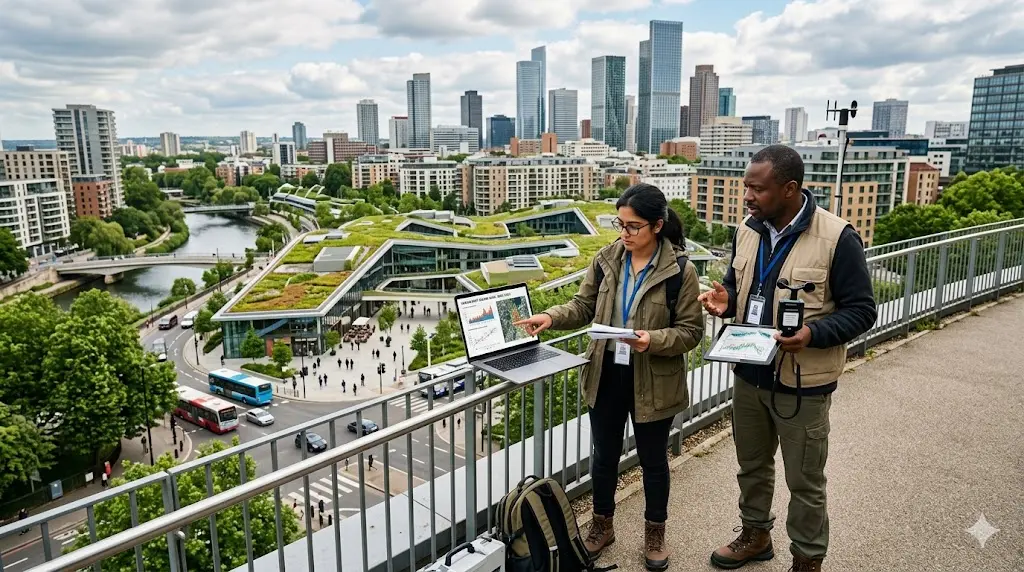
Climate change is reshaping the way cities are built, expanded, and managed. Recent research findings about climate change in urban development show that rising temperatures, flooding, pollution, and infrastructure stress are no longer future problems. They’re happening right now in cities across the world.
Urban planners, architects, and local governments are under pressure to rethink housing, transport, energy use, and public spaces. What’s interesting is that some of the most effective solutions aren’t flashy or expensive. In many cases, simple design choices are making a bigger difference than massive technology projects.
Research findings about climate change in urban development reveal that cities contribute heavily to global emissions while also facing the biggest climate risks. Modern urban planning now focuses on green infrastructure, energy-efficient buildings, flood-resistant systems, public transportation, and climate-adaptive design to reduce environmental damage and improve city resilience.
What Is Climate Change in Urban Development?
Climate change in urban development refers to how cities both affect and respond to environmental changes caused by global warming. Urban areas generate large amounts of greenhouse gases through transportation, construction, energy use, and industrial activity. At the same time, cities are highly vulnerable to heatwaves, flooding, water shortages, and air pollution.
Urban Climate Resilience — the ability of a city to prepare for, survive, and recover from climate-related challenges like floods, extreme heat, and rising sea levels.
Here’s the thing most people overlook: cities occupy a relatively small part of the planet’s surface, yet they produce a huge share of global carbon emissions. Dense populations, heavy traffic, and large-scale construction all add pressure to the environment.
Researchers have found that poorly planned urban growth increases environmental risks dramatically. For example, when wetlands are replaced with concrete structures, flood risks rise because water has nowhere to drain naturally. You’ve probably seen this happen after heavy rainfall in crowded urban areas where streets turn into rivers within hours.
What surprised many experts is how uneven climate effects can be inside the same city. Wealthier neighborhoods often have better drainage systems, more green spaces, and cooler temperatures. Meanwhile, lower-income communities usually face higher heat exposure and worse air quality.
That imbalance is becoming one of the biggest urban development concerns heading into 2026.
Why Research Findings About Climate Change in Urban Development Matter in 2026
Cities are expanding faster than many governments can manage. Research now shows that nearly every major urban center faces at least one serious climate threat. Some struggle with rising temperatures. Others deal with coastal flooding, water scarcity, or worsening storms.
In my experience, the conversation has shifted dramatically over the last few years. Earlier discussions focused mostly on sustainability goals. Now, city planners are talking about survival and adaptation.
Extreme heat is one of the clearest examples. Urban heat islands — areas where buildings and roads trap heat — can make cities several degrees hotter than nearby rural areas. That might sound manageable on paper, but during heatwaves, those few degrees can increase hospital admissions, energy demand, and even death rates.
Research in urban sustainability also points to transportation systems as a major issue. Car-dependent cities produce more emissions and often experience worse air pollution. On the other hand, cities investing in public transit, cycling infrastructure, and walkable neighborhoods are seeing measurable environmental improvements.
Another major finding involves construction materials. Cement and steel production release massive amounts of carbon dioxide. As a result, architects and developers are exploring alternatives like recycled materials, timber-based structures, and low-carbon concrete.
Oddly enough, taller buildings are not always worse for the environment. That’s the counterintuitive part. In some cases, dense vertical housing near public transportation reduces emissions more effectively than widespread suburban expansion. Urban sprawl often forces residents to rely heavily on cars, increasing pollution over time.
Cities that combine climate adaptation with economic planning tend to recover faster after disasters. Smart urban development isn’t just about environmental protection anymore. It’s increasingly tied to job creation, public health, and long-term economic stability.
What Are the Main Research Findings About Climate Change in Urban Development?
Several important patterns keep appearing in climate studies connected to urban growth.
1. Green Spaces Reduce Heat and Improve Health
Parks, rooftop gardens, and tree-lined streets significantly lower city temperatures. Researchers found that neighborhoods with more vegetation experience less heat stress and better air quality.
This sounds simple, but it matters more than people realize. Even a few shaded streets can reduce surrounding temperatures noticeably during extreme summer conditions.
One city redevelopment project introduced urban forests and reflective roofing materials into high-density neighborhoods. Within a few years, residents reported lower cooling costs and fewer heat-related illnesses.
2. Flood Risks Are Increasing in Dense Cities
Heavy rainfall events are becoming more frequent in many urban regions. Unfortunately, older drainage systems were never designed for modern climate conditions.
Researchers studying climate adaptation strategies found that permeable pavements, rain gardens, and restored wetlands help absorb excess water naturally. Cities relying entirely on underground drainage systems are struggling to keep up.
I’ve noticed that many urban planners now talk about “working with water” rather than simply trying to remove it as quickly as possible.
3. Buildings Are Responsible for Huge Emissions
Commercial and residential buildings consume enormous amounts of energy for heating, cooling, and electricity. Research suggests that energy-efficient building design could cut urban emissions significantly.
This includes better insulation, natural ventilation, solar integration, and smart energy systems.
What most guides miss is that older buildings create one of the biggest challenges. Retrofitting existing infrastructure is often harder and more expensive than designing sustainable buildings from scratch.
4. Public Transportation Plays a Bigger Role Than Expected
Cities investing in efficient transit systems are seeing long-term environmental gains. Reduced traffic congestion means lower emissions and improved air quality.
A realistic example would be a growing metropolitan city replacing thousands of diesel buses with electric public transport while expanding bike lanes. Over time, researchers observed measurable declines in pollution levels and commuter fuel expenses.
Urban sustainability projects work better when local communities are involved early. Residents usually know which streets flood first, where heat becomes unbearable, and which public services fail during emergencies.
How to Build Climate-Resilient Urban Development — Step by Step
Climate-resilient urban planning requires more than just planting trees or adding solar panels. Cities need coordinated strategies that connect infrastructure, housing, transportation, and environmental policy.
Step 1: Assess Climate Risks
Urban planners first identify major environmental threats affecting a city. This could include flooding, drought, rising sea levels, or extreme heat.
Without accurate risk assessment, development decisions become reactive instead of preventive.
Step 2: Upgrade Infrastructure
Drainage systems, roads, bridges, and utilities must be redesigned for future climate conditions rather than past averages.
That’s where many cities are falling behind. Infrastructure built decades ago often cannot handle modern weather extremes.
Step 3: Increase Green Infrastructure
Adding parks, urban forests, wetlands, and green rooftops helps regulate temperature and improve water absorption.
This step also improves mental health and public wellbeing, which researchers increasingly connect to environmental design.
Step 4: Promote Sustainable Transportation
Cities need reliable public transportation, cycling routes, and walkable districts to reduce vehicle emissions.
In most cases, people will use greener transport if it’s affordable, safe, and convenient. It’s not always about environmental awareness alone.
Step 5: Improve Building Efficiency
New construction projects should follow climate-responsive architecture principles. Existing buildings also need retrofitting to improve insulation and reduce energy consumption.
Step 6: Engage Local Communities
Residents should participate in urban planning discussions because climate adaptation affects everyday life directly.
Honestly, top-down planning without public involvement usually creates resistance and delays.
Common Mistake: Bigger Technology Doesn't Always Mean Better Results
One misconception in climate-focused urban development is the belief that advanced technology alone can solve environmental problems.
Here’s my hot take: cities sometimes chase flashy innovation projects while ignoring simpler solutions that work immediately.
For example, expensive smart-city systems may gather climate data efficiently, but they don’t replace practical measures like tree planting, floodplain restoration, or reliable public transportation.
I once followed a redevelopment proposal centered around high-tech cooling systems for commercial districts. Meanwhile, nearby neighborhoods lacked basic shade infrastructure and experienced severe summer heat exposure. The priorities felt backward.
Research increasingly supports low-cost, nature-based solutions because they’re easier to maintain and often provide multiple benefits at once.
Expert Tips and What Actually Works
Research findings about climate change in urban development become more useful when cities apply them realistically instead of treating sustainability like a branding exercise.
One strategy that consistently works is mixed-use urban design. When housing, workplaces, schools, and services exist close together, people travel less. That lowers emissions while improving convenience.
Another effective approach is adaptive zoning. Cities that update zoning regulations to support green infrastructure and flood protection respond faster to environmental risks.
What probably matters most, though, is political consistency. Climate adaptation projects often require years to show full results. Sudden policy changes can stall progress halfway through.
Don’t underestimate maintenance. A city can launch impressive sustainability projects, but neglected green infrastructure quickly loses effectiveness. Long-term upkeep matters just as much as initial design.
How Climate Change Is Changing Future Urban Planning
Urban planning is entering a different era. Research now focuses heavily on resilience instead of expansion alone.
Future cities will likely prioritize:
Climate-responsive architecture
Renewable energy integration
Water conservation systems
Heat-resistant public spaces
Compact neighborhood development
Reduced car dependency
At least from what I’ve seen, younger architects and planners already approach development differently than previous generations. Environmental considerations are becoming part of standard planning rather than optional add-ons.
There’s also growing interest in “15-minute cities,” where residents can access essential services within short walking or cycling distances. Supporters argue this reduces emissions and improves quality of life.
Critics worry about implementation challenges, but the concept continues gaining attention because it addresses transportation emissions directly.
People Most Asked About Research Findings About Climate Change in Urban Development
How does climate change affect urban development?
Climate change affects urban development by increasing risks related to flooding, heatwaves, pollution, infrastructure damage, and water shortages. Cities now need climate-adaptive planning strategies to remain functional and safe.
Why are cities vulnerable to climate change?
Cities concentrate large populations, infrastructure, and economic activity in relatively small areas. Dense construction, limited green space, and aging infrastructure make many urban regions vulnerable to environmental stress.
What is sustainable urban development?
Sustainable urban development focuses on creating cities that reduce environmental harm while supporting economic growth and public wellbeing. This includes energy-efficient buildings, clean transportation, and resilient infrastructure.
How can green infrastructure help cities?
Green infrastructure lowers temperatures, improves air quality, absorbs rainwater, and supports biodiversity. Examples include parks, urban forests, green roofs, wetlands, and permeable pavements.
What are urban heat islands?
Urban heat islands are city areas that become significantly hotter than surrounding regions due to concrete surfaces, traffic, and limited vegetation. They increase health risks during heatwaves.
Can urban planning reduce climate change?
Yes. Better transportation systems, efficient building design, renewable energy use, and compact development can significantly reduce urban carbon emissions over time.
Why is public transportation important for climate resilience?
Public transportation reduces traffic congestion, lowers emissions, and improves air quality. Efficient transit systems also help cities recover faster during fuel shortages or environmental disruptions.
Are smart cities always environmentally friendly?
Not necessarily. Smart technologies can improve efficiency, but sustainability depends on how cities implement them. Sometimes low-tech environmental solutions produce stronger long-term results.
Research findings about climate change in urban development make one thing clear: cities can no longer separate growth from environmental responsibility. Urban areas that adapt early will probably experience fewer disruptions, lower long-term costs, and healthier living conditions.
The challenge now isn’t whether cities should respond to climate change. It’s how quickly they can do it without leaving vulnerable communities behind.
Our network platforms including PR Wires and Web Info Matrix help businesses, agencies, and SEO professionals strengthen brand visibility through press release distribution services, digital marketing services, and high authority backlinks. Whether you're aiming for better SEO ranking, wider media coverage, or increased organic traffic, these platforms provide trusted solutions with instant publishing support that helps brands grow faster in competitive markets.