

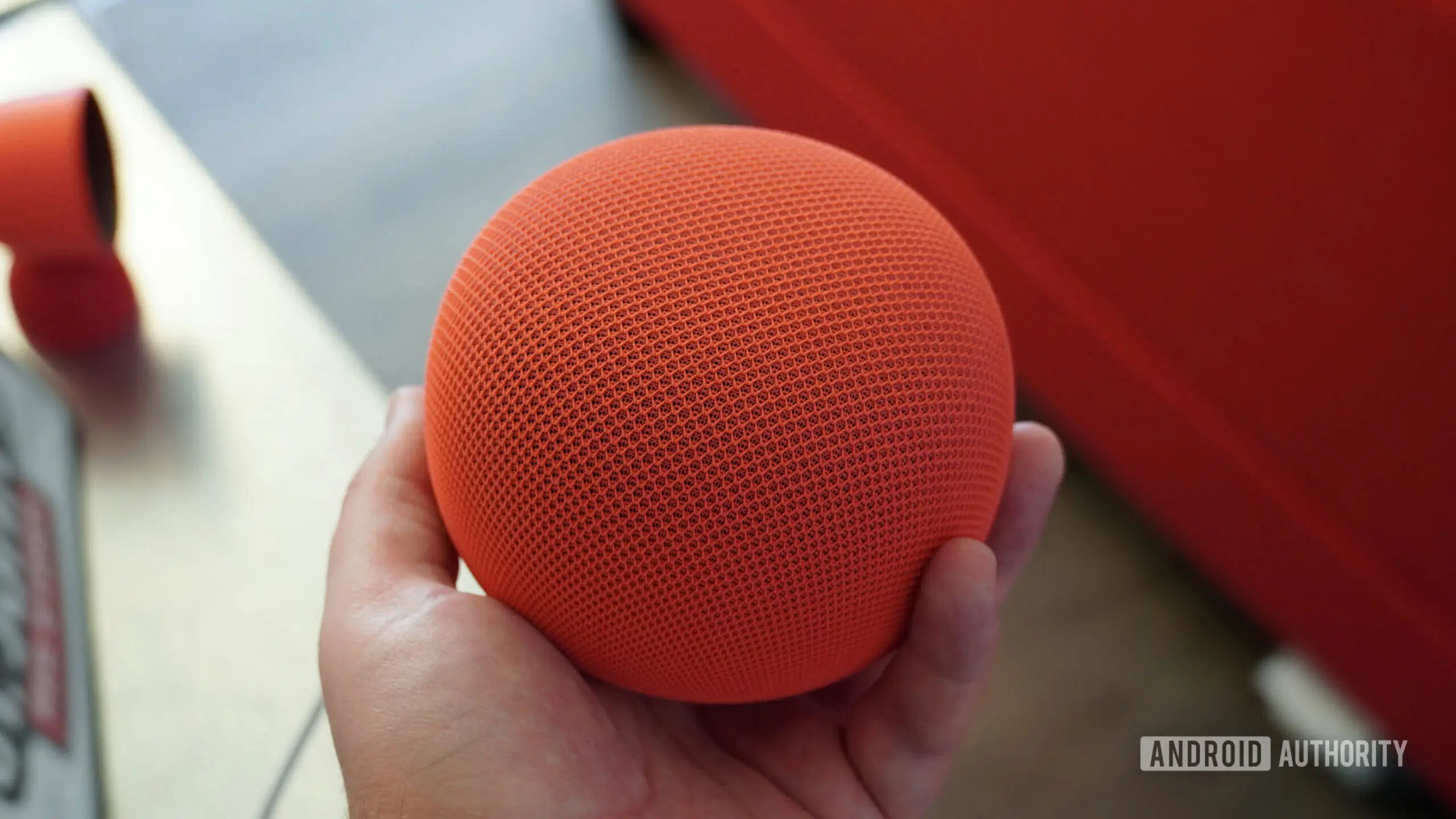
It was an innocent mistake that turned into a brief but tantalizing opportunity for early adopters of the latest smart speaker from Google. Walmart, the retail giant, accidentally placed the brand-new Google Home speaker on clearance, offering a 30% discount that brought the price down to just $69. This pricing error, seemingly caused by confusion with the older Nest Audio model, was quickly rectified, but not before several shoppers managed to place orders and even secure in-store purchases at the reduced rate. The incident has sparked conversations about inventory management, price glitches, and whether customers can still benefit from such errors.
The Accidental Discount: What Happened?
Reports from multiple users on social media platforms, particularly Reddit, highlighted the pricing anomaly. One user shared photographic evidence of an in-store purchase where the new Google Home speaker was marked with a clearance tag originally designated for the Nest Audio. The checkout system scanned the correct barcode, but the discounted price remained applied, resulting in a final bill of $69 plus tax. Another user spotted the same discount on Walmart’s website for the black and Porcelain color variants, though the green and red options were not affected. The online listing showed a delivery date that was actually sooner than Google’s official shipping estimates, making the deal even more attractive.
The discount appears to have been a system glitch rather than a deliberate promotion. Walmart’s clearance system likely misidentified the new speaker due to its similar product packaging or SKU overlap with the Nest Audio, which has been heavily discounted in recent months. The confusion may have been exacerbated by the fact that both devices share a similar form factor and have been part of Google’s smart home lineup. However, the new Google Home speaker features upgraded internals and the integration of Google’s Gemini AI assistant, setting it apart from its predecessor.
Details from the Incident: In-Store and Online
In-store, a Redditor named eqbirvin reported purchasing a unit for $69, presenting a photo of the price tag that clearly stated “Nest Audio” but was attached to the new speaker box. The original barcode, when scanned, still yielded the clearance price. Other commenters speculated that the tag might have been swapped from another unit, but the original poster insisted that the barcode on the box matched the one on the tag, indicating a genuine database error. This suggests that Walmart’s inventory system may have temporarily grouped the new model under the old product number.
Online, user Rossmay discovered a listing for the new Google Home speaker at $69.98. Without hesitation, they ordered four units, hoping to resell or gift them. However, the listing was removed shortly after, and the discount vanished. Several other commenters confirmed seeing the deal but were unable to complete their purchases before it was fixed. The online glitch only affected two color options, leading many to believe it was a localized issue with specific SKUs. As of now, Walmart has restored the regular price of $99.99 for all variants.
Walmart has not issued an official statement regarding the pricing error. Typically, the company honors accidental discounts for online orders that have already been confirmed, but there is no guarantee. Customers who placed orders are waiting with a mix of excitement and anxiety, hoping that Walmart will not cancel their shipments. The retailer has the right to cancel orders if a price mistake is clear, but they often fulfill such orders as a goodwill gesture.
How to Possibly Benefit: Price Matching and Refunds
Even though the discount is no longer available, there may be a way to capitalize on it. Google offers a price matching policy for purchases made on the Google Store. If a customer bought the new Google Home speaker from the official Google Store and finds a lower price from a competitor like Walmart (even if it was a temporary glitch), they can request a partial refund. However, this requires evidence of the listing, such as a screenshot or a cached page. Given that the Walmart listing has been removed, it may be difficult to provide proof. Some users have had success in the past by showing the price on archive websites like the Wayback Machine.
Another avenue is to check local Walmart stores for remaining clearance inventory. Although the online listing is gone, physical stores may still have units that were priced incorrectly due to delayed system updates. It might be worth visiting a nearby Walmart and scanning the barcode of the new speaker at a price checker to see if the discount is still in their database. This is a long shot, but it has worked for some shoppers in the past with other products.
Background on the Google Home Speaker with Gemini
The new Google Home speaker was launched in early 2025, succeeding the Nest Audio. It introduces tighter integration with Google’s Gemini AI model, which powers more natural conversations, contextual understanding, and proactive suggestions. The speaker also supports Matter and Thread protocols for smart home control, and it features improved microphones for better voice recognition. However, early reviews have noted that the speaker can be slower than the Nest Audio when responding to queries, likely because Gemini requires more processing time. The audio quality has also been described as slightly weaker, with less bass and overall presence compared to its predecessor. Google has promised software updates to optimize performance, but no timeline has been provided.
Google is also struggling to keep the device in stock due to high demand following its launch. The accidental Walmart discount made an already popular product even more desirable, but it also created confusion among potential buyers who could not understand why the price was fluctuating. This incident underscores the challenges retailers face when managing inventory for new product releases, especially when older models remain on shelves.
Comparison with Nest Audio: What’s New?
The Nest Audio, launched in 2020, was Google’s first attempt at a premium smart speaker after the original Google Home and Google Home Mini. It offered a balanced sound profile with good clarity and decent bass for its size. The new Google Home speaker, while visually similar, adopts a slightly different driver arrangement and adds a temperature sensor. The most significant change is the integration of Gemini, which replaces the older Google Assistant in terms of capabilities. Gemini enables the speaker to handle multi-turn conversations, provide more accurate answers, and even let users ask follow-up questions without repeating the wake word.
Despite these advances, the Nest Audio remains a strong competitor in terms of audio performance. Many audio enthusiasts argue that the Nest Audio still delivers richer sound, especially in the midrange and bass frequencies. The new speaker’s weaknesses might be addressed through firmware updates, but for now, the Nest Audio could be a better choice for music lovers. However, the new speaker’s Gemini capabilities make it a more intelligent assistant, which could be a decisive factor for smart home enthusiasts.
The clearance incident highlighted the similarities between the two devices. The new speaker’s packaging is almost identical to the Nest Audio, which may have led Walmart employees to mislabel them. This is a common problem in retail when products undergo minor redesigns but maintain similar SKU patterns. Retailers often rely on barcode scanning and inventory management software that can sometimes fail to differentiate between generations.
Walmart’s Inventory System: A History of Glitches
Walmart is no stranger to pricing errors. In the past, the retailer has accidentally discounted high-end electronics like MacBooks, Nintendo Switch consoles, and even collectible items due to mislabeling or system bugs. These errors are usually corrected quickly, but they generate significant buzz among deal hunters. The company has a dedicated team that monitors price inconsistencies and works to resolve them, but the sheer volume of products makes it challenging to catch every mistake in real time. For consumers, these glitches represent a lottery of sorts: if you spot it early, you can secure a bargain.
The Google Home speaker incident is particularly noteworthy because it involved a newly released product that is in high demand. This combination often leads to rapid sellouts and frustration among those who miss out. Social media amplifies the news, spreading word of the deal within minutes and causing a rush. In this case, the deal was only live for a few hours online and possibly a day in stores before being removed. The speed of the fix indicates that Walmart’s pricing alerts were triggered quickly, likely by unusual sales velocity or an internal audit.
Some analysts believe that Walmart may have intentionally allowed the glitch to run for a short time as a marketing tactic, but this is unlikely given that the company did not promote the discount and quickly pulled it. More probably, it was a genuine human error combined with a system oversight. Walmart has not commented, but the silence suggests they are handling the matter internally.
Implications for Google and the Smart Speaker Market
For Google, the accidental discount is a double-edged sword. On one hand, it generated buzz and might drive more people to purchase the speaker, albeit at a lower profit margin for those who got the deal. On the other hand, it could cause confusion among customers who now expect the $69 price to be the standard, leading to disappointment when they see the full price. Google may need to address this by explaining that the discount was a retailer error, not an official price drop. The incident also highlights the challenges of coordinating with retailers, especially regarding inventory accuracy and pricing consistency across channels.
The smart speaker market is highly competitive, with Amazon’s Echo line and Apple’s HomePod holding significant shares. Google’s new speaker aims to differentiate through AI capabilities, but affordability is also a key factor. At $99.99, it is priced competitively against the Echo Dot and Echo Studio, but not as cheap as some budget options. A $69 temporary discount made it irresistible, but that window has closed. Still, price-conscious consumers may now be more aware of the product and may wait for future sales, such as Amazon Prime Day or Black Friday, to purchase at a reduced price.
Some industry observers note that the deliberate clearance of older Nest Audio units by Walmart earlier this year may have set a precedent for discounts on the new model. Nest Audio prices dropped as low as $49.99 during clearance events, making the new speaker at $69 seem like a great deal in comparison. However, the new speaker offers more advanced features, so the comparison is not entirely fair. Google likely intends to keep the new model at its premium price point for at least the first year, with occasional sales from retailers.
Meanwhile, early adopters who paid full price on launch day may feel slighted by this accidental discount. Google’s price matching policy does not apply retroactively unless a specific offer is made, so those customers are out of luck. However, they can take comfort in the fact that they received the product earlier and avoided the uncertainty of Walmart’s delivery promises. As the saying goes, “better a bird in the hand than two in the bush.”
For the average consumer, this incident serves as a reminder to keep an eye on price alerts and online forums during product launches. While not everyone can snag a glitched deal, those who do can save significantly. In a time of rising costs, such opportunities are welcome, even if they last only moments. The new Google Home speaker remains a solid choice for those looking to upgrade their smart home, and with or without a discount, it represents a step forward in AI-assisted living.
As Walmart and Google sort out the inventory and pricing issues, the lucky few who managed to secure the speaker at $69 are already unboxing their units and testing the Gemini assistant. Their experiences will likely shape the conversation around the device’s real-world performance. For now, the incident is a quirky footnote in the launch of Google’s latest hardware, reminding us that even the biggest retailers can make mistakes that benefit the savvy shopper.
Source: Android Authority News