

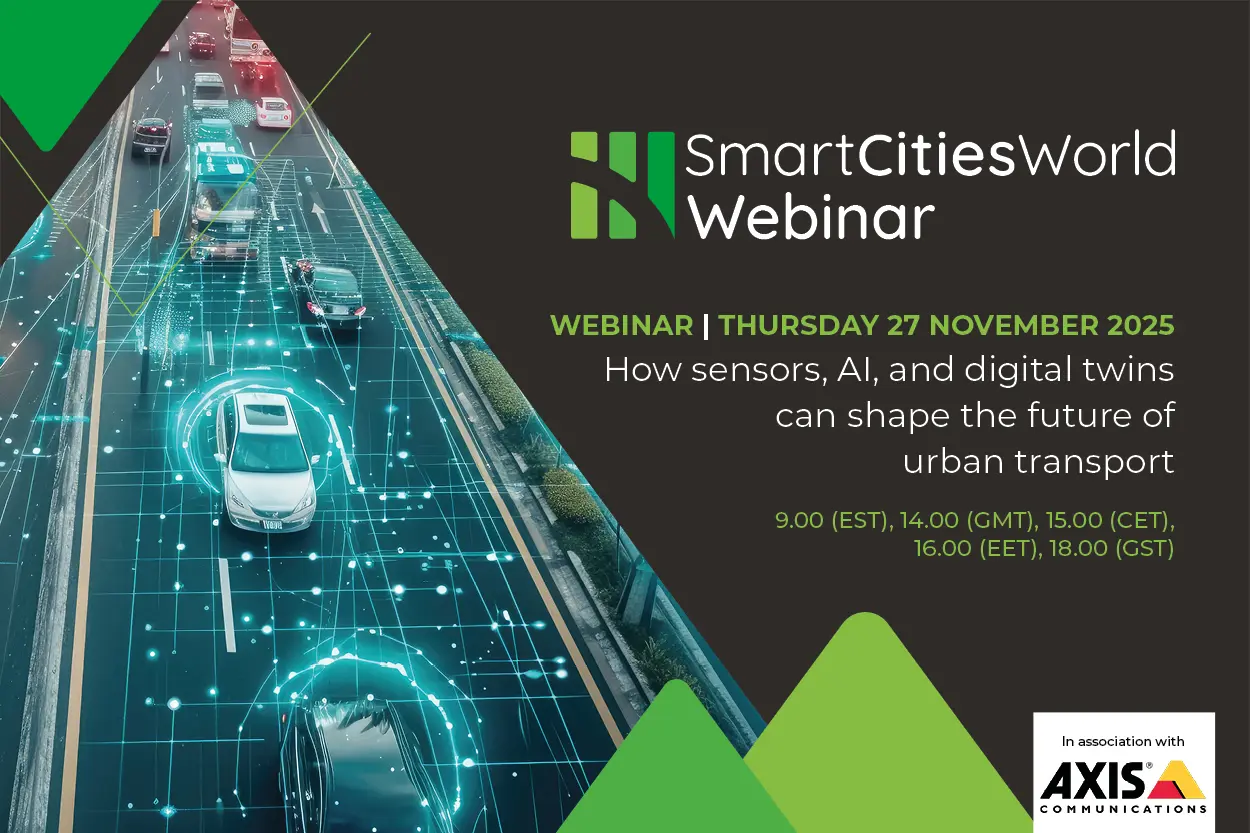
The integration of sensors, artificial intelligence (AI), and digital twins is rapidly reshaping urban transport infrastructure. A recent on-demand webinar brought together thought leaders and city practitioners to discuss how these technologies are enabling smarter planning, real-time operations, and better outcomes for communities. From edge computing at the street level to cloud-based analytics, cities are building digital replicas of their transport networks that allow them to simulate, predict, and optimise traffic flows, reduce emissions, and enhance resilience.
Edge and Cloud Synergy for Smart Mobility
Chris Lucero of The Connective, Greater Phoenix’s regional smart city consortium, highlighted how a hybrid approach — blending edge and cloud computing — is essential for modern smart cities. Edge processing enables low-latency responses for traffic signals and autonomous shuttles, while cloud platforms aggregate data from thousands of sensors to train AI models. This combination allows cities to adapt to real-time conditions while planning long-term infrastructure investments. Phoenix, for example, uses such a system to manage its expanding light-rail network and to coordinate multimodal transit options.
Data Integration and Security in Smart Cities
Another key theme was the race among cities to connect fragmented data systems, tighten cybersecurity, and harness AI. Many municipal departments operate in silos — transport, utilities, public safety — but integrated digital twins break down those barriers. London and Singapore have already deployed unified data platforms that link traffic sensors, parking meters, and air quality monitors. The result is a more responsive urban service: dynamic traffic routing, predictive maintenance of road assets, and real-time alerts for congestion or hazards. However, these systems also introduce new vulnerabilities, so robust encryption, access controls, and continuous monitoring are critical.
City Profiles: Sunderland and Dublin Leading the Way
The webinar featured two in-depth city profiles. Sunderland in the UK is repositioning itself as a leading smart city by leveraging digital infrastructure and low-carbon innovation. Its digital twin enables simulation of traffic patterns under different scenarios — such as new housing developments or major events — to test interventions before deploying them in the real world. The city has also integrated renewable energy microgrids into its transport system, powering electric buses and charging stations with solar and wind.
Dublin, meanwhile, has invested in a city-wide digital twin to improve experiences and services. The Irish capital’s twin covers not only transport but also water management and public spaces. Using real-time data from traffic loops and GPS on buses, Dublin reduced average journey times by 12% during peak hours. The city is also experimenting with AI to predict cycle and pedestrian flows, helping to design safer intersections. Economic growth has followed, as better mobility attracts businesses and reduces commute stress.
Smart Lighting as Infrastructure Backbone
A series of episodes from the Cities Thriving on Lighting webinar series complemented the main session. Smart lighting, often the most widespread sensor network in any city, is becoming a foundational element for urban IoT. Modern LED streetlights can host cameras, air quality sensors, and public Wi-Fi. By converting existing streetlight poles into secure, interoperable nodes, cities gain a ubiquitous platform for data collection. However, the episodes cautioned that cybersecurity risks are real — each connected luminaire is a potential entry point. Municipalities must adopt zero-trust architectures and segment lighting networks from other critical systems.
UN Virtual Worlds Day: The Citiverse and People-Centred Outcomes
Paul Wilson, a prominent smart-city advocate, presented the upcoming UN Virtual Worlds Day, which will explore how AI, spatial intelligence, and the emerging Citiverse ecosystem can deliver trusted, people-centred outcomes. The Citiverse — a mesh of digital twins across cities — promises to enable global collaboration on urban challenges. For instance, a transport model from Barcelona could be adapted for use in Nairobi, sharing best practices on congestion pricing or micro-mobility integration. Wilson emphasised that ethical design and inclusivity must be at the core of these virtual worlds to avoid digital divides.
Indoor Safety via Sensor Networks
Beyond outdoor infrastructure, smart sensor networks are improving indoor safety. In transport hubs like airports and train stations, sensors detect fire, smoke, or chemical leaks early, giving operators time to evacuate and respond. They also monitor occupancy levels and air quality, ensuring healthier environments. For example, Helsinki Airport uses over 1,000 sensors to track passenger flows and adjust ventilation, reducing energy use by 15% while maintaining comfort. Such systems are becoming standard in new transit-oriented developments.
AI for Resilient Infrastructure: A Trend Report
An on-demand trend report panel discussion focused on AI for resilient infrastructure — particularly how sustainable operations prepare cities for climate shocks. AI models can predict flooding risks, heat-island effects, and aging infrastructure failures. In Rotterdam, a digital twin of the stormwater network allows engineers to test upgrades virtually before digging streets. The panel agreed that cities must treat data as a public good, sharing insights across departments and with private sector partners to maximise resilience.
COP30 Webinar: Unlocking Climate Finance
The webinar also previewed a COP30 session on climate finance, where cities learn to build capacity and partnerships to fund green transport projects. Many cities lack the technical expertise to apply for international climate funds. This session will provide templates for project proposals, focusing on measurable emissions reductions from AI-optimised traffic management and electric fleet transitions. Early adopters like Bogotá have used such financing to electrify 30% of their bus fleet, cutting CO₂ by 45,000 tonnes annually.
SmartCitiesWorld newsletters — daily and weekly — continue to curate the latest news, city interviews, special reports, and guest opinions. These updates ensure that transport planners, city managers, and technology vendors stay informed about rapidly evolving best practices. The on-demand webinar series remains available for those who wish to dive deeper into specific topics, from edge computing to indoor sensor deployment. As digital twins become more sophisticated and AI more accessible, the vision of a seamlessly connected urban transport future moves closer to reality.
Source: Smart Cities World News