

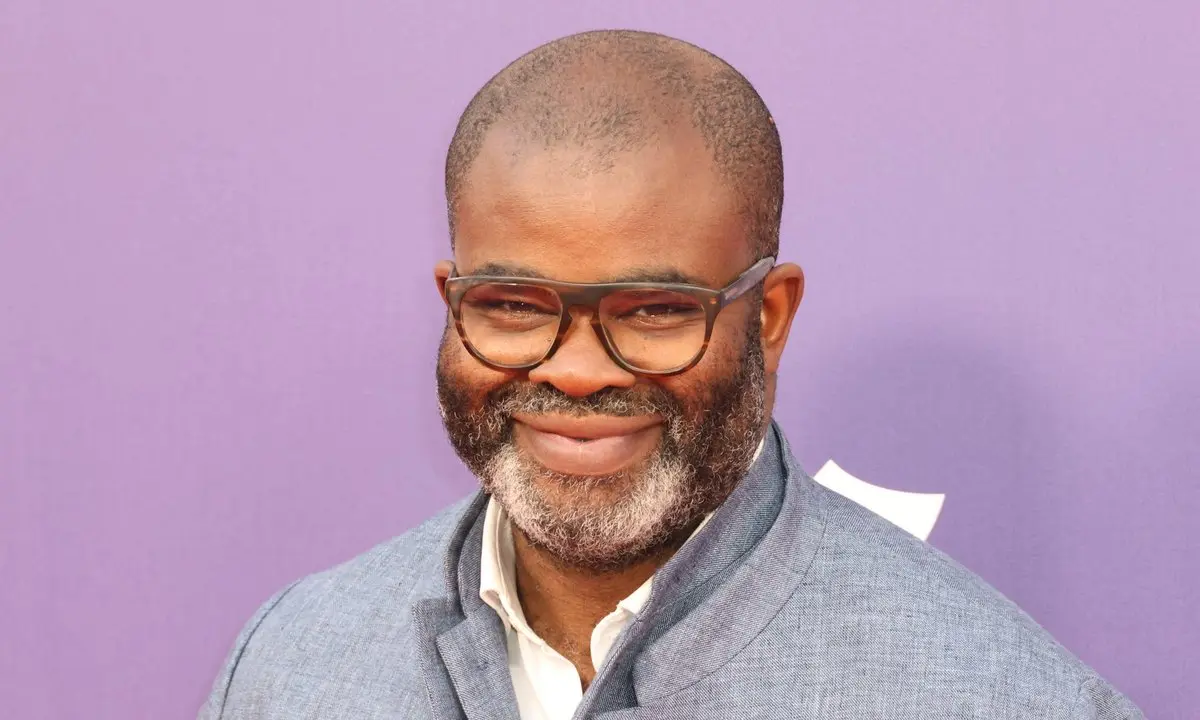
Petition defends Southbank Centre chair Misan Harriman
A petition signed by figures such as the actor Hugh Bonneville and the activist Greta Thunberg has been circulating in support of Misan Harriman, the celebrated photographer and chair of the Southbank Centre in London, over what the letter describes as “a dishonest smear campaign” against him.
Over the past week, articles in The Daily Telegraph and other right-wing news outlets have focused on comments he made about the Golders Green attack of 29 April—which saw two Jewish men stabbed in the street in the predominantly Jewish area of north London—and the success of Reform in the UK’s local elections last week (7 May).
The controversy stems from two episodes: firstly, a social media post by the MP Ayoub Khan that Harriman shared, and commented on, in the wake of the Golders Green knife attack. A third, Muslim man had been stabbed by the same attacker earlier in the day, and Harriman argued that this fact had been less reported by the press.
This online comment then formed the basis for an article in The Daily Telegraph pushing back against the assertion that the third stabbing had not been reported.
The second episode was a five-minute, 40-second video that Harriman put on Instagram after the UK’s local elections. Reflecting on the rise of the right-wing Reform party, he cited a conversation between the writers Kurt Vonnegut and Susan Sontag about the Holocaust in which Sontag reportedly said 10% of any given population were cruel, 10% were merciful, and 80% could be persuaded into either category. This was picked up by right-wing activists and politicians online, who alleged that Harriman was equating the rise of Reform to the Holocaust, and its supporters to Nazi sympathisers. Media outlets responded to the allegations, with one Telegraph article headlined: “Southbank Centre chief ‘compares Reform victory to Holocaust’”.
Other critics included Karen Pollock, the chief executive of Holocaust Educational Trust, who said: “How on earth could yesterday’s election results ever be comparable to the Holocaust?”
Harriman has denied that his comments made those equivalences.
In response to the articles carrying the allegations, nearly 70,000 people filed complaints to the editors of the Telegraph, the Daily Mail, the Daily Express and others via the Independent Press Standards Organisation (IPSO)—the largest campaign in the organisation’s history.
Reaction has been swift for Harriman across the cultural and political sectors too. More than 15,000 people have signed the celebrity-backed petition, posted by the Good Law Project. In a social media post, the poet Michael Rosen called it a clear example of cancellation; the MP Dianne Abbott voiced her support, calling him a “highly respected and influential Black man”; and the broadcaster Mehdi Hasan asked The Telegraph to apologise for the “shameful smear”. A parliamentary letter of support for Harriman, sent to the UK culture minister Lisa Nandy on 12 May, has been signed by more than a dozen other UK MPs.
Harriman, on social media, said he has been moved by the level of support: “I cannot thank everyone individually but please know that this means so much.”
“We have reached the point where truth itself is being crushed by the very institutions that are supposed to uphold it,” he said in a separate statement to the media. “I will never whisper about the oppressed. I stand with truth, I stand by my right to use my voice to help others.”
However, others have cautioned against Harriman’s statements, questioning whether it is appropriate for the head of a charity organisation to have a public political stance.
According to comments reported in the Daily Telegraph, David Taylor, a Labour MP from Hemel Hempstead, said, “Antisemitism under the cover of solidarity with the Palestinian cause has been rife within the arts for too long, that needs to change now. In the spirit of the prime minister’s words this week, Arts Council England should reconsider their funding arrangement with the Southbank Centre, and the Southbank Centre should consider removing Mr Harriman from the board.”
The Southbank Centre, of which Harriman has been chair since 2021, has distanced itself from the issue. It issued a statement saying that the Harriman’s personal views do not represent that of the organisation and that it “condemns all forms of anti-Semitism, hatred and discrimination”.
Background on Misan Harriman
Misan Harriman is a Nigerian-born British photographer and cinematographer, best known for his portraits of public figures including Meghan Markle and Prince Harry, as well as his work during the Black Lives Matter protests. He became the first black male photographer to shoot a cover of Vogue in the magazine’s 100-year history. In 2021, he was appointed chair of the Southbank Centre, one of the UK’s largest arts venues, overseeing its programming and governance. His appointment was seen as part of a broader push for diversity in cultural leadership.
Harriman has been an outspoken advocate for social justice, often using his platforms to discuss race, inequality and Palestine. This has sometimes placed him at odds with conservative commentators and media outlets.
The rise of Reform UK
The Reform party, founded by Nigel Farage, has seen a surge in support in recent local elections, capitalising on discontent with the Conservative party and Labour’s centrist agenda. In the May 2026 local elections, Reform won control of several councils and gained dozens of seats across England. The party’s platform focuses on immigration reduction, Euroscepticism and cultural nationalism, and it has been accused of dog-whistle politics by critics.
Harriman’s video referenced the Holocaust as a historical example of what can happen when populations are persuaded toward cruelty. The controversy underscores the sensitivity of comparing contemporary political movements to Nazi Germany, particularly in the UK where antisemitic incidents have risen sharply since the Hamas attacks of 7 October 2023.
The Golders Green attack
On 29 April 2026, two Jewish men were stabbed in Golders Green, north London, by a man who had earlier stabbed a Muslim man. The attack was widely condemned as antisemitic. Harriman shared a post from MP Ayoub Khan noting that the stabbing of the Muslim man received less media coverage. Harriman added that “we need to protect all minorities”. Critics accused him of downplaying antisemitism.
The Telegraph article pushed back, arguing that the Muslim stabbing had been covered by multiple outlets. This sparked a broader debate about media bias and the hierarchy of victimhood.
Implications for free speech and cultural leadership
The case raises questions about the role of cultural leaders in political debate. While many supported Harriman’s right to express his views, others argued that his position as chair of a publicly funded arts centre requires neutrality. The Southbank Centre receives significant funding from Arts Council England, and any perceived political stance could jeopardise that support.
The IPSO complaints campaign is unprecedented in scale, reflecting growing frustration with what many see as a coordinated attempt to silence progressive voices. The Good Law Project, a legal advocacy group, has threatened legal action against the newspapers involved unless they retract the allegations.
Dianne Abbott, a veteran Labour MP, defended Harriman, stating: “We cannot allow the media to destroy the reputation of a highly respected and influential Black man simply because he speaks truth to power.” Similarly, author and poet Michael Rosen described the attacks as “the classic tactic of taking someone’s words out of context to get them cancelled”.
On the other side, Holocaust Educational Trust’s Karen Pollock maintained that comparisons to the Holocaust are unacceptable. “The Holocaust is a unique historical atrocity, and any attempt to trivialise it by linking it to election results does a disservice to survivors and the memory of the six million Jews murdered,” she said.
Harriman’s supporters argue that he never made a direct comparison, but rather used a philosophical reflection about persuasion. The video in question is still available on his Instagram account, where he clarifies that he is not comparing Reform supporters to Nazis.
As of now, the Southbank Centre continues to support Harriman as chair, though it has issued a statement distancing itself from his personal comments. The controversy is ongoing, with the IPSO complaints likely to be investigated in the coming weeks.
Harriman remains defiant. In a final statement, he said: “I will continue to speak out against injustice. My commitment to truth and to the marginalised is unwavering. No amount of press harassment will silence me.”
Source: The Art Newspaper - International art news and events News