

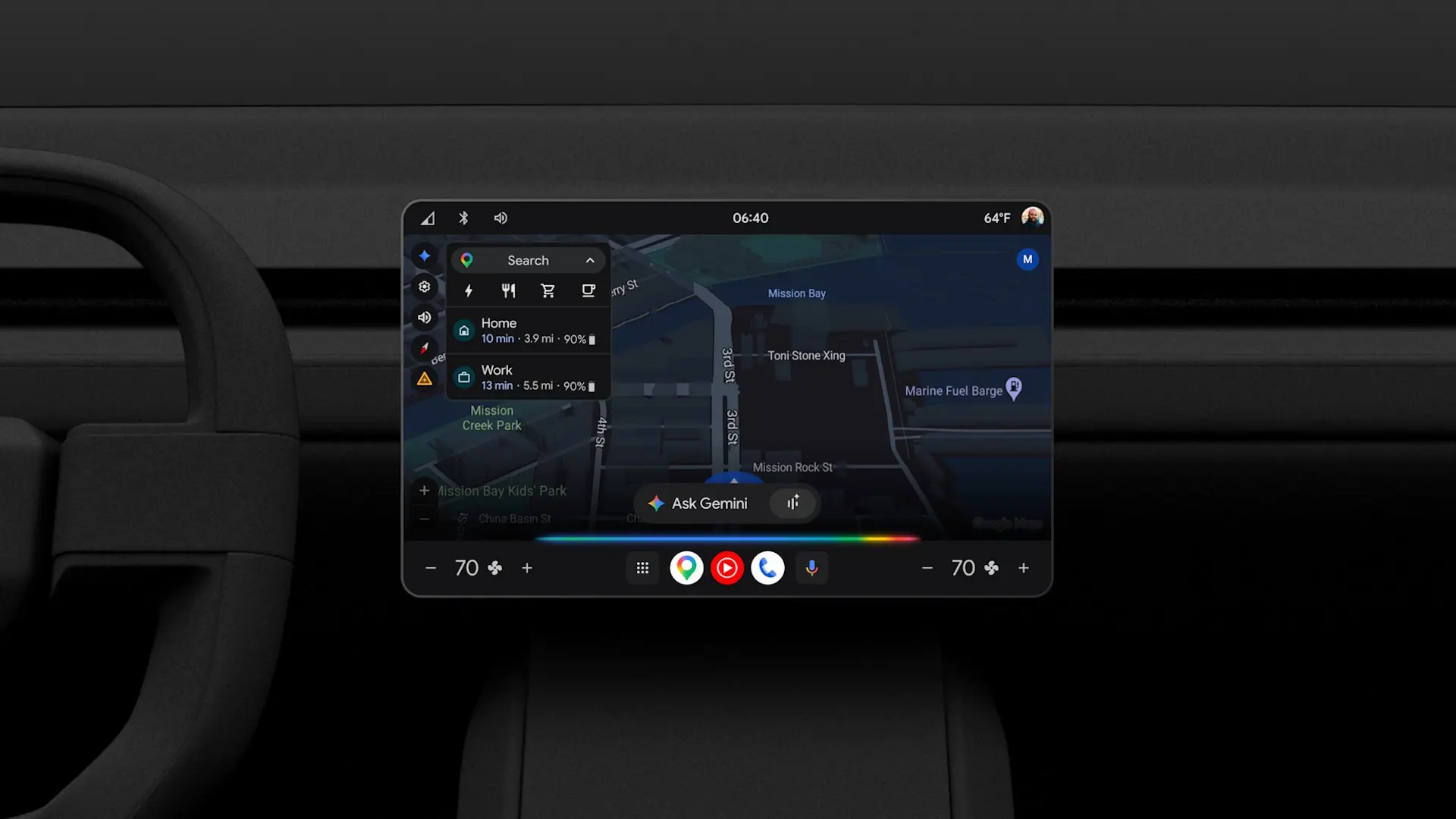
Google has taken another significant step in integrating its generative AI assistant into vehicles, showcasing an experimental feature that allows Gemini to see and interpret the world outside the car through its front-facing camera. The demonstration, delivered by Sameer Samat, President of Android at Google, during a conversation with Logan Kilpatrick, Product Lead for Google AI Studio, revealed a capability that could transform how drivers interact with their surroundings.
The feature is currently exclusive to the Volvo EX60, a model that has not yet begun shipping, and runs on the Google Built-in platform with Gemini. Samat did not provide a timeline for expanding the feature to other vehicles, leaving many questions about its broader availability. However, the demo highlights Google's ambition to extend Gemini's multimodal capabilities beyond smartphones and into the automotive realm.
How the Feature Works
The concept is reminiscent of Gemini Live's camera mode on Android phones, where the AI can analyze what the device's camera sees. In this automotive adaptation, the car's front-facing camera becomes Gemini's eyes, but with a crucial distinction: the camera feed is not continuously monitored. Samat stressed that the camera is only activated after the user explicitly invokes Gemini and asks a question. Once the query is processed, the feed is cut off, ensuring privacy is maintained.
During the demo, there was a noticeable lag as the camera feed connected to Gemini—unlike the phone version, no live viewfinder is displayed on the infotainment screen. Instead, Gemini provides spoken responses after processing the visual input. Despite the delay, the AI demonstrated impressive visual understanding. Samat asked Gemini to identify landmarks visible through the windshield around Google's Mountain View campus. The assistant correctly recognized The Orb public art installation, described details of the Gradient Canopy solar roof, and even explained the architectural history of the nearby Shoreline Amphitheater.
Background and Context
Google's Gemini model represents a major leap in AI, combining text, image, video, and audio understanding. This vehicle integration builds on earlier work with Gemini Live, which launched on Pixel devices in 2024. The automotive application is part of a broader trend where tech companies are embedding advanced assistants into cars. Google's Android Automotive OS already powers infotainment systems in vehicles from Volvo, Polestar, Ford, and others, but this camera-based feature takes interaction to a new level.
Traditionally, in-car AI assistants like Amazon Alexa and Apple's Siri have relied on voice commands and navigation data. This Gemini feature introduces real-time visual context, enabling the assistant to answer questions about specific objects, landmarks, or signs in the immediate environment. For example, a driver might ask about a building's history or decipher a foreign-language street sign while traveling abroad—an application Samat highlighted as particularly useful.
The demo also underscores the growing importance of multimodal AI. Competitors like Tesla's Full Self-Driving system use cameras for autonomous driving, but they do not provide conversational AI explanations. Google's approach is more assistive, aiming to enhance the driving experience without taking over control.
Privacy and Safety Considerations
Given the sensitivity of in-car cameras, Google was proactive in addressing privacy concerns. Samat emphasized that Gemini does not continuously analyze the road or record footage. The camera feed is only activated when the user triggers it, and the AI does not store images or video. This on-demand model aligns with Google's broader privacy principles, though some may still worry about potential misuse or data leaks. The company has not detailed whether the feature will be optional or require explicit consent beyond invoking the assistant.
Another consideration is driver distraction. The delayed response time could encourage drivers to focus on the road rather than the infotainment screen, but any visual interaction must be carefully designed to avoid diverting attention. Google has not released safety guidelines for this feature, but it is likely to be restricted to specific contexts, such as when the vehicle is stationary or in low-speed environments.
Future Potential and Challenges
While the Volvo EX60 is the only vehicle currently featured, Google is exploring ways to bring the capability to other cars with Google Built-in. The company is also investigating additional use cases, such as helping drivers identify wildlife, understand road signs in different languages, or get real-time information about points of interest. The demo showed that the system can handle complex visual queries, but limitations remain—accuracy depends on lighting, weather, and camera quality.
The automotive industry is increasingly embracing AI, with companies like Mercedes-Benz integrating ChatGPT, and BMW partnering with Amazon Alexa. Google's Gemini advantage lies in its deep integration with Android Automotive and the wealth of data from Google Maps and Search. If the camera feature becomes widely available, it could set a new standard for in-car assistants, offering a more intuitive way to access information than traditional voice commands.
However, scaling the feature will require collaboration with automakers to ensure the camera hardware meets Google's requirements and that the software integrates smoothly. Additionally, regulatory approval may be needed in some regions, especially concerning data privacy and driver monitoring laws.
Google's demonstration is a promising glimpse into the future of vehicle AI, where the car becomes a proactive assistant that understands not just where you are, but what you are looking at. As Samat noted, the company is still figuring out the best way to bring this capability to vehicles, and further refinements are likely before a public rollout. For now, the feature remains experimental, but it signals a clear direction for Google's ambitions in the automotive space.
Source: Android Authority News