

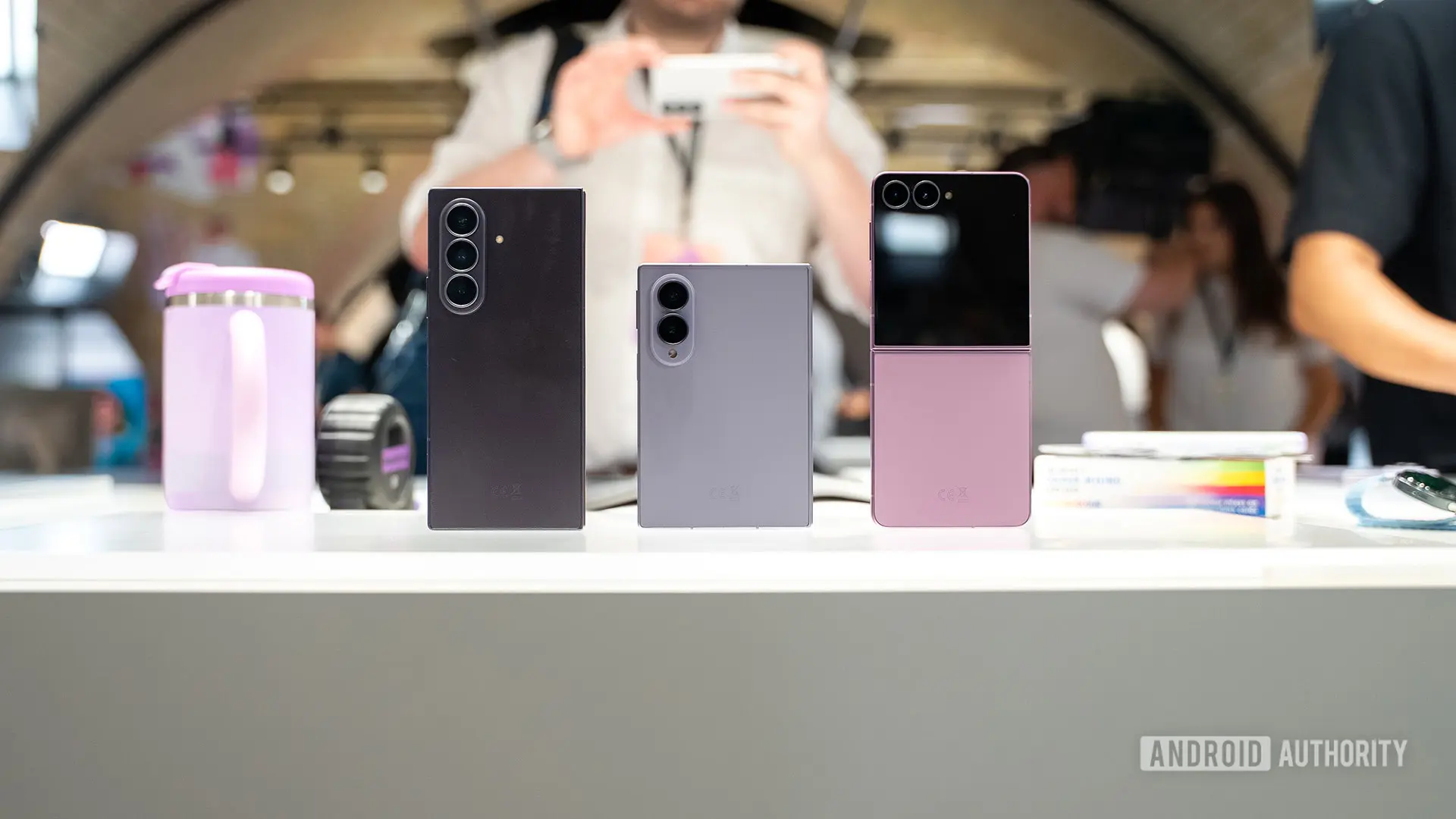
Earlier this year, Google unveiled the Gemma 4 model family, which formed the foundation for the next generation of its on-device AI — Gemini Nano 4. Now, that model is officially making its commercial debut on Samsung's latest foldable smartphones: the Galaxy Z Fold 8 Ultra, Galaxy Z Fold 8, and Galaxy Z Flip 8. This launch positions Samsung as the first device manufacturer to ship hardware equipped with Google's cutting-edge on-device AI technology.
What is Gemini Nano 4?
Gemini Nano 4 is the latest iteration of Google's lightweight, on-device AI model designed to run directly on smartphones and tablets without requiring a constant internet connection. Unlike cloud-based AI services, which send data to remote servers for processing, on-device models like Gemini Nano 4 process information locally, offering faster response times, lower latency, and enhanced privacy. The model supports over 140 languages and brings improved multimodal understanding, meaning it can interpret and combine inputs such as text, images, and audio more naturally than its predecessors.
This version builds upon the strengths of Gemini Nano 2 (introduced with the Pixel 8 series in late 2023) and the subsequent Gemma family. It introduces significant upgrades in efficiency and accuracy, enabling more complex tasks to be handled entirely on-device. Google designed Nano 4 to be the engine behind what it calls Gemini Intelligence — a suite of smart features that go beyond simple text generation or image recognition to perform real-world actions.
Gemini Intelligence: A new era of task automation
On Samsung's new foldables, Gemini Nano 4 powers several Gemini Intelligence features that promise to change how users interact with their phones. One of the standout capabilities is the ability to automate routine tasks. For example, users can ask Gemini to order food from a favorite restaurant, book a table for dinner, or purchase movie tickets — all without manually opening multiple apps. The AI understands context, follows multi-step instructions, and can securely access relevant services through integrations supported by Samsung and third-party partners.
Another key feature is the updated Gemini Notebook (previously known as NotebookLM). This tool allows users to upload images, handwritten notes, PDF files, and other documents, and then transforms them into polished, structured information. Whether you're a student compiling research notes or a professional preparing a report, Gemini Notebook uses the on-device model to summarize, organize, and even generate content based on your provided materials. Because processing happens locally, sensitive data never leaves the device, addressing common privacy concerns associated with cloud-based alternatives.
Additional Gemini Intelligence features are set to roll out in the coming weeks. The upcoming "Create My Widget" feature will let users design custom home screen widgets directly through a conversational interface with Gemini. The AI will interpret the user's request — for example, "make a widget showing today's weather and my calendar" — and generate a functional widget on the spot. Similarly, Gboard's "Rambler" dictation mode will allow users to speak in a free-form, rambling manner and have the AI automatically rewrite the transcription into coherent, well-structured notes. This feature is particularly useful for brainstorming sessions, meetings, or voice journaling.
Multilingual and multimodal advances
One of the most technically impressive aspects of Gemini Nano 4 is its support for 140 languages. This is a notable expansion from previous versions, which initially launched with support for only a handful of languages. The multilingual capability enables users around the world to access on-device AI in their native tongue, reducing language barriers. Furthermore, the improved multimodal understanding means the model can now process and combine different types of data simultaneously. For instance, you could take a photo of a restaurant menu, say "find the cheapest option" out loud, and have Gemini analyze the prices and highlight the best deal — all on-device.
This leap in multimodal processing is crucial for tasks like visual question answering, document analysis, and accessibility features. The model can read text from images, understand charts and graphs, and even recognize objects in real-time video. Such capabilities open doors for new applications in education, healthcare, and daily productivity.
The devices that bring it to life
Samsung's Galaxy Z Fold 8 Ultra, Z Fold 8, and Z Flip 8 serve as the launch vehicles for Gemini Nano 4. The Z Fold 8 Ultra is the company's flagship book-style foldable, featuring a 7.6-inch inner display, a slimmer design than its predecessor, a 5,000mAh battery, 45W fast charging, and a camera system borrowed from the Galaxy S26 Ultra. The Z Fold 8 adopts a wider aspect ratio for a more traditional smartphone feel in the folded state, with a lighter body, dual 50MP cameras, and a price point that makes it more accessible. The Z Flip 8 continues the clamshell design, now with a 4,300mAh battery, a larger FlexWindow supporting more apps, and a thinner, lighter profile.
All three devices run on the Snapdragon 8 Elite Gen 5 processor, which provides the necessary neural processing power to run Gemini Nano 4 efficiently. Samsung and Google worked closely to optimize the software stack, ensuring that the AI model integrates seamlessly with One UI and Android 17. Users can access Gemini Intelligence through a dedicated button or voice command, and the system intelligently decides whether to handle requests on-device or escalate to cloud-based Gemini when needed for more complex queries.
Background and industry impact
The arrival of Gemini Nano 4 on Samsung's foldables underscores a broader industry trend: the shift toward on-device AI as a core smartphone feature. Apple's recent integration of Apple Intelligence with iOS 19 and the ongoing development of Qualcomm's AI Engine all point to a future where phones are not just communication tools but intelligent assistants capable of understanding and acting upon the world.
For Google, partnering with Samsung — the world's largest Android phone maker — is a strategic move to expand the reach of its AI models. Earlier Gemini Nano versions were limited to Google Pixel devices, but with Samsung on board, the user base for on-device AI expands dramatically. This collaboration also benefits developers, who can now target Gemini Nano 4 through the AI Edge SDK and create apps that leverage local AI for things like smart replies, photo editing, and real-time translation.
The 140-language support is particularly noteworthy for emerging markets where cloud connectivity may be unreliable. On-device AI can operate offline, making advanced features accessible to more people. Additionally, because data stays on the phone, privacy-conscious users can embrace AI without fear of their information being stored on remote servers.
Looking at the competitive landscape, Samsung and Google are pushing the envelope faster than ever. The ability to automate real-world tasks — like ordering food or booking tickets — directly from a voice command is a significant step beyond simple Q&A bots. While some of these actions require backend integrations, the intelligence for reasoning and decision-making happens on the phone.
As more Gemini Intelligence features like "Create My Widget" and Gboard's "Rambler" become available, users will see their foldables evolve into even more capable productivity tools. Pre-orders for the Galaxy Z Fold 8 series are open now, with general sales starting August 7. The coming months will likely reveal how well Gemini Nano 4 performs in real-world usage and whether it can live up to the high expectations set by Google and Samsung.
Source: Android Authority News