

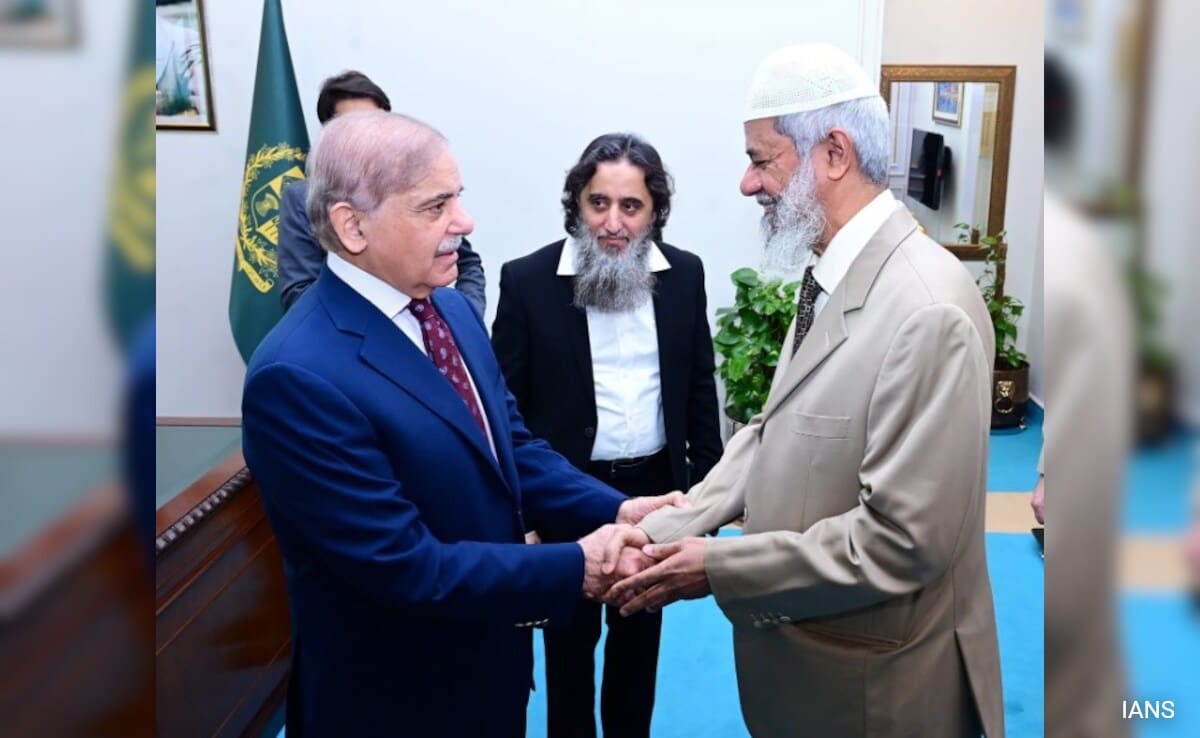
Fugitive Islamic preacher Zakir Naik, who is wanted by Indian authorities on charges of hate speech, money laundering, and inciting terrorism, met Pakistani Prime Minister Shehbaz Sharif in Islamabad on Thursday. The meeting, which took place at the Prime Minister's official residence, has drawn sharp reactions from India and raised questions about Pakistan's stance on harboring individuals facing legal action abroad.
Background of Zakir Naik
Zakir Naik, a 58-year-old Indian-born preacher, is the founder of the Islamic Research Foundation (IRF) and the popular Peace TV network. He is known for his controversial speeches that often promote religious intolerance and anti-West rhetoric. In India, he is accused of making provocative statements that allegedly inspired terrorist acts, including the 2008 Mumbai attacks and the 2016 Dhaka cafe siege. The National Investigation Agency (NIA) has charged him under the Unlawful Activities (Prevention) Act, and he has been designated a fugitive by Indian courts. Despite being banned in India since 2016, Naik continues to broadcast via satellite channels, reaching millions of viewers globally.
Naik has been living in self-imposed exile in Malaysia since 2016. He was granted permanent residency by the Malaysian government in 2019, though his activities there have also drawn scrutiny. In 2020, the Malaysian government banned him from giving public speeches after he made racially charged remarks against ethnic Chinese and Indian communities. However, he remains a polarizing figure, with supporters lauding his oratory skills and critics condemning his divisive rhetoric.
The Meeting with Shehbaz Sharif
According to sources within the Pakistani government, the meeting between Naik and Prime Minister Shehbaz Sharif was arranged at Naik's request. The discussions are said to have centered on religious issues, interfaith harmony, and the role of Muslims in South Asia. A statement from the Prime Minister's Office described the meeting as a courtesy call, with Sharif expressing his views on promoting Islamic unity and countering negative stereotypes about Islam. However, no official details about the topics discussed were released, and the meeting was not listed on the Prime Minister's official schedule.
The timing of the meeting is notable, as it comes amid heightened tensions between India and Pakistan. India has consistently demanded Naik's extradition, and his presence in Pakistan could be seen as a direct challenge to Indian diplomatic efforts. Pakistan, which has a history of hosting controversial figures, has not commented on any plans to grant Naik asylum or permanent stay.
Zakir Naik has previously visited Pakistan in 2013 and 2015 for speaking engagements. During his 2013 visit, he met with then-Prime Minister Nawaz Sharif and addressed a large gathering in Lahore. His speeches in Pakistan were widely attended and praised by local religious leaders, but also drew criticism from secular and minority groups.
Indian Reaction and Legal Implications
The Indian Ministry of External Affairs (MEA) responded sharply to the news of the meeting. In a statement, MEA spokesperson Randhir Jaiswal said, "Zakir Naik is a fugitive from Indian law, wanted for serious crimes including inciting terrorism and money laundering. Any country that engages with him is providing comfort to a criminal. We urge Pakistan to act against him and hand him over to Indian authorities." India has been pursuing Naik's extradition through Interpol, which issued a Red Notice against him in 2017. However, extradition efforts have stalled due to Naik's Malaysian residency and lack of bilateral extradition treaties.
Legal experts point out that if Pakistan provides safe haven to Naik, it could violate United Nations Security Council resolutions on counter-terrorism, which require all member states to prevent the support of individuals linked to terrorism. Pakistan has previously faced international criticism for harboring other fugitives, such as alleged Indian intelligence agent Kulbhushan Jadhav (though India denies the charges) and various militant leaders.
Naik's meeting with Shehbaz Sharif also comes just weeks after Pakistan's Foreign Office rejected India's extradition request for a separate fugitive, underscoring the strained relations between the two nuclear-armed neighbors.
Broader Context: Naik's Global Influence and Controversies
Zakir Naik's influence extends far beyond South Asia. Through Peace TV, which broadcasts in English, Urdu, and other languages, he reaches an estimated audience of 100 million people worldwide. His speeches often compare religious scriptures, yet many have been criticized as misleading and promoting a supremacist view of Islam. He has been banned in the United Kingdom, Canada, and several other countries for hate speech.
In 2019, a UK-based think tank, the Quilliam Foundation, described Naik as a "promoter of Islamist extremism" and called for global action against him. Despite this, Naik continues to have a significant following, particularly among conservative Muslims in South Asia, Africa, and the Middle East.
His meeting with the Pakistani PM is likely to bolster his standing among his supporters, who view him as a champion of Islam. However, it also risks alienating Pakistan further from the international community, especially at a time when the country is seeking financial assistance from the IMF and other global lenders.
What Lies Ahead
The Pakistani government has not indicated any intention to take action against Naik or to facilitate his extradition. Instead, the meeting suggests a tacit endorsement of his activities, at least within the country's borders. For India, this is a diplomatic setback, as it underscores the challenges in prosecuting fugitives who find refuge in neighboring states. The issue is likely to be raised in upcoming bilateral talks or international forums, though progress is unlikely given the deep mistrust between the two countries.
Meanwhile, Zakir Naik continues to use his platform to criticize India and promote his brand of Islam. His recent speeches have focused on what he calls the "persecution of Muslims in India," a narrative that resonates with many in Pakistan and other Muslim-majority countries. Whether this meeting leads to a more formal alliance between Naik and the Pakistani establishment remains to be seen, but it certainly signals a new chapter in his relationship with the country.
In the broader landscape of South Asian geopolitics, this meeting is yet another flashpoint. It reinforces the perception that Pakistan is willing to host individuals deemed undesirable by India, further complicating any prospects for peace and cooperation. As the world watches, the saga of Zakir Naik—a preacher, a fugitive, and now a guest of a head of government—continues to unfold.
Source: NDTV News