

Flock Safety’s AI-powered search tool, widely used by police departments across the United States, has been reverse engineered by an independent security researcher. The findings reveal how the platform lets officers comb through a vast network of license-plate cameras, identify vehicles with partial descriptions, and potentially track individuals’ movements without probable cause. The analysis, published online without naming specific law enforcement clients, provides an unusual look inside a system that has largely operated behind a veil of proprietary secrecy.
A powerful surveillance ecosystem
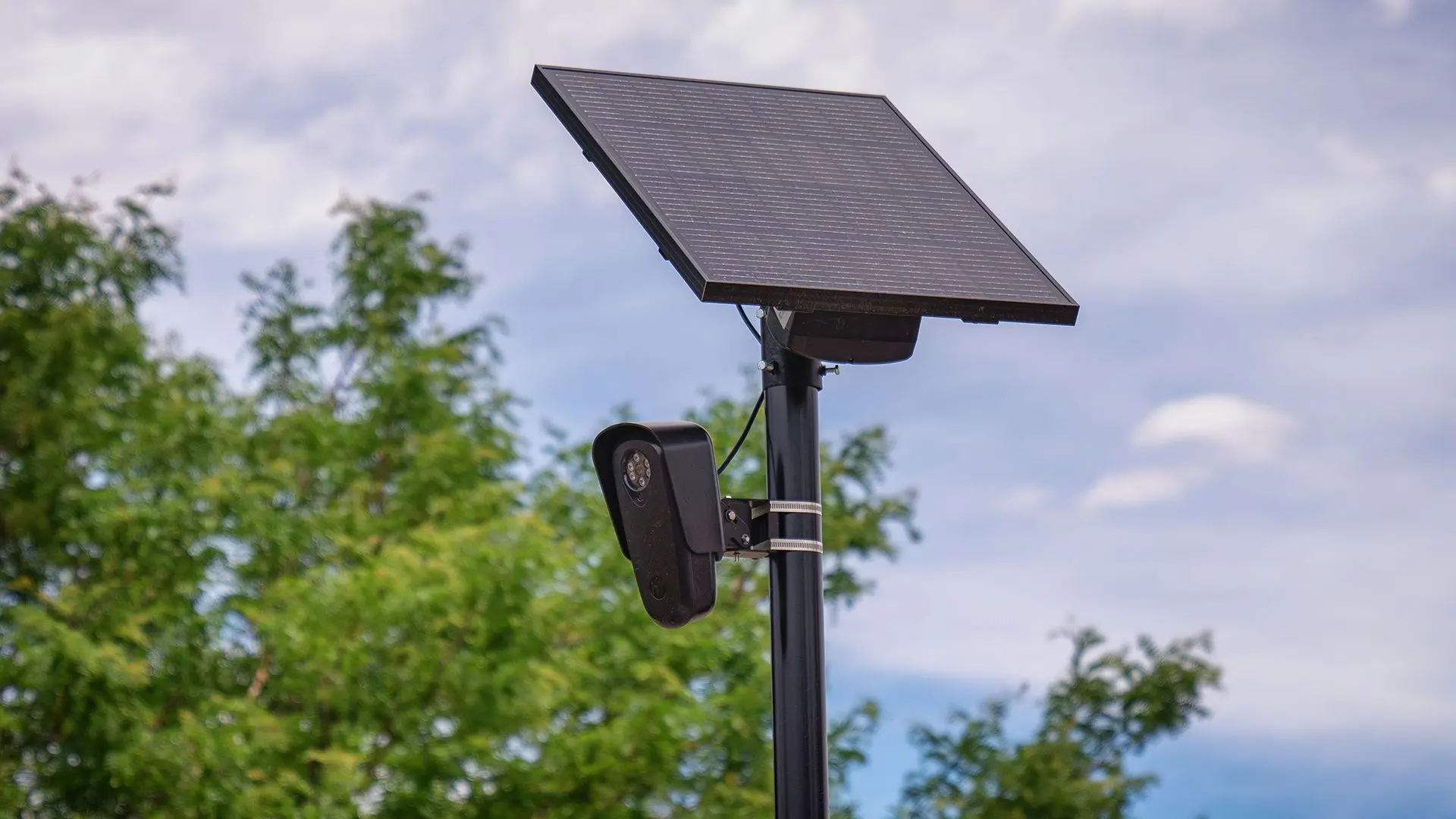
Flock Safety, founded in 2017, has become one of the country’s largest suppliers of automated license plate readers and surveillance equipment. Its cameras are mounted on utility poles and streetlights, constantly scanning passing license plates. The company claims its network spans thousands of cities and captures millions of vehicle records every day. Police officers access the platform through a mobile app and a web dashboard, where they can search for plates or filter by vehicle type, color, and even distinctive details such as roof racks or bumper stickers.
The reverse engineering effort focused on the mobile application used by officers. By intercepting network traffic and decompiling the app’s code, the researcher was able to map the underlying API endpoints and document what data is collected, stored, and shared. One of the most troubling revelations is that the app appears to allow law enforcement to perform “offense-free” searches. In other words, an officer can enter a description of a vehicle they find suspicious, such as a white Ford pickup with a ladder rack, and pull up a list of previous sightings, even if no crime has been reported. Civil liberties advocates have long warned that this type of exploratory search turns the database into a mass location-tracking tool.
What the reverse engineering found
Another key finding involves data retention. Flock publicly states that it does not sell data and that many agencies set their retention periods to 30 days. The reverse-engineered app, however, reveals that metadata such as geolocation and camera identifiers are sent alongside every license-plate read. That metadata is essential for geofencing: officers can run a “search by location” and ask for every vehicle seen in a certain radius during a specific window. While the company requires agencies to obtain a warrant or court order for some historical searches, the app’s internal logic does not appear to block warrantless searches, leaving enforcement to policy and auditing.
The researcher also found that Flock’s platform has the ability to share data between agencies automatically. The company calls this federation: a camera in one jurisdiction can contribute to searches run by officers in neighboring towns, counties, or even states. This interoperability is marketed as force multiplier for investigations, but it also means that privacy protections in one jurisdiction may be undermined by weaker protections elsewhere. If a search query is logged, the log may include an officer’s name and badge number, the agency, and the search parameters—but the app does not appear to generate a public record or notify the person whose vehicles were searched.
The technical report includes screenshots of the app’s network requests, showing that search results are returned in JSON format with time stamps, camera locations, and images of license plates. The images are linked to an index that can be queried with partial plate numbers. The optical character recognition engine is capable of reading plates from several states and provinces. Some configurations include a “hot list” feature that flags plates in state or national criminal-justice databases. When a hot-list plate is detected, the system can send push notifications to officers in the vicinity, according to the reverse-engineered code.
Privacy and legal questions
Flock Safety responded to the disclosure with a statement saying that the reverse engineering was unauthorized and that the company has security monitoring to prevent such activity. It emphasized that law enforcement access is logged and audited, and that every user must agree to a privacy pledge limiting searches to legitimate law enforcement purposes. But privacy advocates are not satisfied. They argue that the underlying architecture is built for surveillance at an unprecedented scale, and that the lack of independent testing means the public cannot verify the company’s promises.
This episode fits into a broader pattern of police departments rapidly adopting algorithmic tools—from predictive policing to facial recognition—without thorough public debate. Flock’s technology is popular because it is relatively cheap to deploy and easy to use. But, as this reverse engineering demonstrates, the systems are not merely passive data recorders; they are active search engines. The same capability that lets an officer find a getaway car can allow a supervisor to locate every vehicle at a political protest, an abortion clinic, or a mosque.
Historically, law enforcement has needed a warrant to place a GPS tracker on a vehicle. In United States v. Jones, the Supreme Court ruled in 2012 that physical installation of a GPS tracker constitutes a search. With ALPR networks, there is no physical installation, and the data is often collected by private devices on public roads. Courts have split on whether warrantless access to historical ALPR records violates the Fourth Amendment. Some decisions have held that prolonged warrantless use of ALPR data violates an individual’s reasonable expectation of privacy. Others have allowed shorter retention periods.
A call for stronger oversight
The reverse engineering report does not reveal specific law enforcement operations, but it contains enough detail for security researchers to inspect Flock’s API for vulnerabilities. The author of the analysis said the goal was to foster transparency and informed conversation, not to help criminals evade detection. Still, the publication of technical details may make it easier for malicious actors to spoof the system or inject false data. The company has patched some less severe issues, but the core architecture remains accessible to anyone who can obtain a legitimate officer login—a risk that concerns cybersecurity experts.
Flock has argued that its technology is essential for solving crimes like carjackings, catalytic-converter thefts, and hit-and-runs. The company keeps a public transparency portal that lists which agencies use its cameras, but the portal is not comprehensive. Some cities have canceled contracts after residents raised objections, while others have expanded their use with little oversight. The reverse engineering release may become a crucial test case for whether private surveillance companies can continue to operate in this gray zone.
Now a handful of civil liberties groups are urging state legislators to pass stricter laws governing ALPR data. Among the proposed policies: requiring warrants for all historical searches, limiting retention to 14 days, requiring automatic notification when a person’s plate is queried, and establishing independent audits. No federal law currently regulates ALPRs, leaving a patchwork of state rules that often lag behind technology. The report provides an unusual empirical foundation for the legislative debate, because it is one of the few independent documentations of how a private product works behind the scenes.
The pressures on independent research
The researcher’s methodology also highlights the inherent difficulty of studying proprietary surveillance systems. Copyright law can inhibit security research, and the Computer Fraud and Abuse Act has been used in the past to punish good-faith researchers. For now, the report is hosted in a public repository, and its author has removed any examples that might compromise active investigations. Flock’s response, however, shows how hard it is for outsiders to scrutinize these systems. The company has previously threatened legal action against researchers who published vulnerabilities, although it has not yet commented on next steps in this case.
The implications go beyond one company or one mobile app. Flock Safety is part of a larger industry that sells AI-powered surveillance to police. These tools often rely on machine learning models trained on massive datasets. The models are not perfect: misreadings of plates can lead to innocent drivers being pulled over, and a flawed search query can produce a false positive. Without access to the system’s performance metrics, there is no way to know how often these errors happen. The reverse engineering exercise cannot answer every question, but it does provide a starting point for public accountability.
The most important takeaway is that the power of the state to search digital records has grown without a corresponding expansion of judicial oversight. The public knows police use camera networks, but rarely can citizens see the software architecture that determines how those cameras are used. This reverse engineering peels back a layer, showing that a license plate capture is not merely a moment frozen in time; it is an entry in a searchable, shareable, location-aware database. That knowledge will inevitably influence ongoing fights over police surveillance, the right to assemble, and the limits of algorithmic law enforcement.
Source: TechRadar News