

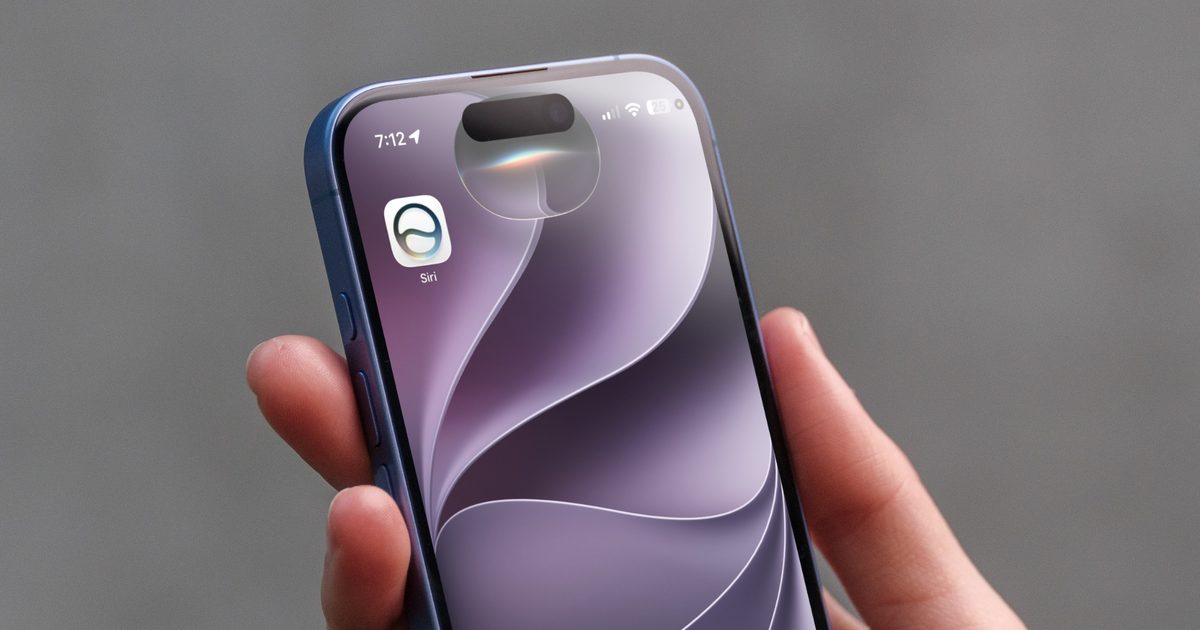
Apple’s latest earnings call brought plenty of good news: record iPhone revenue, a strong June quarter, and non-stop excitement about Siri AI. But buried inside the analyst Q&A was a detail that caught our attention: Apple all but confirmed that heavy Siri AI users could eventually need a bigger iCloud+ plan to keep using it comfortably. The comment signals a shift in how Apple may handle the costs of generative AI, and it raises important questions about what “free” really means for Siri features going forward.
Key facts
- Apple executives were asked how the company plans to cover Siri AI compute costs during the earnings call.
- Tim Cook confirmed that heavy Siri AI users may be offered upgrades to higher iCloud+ tiers.
- Apple said that the exact balance between absorbing AI costs and passing them through iCloud+ is still uncertain.
- AI features in the Apple Home app already require a 2TB iCloud+ plan, creating a precedent.
- No pricing tiers, usage caps, or timeline have been announced yet.
Will heavy Siri AI users need to pay more?
During the call, an analyst asked how Apple plans to recover the compute costs behind Siri AI, especially since usage during the beta has apparently been strong. CEO Tim Cook didn’t dodge the question. He said Apple believes there will be people who want to use it a lot, and confirmed the company will roll out “some kind of upgrade possibilities on iCloud+ where people can buy up the stack.” In plain terms, if you push Siri AI hard, Apple wants you on a higher iCloud+ tier to help cover the cost.
This wasn’t a one-off comment either. Later in the call, when asked whether Siri AI would change Apple’s capital spending, Cook circled back to the same idea, adding that heavy usage gives people “the ability… to move up on an iCloud plan as well.” He also admitted that the balance between Apple absorbing those AI costs itself versus passing them on through iCloud+ upgrades is still “a bit uncertain at the moment.”
It’s not that Apple will be doing this for the first time either. If you remember, the new AI features in the Apple Home app are restricted to the 2TB iCloud+ plan, which costs $9.99/month. So, Apple already has a precedent to follow. The company has been willing to tie premium AI-powered conveniences to higher subscription tiers for specific product categories, and Siri AI may simply be the next logical extension of that strategy.
What does this mean for you?
Nothing is locked in yet. Apple hasn’t announced usage caps, pricing tiers, or a timeline for any of this. But reading between the lines, it sounds like the free tier of Siri AI could come with some sort of ceiling, and once you hit it, Apple would love for you to upgrade your iCloud+ subscription to keep going. If you’re already paying for iCloud+, this probably won’t sting much. But if you were hoping Siri AI stays free and unlimited forever, that’s not going to happen.
A closer look at Apple’s AI costs and iCloud+ economics
The underlying issue is simple: generative AI is expensive to run. Every time a user asks Siri to summarize a long email thread, generate a custom image, or carry on a back-and-forth conversation, Apple must pay for server processing, energy, model inference, and ongoing infrastructure. Those costs add up quickly when millions of users interact with AI throughout the day. Unlike a traditional Siri request that just fetches weather data or sets a timer, modern large language model requests require substantial computational resources on the back end.
Apple has tried to differentiate itself by emphasizing on-device processing. Many Siri AI features are designed to run locally on iPhones, iPads, and Macs using Apple’s own chips. On-device processing is faster for privacy and reduces Apple’s cloud costs. However, not everything can happen on the device. Complex queries, cloud-based inference, and features that require a broader knowledge base still need server support. As beta usage numbers climb, Apple has to manage a growing operational expense that it hasn’t traditionally incurred with Siri.
That’s likely why Cook pointed to iCloud+ as the natural vehicle for monetization. iCloud+ already has a huge subscriber base, with multiple tiers ranging from 50GB to 2TB and beyond. Apple can layer AI usage allowances onto these existing plans without introducing a separate AI subscription. It also means users who already store photos, backups, and documents in iCloud may find an upgraded plan more attractive if it also unlocks better Siri AI limits.
Apple already set the template with Apple Home
Earlier this year, Apple launched new AI features inside the Home app that help users create smarter automation scenes and control connected accessories with natural language. Those features aren’t available to everyone. Instead, Apple limited them to subscribers on the 2TB iCloud+ plan or higher. That decision was a clear signal that Apple is comfortable tying premium AI capabilities to its highest storage tiers. It wasn’t a small change, either, because HomeKit users with smaller iCloud plans suddenly had a reason to upgrade if they wanted to use the new features.
That precedent makes it easier to understand where Siri AI may be heading. If Apple restricts certain AI features to higher iCloud+ tiers, it can avoid charging a flat fee for Siri while still generating enough revenue to offset AI-related capital expenditures. It also aligns with Apple’s broader services strategy, which has turned subscription revenue into a major growth driver. Services revenue has become a counterweight to slowing hardware sales, and AI offers yet another hook to encourage plan upgrades.
How this fits into Apple’s broader AI roadmap
Siri AI is not just a single feature. It builds on Apple Intelligence, the company’s suite of machine learning and generative AI tools introduced across iOS, iPadOS, and macOS. With Apple Intelligence, Siri gains the ability to understand context, answer questions about content on your screen, and perform actions across apps. Some of these features require natural language understanding and real-time data processing that go far beyond what older Siri versions could do.
Apple is also facing intense competitive pressure. Google has integrated Gemini into Android and its assistant experiences, while OpenAI’s ChatGPT has redefined what people expect from AI assistants. Microsoft has pushed Copilot across Windows and its productivity apps. In this environment, Apple has to offer something compelling to keep users inside its ecosystem. The strategy appears to be: give users a taste of Siri AI for free, but make the most resource-heavy capabilities part of a monetized tier.
That approach is not unique to Apple. Many cloud-based AI services offer a free tier with limited quota, then ask serious users to pay as they consume more tokens, credits, or compute time. What’s unusual for Apple is applying that logic to a product named Siri, which has been positioned as a free, standard feature of iOS for more than a decade. Changing that positioning, even partially, marks a philosophical shift in how Apple thinks about the assistant.
Potential impact on consumers and privacy
For average users, the practical impact may be mild at first. The free tier will likely cover occasional summary requests, basic image generation, and everyday Siri queries. Only users who rely on Siri AI for work, content creation, or heavy automation will feel the ceiling. But as Siri AI becomes more embedded in daily workflows, the definition of “heavy” may shift. A user who asks Siri to draft messages, summarize documents, and manage notifications throughout a busy day could quickly cross a modest usage threshold.
Privacy also remains a question. Apple often promotes that AI processing happens on device to keep personal data private. If more users are pushed to higher iCloud+ tiers, Apple has to be transparent about what happens in the cloud versus on the device. Users may wonder whether their Siri requests are being logged, stored, or used to improve models. Apple’s privacy promises have historically been a major selling point, and it will need to maintain that trust while introducing cloud-dependent AI features.
Pricing will be another test. The 2TB iCloud+ plan in the U.S. currently costs $9.99 per month, with even larger plans available for those who need more storage. Apple could introduce a higher tier for AI-heavy users, or it could create add-ons within iCloud+ that unlock specific language model capabilities. Because Cook mentioned “upgrade possibilities on iCloud+,” a single bundled tier seems most likely. That would let Apple avoid fragmenting Siri into multiple paid add-ons, which could confuse consumers.
What Apple still hasn’t told us
There are many unknowns. We don’t know how many free queries per day or per month will be allowed before a user hits the ceiling. We don’t know whether the usage meter will reset periodically or whether it will be cumulative. We don’t know if Siri AI limits will vary by device region, iCloud storage size, or Apple One bundle membership. Apple hasn’t even announced whether these changes will come with future beta releases, the next iOS version, or a staged rollout.
Tim Cook’s language suggests the company is still figuring out the exact balance. During the earnings call, he described the structure as “a bit uncertain at the moment.” That kind of phrasing usually means discussions are ongoing and that Apple doesn’t want to lock itself into a public commitment too early. Still, the overall direction is clear: Siri AI will have a free tier, and that free tier will have limits. People who want more will be invited to pay through iCloud+.
This is a pivotal moment for Apple’s services business. If Apple can convert AI enthusiasm into iCloud upgrades, it creates a durable revenue stream that supports its infrastructure investments. If it prices the upgrades too aggressively, it risks frustrating users who expect Siri to remain a free intelligence layer. The company has succeeded before with premium iCloud features, but Siri enjoys a more emotional place in Apple’s ecosystem. The next year will reveal whether users accept the new model or push back.
Source: Digital Trends News