

Zcash Unveils Quantum-Resistance Roadmap
Zcash, the privacy-focused cryptocurrency, has announced a bold new roadmap that includes rolling out quantum-recoverable wallets within the next month and achieving full post-quantum security by 2027. The initiative aims to future-proof the network against the looming threat of quantum computing, which could potentially break the cryptographic foundations of existing blockchain systems like Bitcoin and Ethereum.
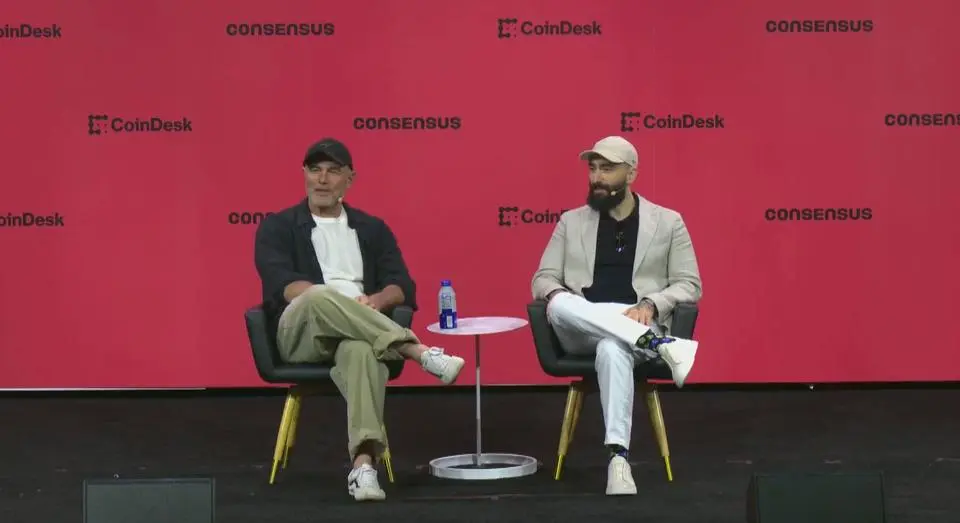
The announcement was made by Zcash's founder, Zooko Wilcox, during a live event where he underscored the urgency of quantum resistance. 'Bitcoin no longer holds up as the cypherpunk-grade money it was meant to be,' Wilcox said, pointing to the need for advanced privacy and security features that protocols like Zcash can offer.
What Are Quantum-Recoverable Wallets?
Quantum-recoverable wallets are a new type of wallet that allow users to recover their funds even if their private keys are compromised by a quantum attack. The technology leverages advanced cryptographic techniques such as lattice-based cryptography or hash-based signatures, which are believed to be resistant to both classical and quantum computers. Zcash plans to deploy these wallets as an interim solution, giving users a safety net while the network transitions to a fully quantum-proof protocol.
The full post-quantum upgrade, scheduled for completion within 12 to 18 months from now (targeting 2027), will involve replacing the current proving system used for shielded transactions with one that is resistant to quantum attacks. This upgrade is part of a broader scaling push that aims to achieve Visa- and Mastercard-level throughput, handling thousands of transactions per second while maintaining Zcash's core privacy guarantees.
Market Rally and Institutional Backing
The roadmap comes at a time of significant momentum for Zcash. The token ZEC has rallied 110% over the past 30 days, fueled by a major investment from Multicoin Capital, a prominent crypto venture firm. The investment has reignited interest in privacy-focused blockchain projects, which had been overshadowed by the broader market focus on DeFi and meme coins.
Multicoin Capital's decision to back Zcash is seen as a validation of the project's long-term vision—anonymity combined with scalability and quantum resistance. The firm has been vocal about the importance of privacy in crypto and views Zcash as a key player in the emerging 'cypherpunk' renaissance.
Adoption via Cross-Chain Swaps
Adoption of shielded ZEC is being driven in part by cross-chain swaps enabled by Near Intents and other interoperability upgrades. These protocols allow users to seamlessly move assets from other blockchains—such as Ethereum, Solana, or Binance Smart Chain—directly into Zcash's shielded pool without leaving a trace.
The shielded pool now holds approximately 30% of the circulating supply of ZEC, up from under 10% two years ago. This growth indicates increasing demand for truly private transactions, especially among users who value financial sovereignty and surveillance resistance.
Scaling and Governance Overhaul
To handle higher transaction volumes, the Zcash community is discussing proposals to reduce block times and increase block sizes, similar to the scaling strategies used by Solana and other high-throughput chains. Accelerated transaction throughput is critical for Zcash to compete with mainstream payment networks.
In addition to scalability, there are proposals to introduce token-holder voting on key protocol parameters, such as mining rewards, fee structures, and development funding. This would shift Zcash from a development-driven model—controlled by the Electric Coin Company and the Zcash Foundation—to a more decentralized governance structure, empowering the community to shape the network's future.
Historical Context: Bitcoin vs. Zcash for Privacy
Bitcoin's pseudonymous nature has long been criticized by privacy advocates. While transactions are not directly tied to real-world identities, they are recorded on a public ledger that can be analyzed with heuristic clustering. This has led to the development of chain analysis firms that can deanonymize users with a high degree of accuracy.
Zcash was designed from the ground up to address these limitations. Using zero-knowledge proofs (zk-SNARKs), Zcash allows users to shield their transactions, hiding the sender, recipient, and amount. This makes Zcash one of the most private cryptocurrencies in existence.
However, the reliance on elliptic curve cryptography in the current zk-SNARKs scheme means that a sufficiently powerful quantum computer could eventually break the privacy and security guarantees of shielded transactions. This is why the quantum-recovery and post-quantum upgrades are critical for Zcash's long-term survival.
Quantum Computing Threats to Cryptocurrency
Quantum computers leverage the principles of quantum mechanics to solve certain mathematical problems exponentially faster than classical computers. Shor's algorithm, for instance, can efficiently factor large integers and compute discrete logarithms, which underpin the security of many public-key cryptosystems used in blockchains.
While a practical large-scale quantum computer is still years away, experts estimate that a quantum device with a few thousand logical qubits could break Bitcoin's ECDSA signature scheme. This has prompted many projects, including Bitcoin itself, to explore quantum-resistant upgrades. Zcash's proactive approach positions it as a leader in this space.
Technical Details of the Upgrade
The quantum-recoverable wallets will likely use a hybrid scheme that combines current zk-SNARKs with a quantum-resistant signature algorithm, such as Falcon or SPHINCS+. This allows users to continue using shielded transactions while ensuring that their funds can be recovered even if the encryption is later broken.
The full post-quantum upgrade by 2027 will involve replacing the core cryptographic primitives of the protocol. Zcash developers are collaborating with academic cryptographers to design a new proving system that is both efficient and quantum-proof. Early benchmarks suggest that the new system may increase transaction sizes and verification times, but ongoing optimizations aim to minimize the impact on performance.
Additionally, the scaling push to Visa-level throughput requires a rethinking of Zcash's consensus mechanism. Current proposals include transitioning to a proof-of-stake model or implementing sharding, similar to Ethereum 2.0. The community is also exploring layer-2 solutions like zk-rollups to increase capacity while preserving privacy.
Implications for the Wider Crypto Ecosystem
Zcash's quantum-resistance roadmap could set a precedent for other privacy coins and even for major blockchain networks like Bitcoin and Ethereum. If Zcash successfully implements these upgrades, it may become the de facto standard for secure digital cash in a post-quantum world.
The investment from Multicoin Capital and the price rally suggest that the market is paying attention. However, challenges remain: the technical complexity of the upgrades, potential delays, and the need to maintain backward compatibility for existing users.
Moreover, regulatory pressure on privacy coins continues to mount. Several exchanges have delisted ZEC due to concerns over anonymity and compliance with anti-money laundering rules. The Zcash team is working on compliance-friendly features, such as selective disclosure of transaction details, to address these concerns without compromising core privacy.
Community Response and Future Outlook
The Zcash community has welcomed the roadmap, though some members have expressed impatience with the long timeline. Shielded adoption has been slower than expected, and many hope that the quantum-resistant upgrade will drive more users to the network.
Zcash creator Zooko Wilcox remains optimistic: 'We are building the financial layer of the future—private, secure, and resistant to any threat, quantum or otherwise.' With the upcoming wallet rollout and the post-quantum milestone in sight, Zcash is positioning itself as both a relic and a reinvention of the cypherpunk dream.
Source: Coindesk News