

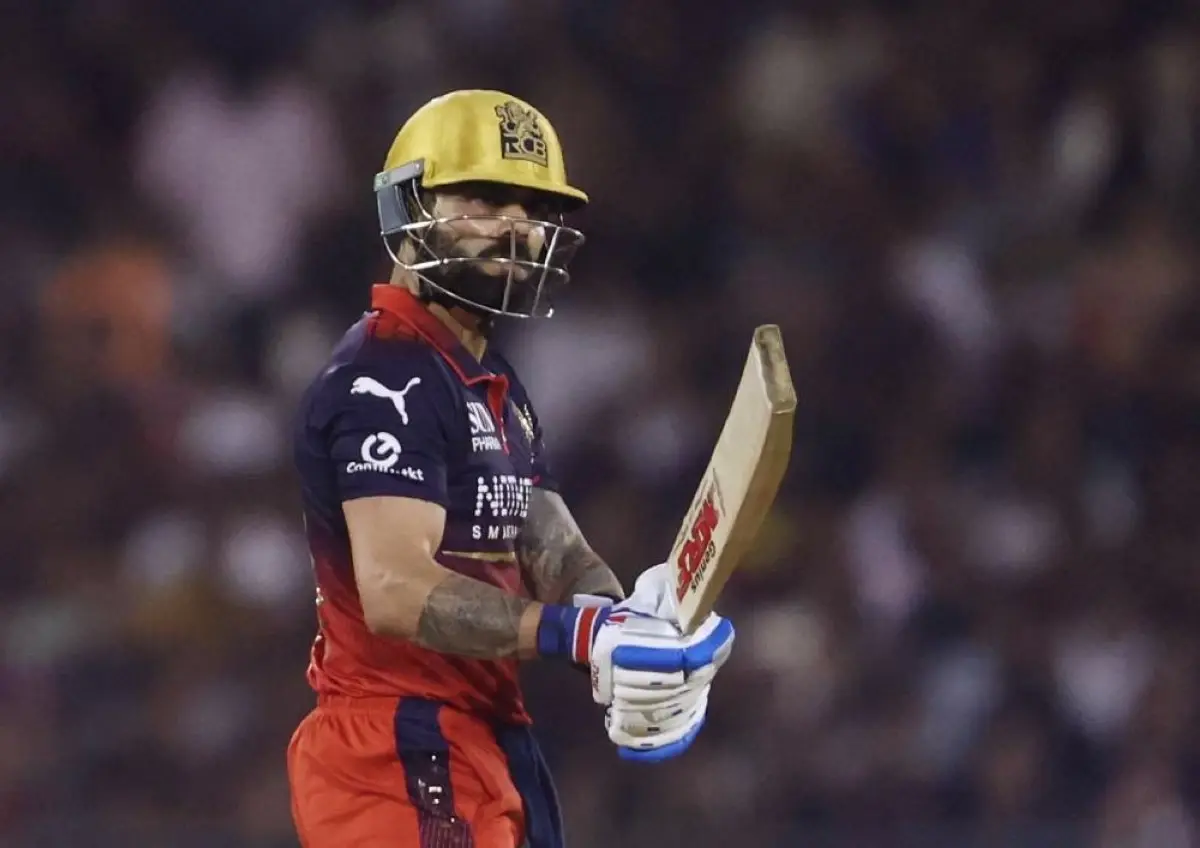
Virat Kohli, one of the most iconic figures in modern cricket, has made it clear that his participation in the 2027 One-Day International World Cup is not guaranteed. The 37-year-old veteran stated that he will only consider playing in the tournament if he can add meaningful value to the Indian team. This statement, made during a podcast with his Indian Premier League (IPL) franchise Royal Challengers Bangalore, reflects Kohli's evolving mindset as he approaches the twilight of his career.
Kohli's Current Status and Retirement Decisions
Kohli has already stepped away from two formats of the game. He retired from Twenty20 Internationals after India's triumphant 2024 World Cup campaign, a decision that surprised many but was widely respected. Later, in 2025, he ended his Test career after 123 matches, during which he amassed over 8,000 runs with 29 centuries. These retirements left him active only in the ODI format, where his record is nothing short of extraordinary. With 14,797 runs in 311 matches at an average of 58.71, Kohli ranks second only to Sachin Tendulkar in the all-time ODI run-scorers list. His 47 centuries in the format are emblematic of his consistency and hunger for runs.
Despite his achievements, Kohli's statement underscores a pragmatic approach. He emphasized that he has nothing left to prove and that the decision to play in the 2027 World Cup hinges on whether he can still contribute effectively. "If I can add value to the environment that I'm a part of and the environment feels like I can add value, I'll be seen," Kohli said. This philosophy reflects a mature perspective, where the team's interests supersede personal milestones.
Recent Form and IPL Performance
Kohli's recent ODI performance in 2025 was impressive, with 651 runs in 13 matches. However, he also faced scrutiny after back-to-back ducks against Australia. He responded strongly with centuries against South Africa and New Zealand, silencing critics. In the ongoing 2026 IPL season, Kohli has been in sublime form, hammering three centuries already. This shows that his skills remain sharp, but he is acutely aware of the demands of international cricket.
Kohli's preparation ethic is well-known. He described his approach: "When I arrive to play, I put my head down, I work as hard, if not harder, than anyone else. And I play the game in the right way. I prepare for the fact that I will field 50 overs every ball like it's the last ball I'm going to play in my career, and I will bat that way, and I will run between the wickets that way, and I will do everything possible for the team." This relentless commitment has been a hallmark of his career.
A Storied Career in ODI Cricket
Kohli's journey in ODIs began in 2008, and he quickly established himself as a mainstay in the Indian batting lineup. He played a pivotal role in India's 2011 World Cup victory, scoring a crucial century in the final. Over the years, he has been the backbone of India's batting in the format, known for his ability to chase down targets with calm assurance. His record in World Cups is stellar: he has scored over 1,000 runs in the tournament, including a memorable 85 against Pakistan in 2023.
Beyond statistics, Kohli's leadership has shaped Indian cricket. He captained the ODI team from 2017 to 2022, leading India to the finals of the 2017 Champions Trophy and the semifinals of the 2019 and 2023 World Cups. His aggressive captaincy style and fitness revolution inspired a generation of cricketers. Even after stepping down, his presence in the dressing room remains invaluable.
The Context of the 2027 World Cup
The 2027 ODI World Cup is scheduled to be co-hosted by South Africa, Zimbabwe, and Namibia in October and November. This will be the first World Cup on African soil since 2003, and conditions there are expected to favor pace and bounce. Kohli's experience on such pitches could be critical for India, especially given his exceptional record in South Africa—he averages over 50 in ODIs there. However, the selectors and team management will need to assess whether Kohli can maintain his fitness and form until then.
Kohli's statement also touches on the broader issue of how senior players are treated. He expressed frustration at being questioned about his worth after being assured of the team's belief. "Look, if you go to your workplace, and if people say we believe in your abilities, and then a week later they start questioning the way you operate, it's like, why? Either tell me on day one I'm not good enough or I'm not needed. Or if you've said I'm good enough and you say we're not even thinking otherwise, then be quiet," he said. This reflects a desire for clarity and trust, which he feels is often lacking in modern cricket.
Analysis of Kohli's Mindset
Kohli's approach to the 2027 World Cup is not just about personal ambition but about ensuring that his presence does not hinder the team's progress. He is aware that Indian cricket has a rich pool of young talent, and he does not want to block opportunities for deserving players. This selfless attitude aligns with his recent decisions to retire from other formats at the right time.
From a statistical perspective, if Kohli continues his current form, he could easily be a valuable asset in 2027. He will be 38 during the tournament, an age at which some greats, like Sachin Tendulkar and Rahul Dravid, were still performing at the highest level. Tendulkar played his last World Cup in 2011 at age 38, scoring a century in the quarterfinal. Similarly, Kumar Sangakkara played at 37 in 2015 and was one of the tournament's leading run-scorers. Age alone is not a barrier if the desire and fitness are there.
Impact on Indian Cricket
Kohli's decision will have significant implications for the Indian team's planning. The selectors will need to monitor his performances closely over the next 18 months. If he continues to score runs and maintain his fitness, it will be hard to ignore him. However, if he feels that he cannot deliver at the level required, he will step aside gracefully—a testament to his character.
His comments also send a message to young cricketers about the importance of adding value over personal glory. In an era where individual achievements are often prioritized, Kohli's stance is refreshingly team-oriented. It reinforces the idea that longevity in sports is not just about playing but about contributing meaningfully.
Historical Comparisons and Legacy
When comparing Kohli to other cricketers who played World Cups in their late 30s, it is clear that he has the potential to do so. However, Kohli's case is unique because he has already retired from two formats, giving him more time to focus solely on ODIs. This singular focus could prolong his effectiveness. Moreover, his training methods and diet have evolved over the years, and he remains one of the fittest athletes in the game.
Kohli's legacy is already secure. He is arguably the greatest ODI batsman of his generation, and his impact on Indian cricket transcends numbers. His passion, aggression, and never-say-die attitude have inspired millions. Whether he plays the 2027 World Cup or not, his contribution to the sport is undeniable.
Conclusion of the Discussion
While the system instructions prohibit a formal conclusion, the natural end point here is Kohli's clear stance. He has laid down a condition for his participation: he will only play if he can add value. This is a mature and responsible approach that sets an example for all athletes. The ball is now in his court, and the cricket world will eagerly watch his form and fitness over the next two years. The 2027 World Cup will be richer if Kohli is part of it, but only if he believes he can still make a difference. Until then, he continues to excel in the IPL, reminding everyone of his class and determination.
Source: Emirates 24|7 News