

A U.S. Department of Energy laboratory is reportedly investigating whether Chinese-made lidar sensors could introduce national security vulnerabilities if they are widely adopted in American vehicles. The review is funded by private companies in the electric-vehicle and autonomous-driving industry, according to two people familiar with the matter, and it is being conducted at the Idaho National Laboratory.
The laboratory is said to be looking for potential cybersecurity flaws in lidar sensors manufactured in China. The findings could help answer a question that has divided Washington, automakers and technology suppliers: Should low-cost Chinese lidar be allowed in vehicles that increasingly rely on software and sensors?
What the lab is reportedly reviewing
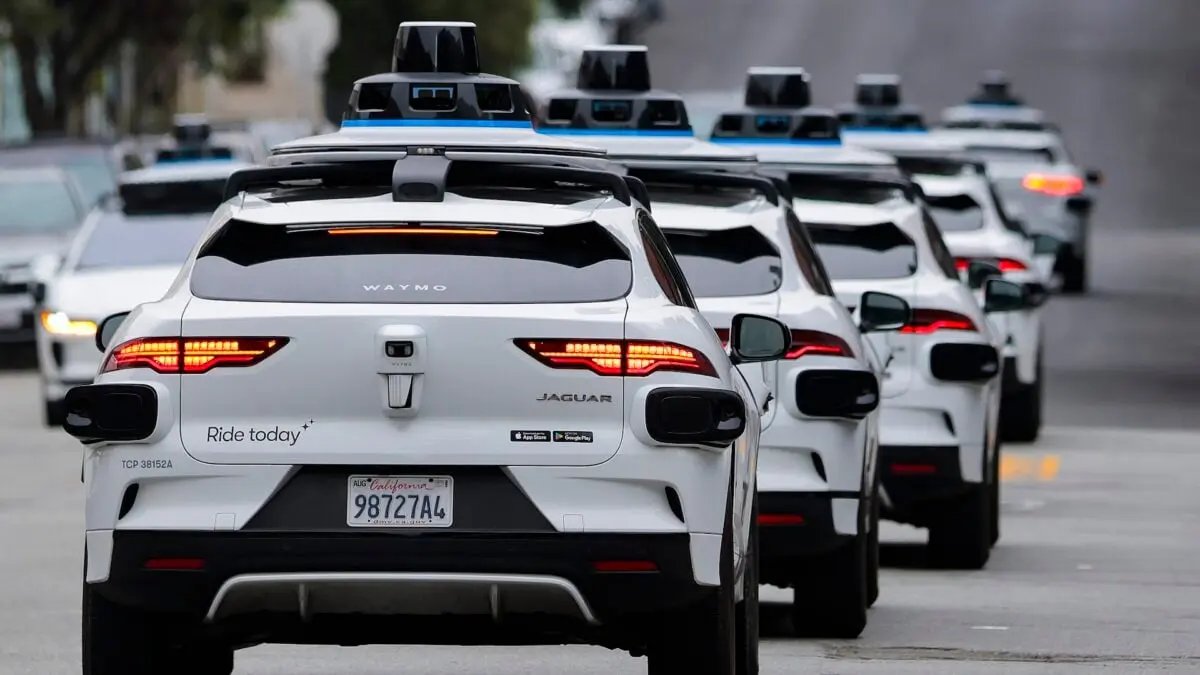
Lidar sensors use pulses of laser light to measure distances and create detailed three-dimensional maps of a vehicle’s surroundings. They are widely considered a critical component for self-driving cars, helping vehicles detect pedestrians, cyclists, other cars and road hazards in real time. While cameras and radar have improved significantly, lidar is prized for its precision in depth perception.
According to the two unnamed sources, the Idaho National Laboratory is investigating whether Chinese-made lidar could be exploited remotely, leak sensitive location data, or contain hidden features that might allow a foreign government to interfere with vehicles. The project is being funded by a company or group of companies in the electric and autonomous vehicle industry, though it is unclear which companies are behind it.
The lab did not respond to a request for comment. In earlier statements, a spokesperson said the project is not something that can be discussed with reporters. That kind of secrecy is not unusual for cybersecurity reviews involving national security, but it has fueled speculation about how concerned regulators and industry players have become.
Why lidar suddenly matters more
Lidar has been used for decades in fields like mapping, forestry and archaeology, but its role in transportation expanded dramatically as companies raced to build autonomous vehicles. Early automotive lidar systems were large, heavy and prohibitively expensive, with some units costing tens of thousands of dollars. That made them viable primarily for prototype vehicles and well-funded research programs.
Chinese manufacturers have played a major role in driving down costs. Sensor prices have fallen from tens of thousands of dollars to just a few hundred dollars in a relatively short period. This collapse in price has made lidar more attractive not only to autonomous vehicle developers but also to mainstream automakers looking to enhance driver-assistance systems, highway autopilot features and safety systems.
Some American automakers now face a difficult choice: pay significantly more for Western-made sensors or adopt cheaper Chinese components that could give them a competitive edge in an increasingly price-sensitive electric vehicle market. As vehicle margins tighten and global competition intensifies, cost advantages in core components can be decisive.
Tesla remains a notable exception. The company has long argued that autonomous driving can be achieved using cameras and artificial intelligence alone, without lidar. Tesla’s chief executive has publicly characterized lidar as a misguided approach and has said that anyone relying on it is destined for failure. This philosophy has kept Tesla out of the lidar procurement equation, but many other automakers and autonomous vehicle startups do not share that view.
Chinese tech and the cost advantage
The affordability of Chinese lidar is difficult for automakers to ignore. China has built a vast supply chain around the technology, supported by government investment, strong domestic electric-vehicle demand and a deep pool of engineering talent. Several Chinese lidar suppliers have introduced compact solid-state sensors that can be embedded in vehicle roofs, grilles or side mirrors, making them easier to integrate into production cars.
Rivian’s chief executive told Reuters earlier this year that when it comes to affordable lidar sensors, nearly all the real choices now come from China. He said Rivian was considering producing lidar in the United States using Chinese technology, possibly through a joint venture. He also said other automakers were involved in discussions about building production capacity outside China, either together or through a shared approach.
That idea, sometimes called “localization,” would allow automakers to benefit from Chinese sensor technology while potentially reducing some of the security concerns associated with shipping data to foreign servers or relying on foreign-controlled hardware and firmware. However, localization is complicated because a product’s core design, software and manufacturing processes often remain tied to the original developers even when final assembly moves to another country.
Washington’s growing unease
Concerns about Chinese automotive technology are not new. Lawmakers and national security officials have warned for years about the risks of connected vehicles that can transmit location data, driving behavior and even conversations inside the cabin. Chinese-made lidar, like cameras and other sensors, collects vast amounts of information about a vehicle’s surroundings. If that data were transmitted back to China, it could potentially be used to build detailed maps of American roads, infrastructure and critical facilities.
There is also concern that Chinese-made sensors could contain backdoors or vulnerabilities that would allow foreign actors to remotely disable vehicles in the event of a conflict. This concern extends beyond lidar to other vehicle components, including communications systems, navigation chips and software platforms. The U.S. Commerce Department has already imposed restrictions on certain Chinese and Russian connected-car technologies, and lawmakers have proposed at least two bills that would specifically ban Chinese-made lidar in the United States.
These proposals reflect a broader push in Washington to reduce American dependence on Chinese technology in critical infrastructure. Automakers, batteries, chargers and even roads are increasingly viewed as part of that infrastructure, and the line between consumer products and national security has become blurred.
Security concerns vs. hard evidence
Despite the growing anxiety, there is no publicly known evidence that Chinese-made lidar sensors have been used to spy on drivers, exfiltrate data or remotely disable vehicles. Reports have described the potential risks as hypothetical, and industry analysts note that compromising lidar on a massive scale would require deep access to supply chains, sophisticated cyberweapons and a willingness to provoke severe diplomatic and economic retaliation.
Some experts argue that any sensor connected to a vehicle’s onboard network can be a security risk, regardless of where it is made. Automakers routinely patch software in cars, and the entire ecosystem of vehicle electronics is already a target for hackers. Lidar suppliers, whether Chinese or American, must meet strict automotive safety and cybersecurity standards to win contracts.
Nevertheless, the review at Idaho National Laboratory is significant because it could provide a technical basis for future U.S. policy. If the tests uncover real vulnerabilities, regulators could move quickly to ban certain Chinese lidar products. If the tests come back clean, automakers may gain more leeway to adopt cheaper Chinese sensors, although political pressure might still lead to restrictions based on broader geopolitical concerns.
The involvement of private industry in funding this review also suggests that automakers are anxious about the situation. They may be seeking clarity before committing millions of dollars to product development decisions based on uncertain regulations. A formal government assessment could give automakers a way to demonstrate they are using secure components, or it could give them political cover to move away from Chinese suppliers without publicly admitting cost concerns.
Potential impact on the market
The outcome of the review could have a major impact on the global lidar market. Chinese suppliers have become dominant in terms of volume and price, and any ban in the United States would reshape procurement strategies for American automakers. Western lidar makers, including startups and established automotive suppliers, have struggled to compete on price, though they continue to argue that their products offer better security and supply-chain transparency.
A ban could also accelerate efforts to build domestic lidar manufacturing capacity. Rivian’s suggestion about producing lidar in the United States using Chinese technology points to one possible path: maintaining access to valuable technology while satisfying national security requirements through domestic production and oversight. Whether that approach would pass muster with hardline lawmakers is still unclear.
Meanwhile, other countries will be watching closely. The United States is not alone in worrying about Chinese automotive technology. Several allies have imposed their own restrictions on Chinese-made connected vehicles and are debating whether to go further. A U.S. decision on Chinese lidar could set an example for how Western democracies handle the broader challenge of safeguarding new mobility technologies while keeping prices affordable.
Automakers are expected to continue pressing Beijing and Washington for predictable rules, since supply chains for sensors, chips and software are deeply global. A sudden regulatory shift could delay electric vehicle launches, raise prices and slow the adoption of advanced driver-assistance systems. On the other hand, doing nothing could leave critical technology vulnerable in ways that are not yet fully understood.
For now, the investigation at the Idaho National Laboratory is the clearest sign yet that the lidar question is moving from technical curiosity to national security policy. The answers that emerge may determine not only which sensors enter American vehicles, but how far Washington is willing to go in severing the automotive supply chain from China.
Source: Gizmodo News