

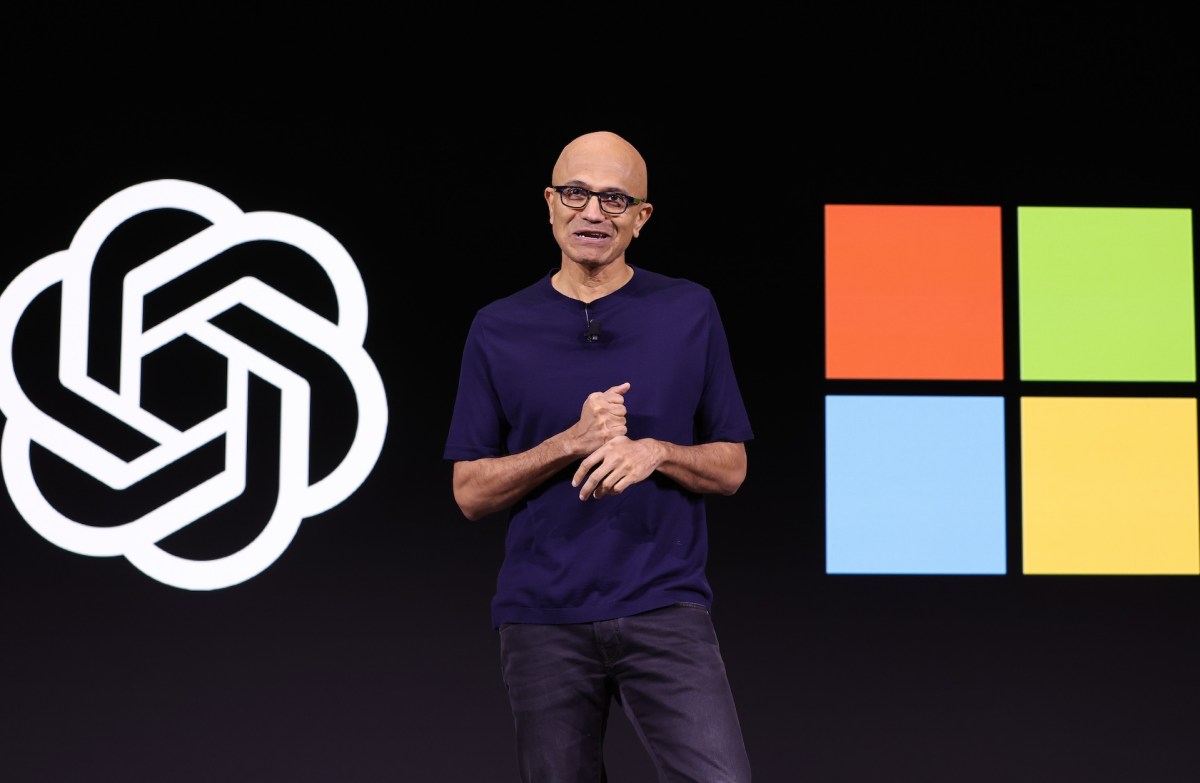
Satya Nadella has joined a growing chorus of tech leaders warning that the biggest AI labs may be quietly turning their customers into sources of competitive intelligence. In a blog post published Sunday, the Microsoft CEO cautioned enterprises that relying on proprietary AI models comes with a hidden cost that goes far beyond the fees they pay for tokens. He argues that companies are giving away the very knowledge that makes them unique, and that model makers are using that knowledge to improve their own systems.
The warning adds a powerful voice to a debate that has been simmering in Silicon Valley for months. Venture capitalists, startup founders, and enterprise software executives have all raised concerns about the concentration of power in AI. The specific fear is that AI labs such as OpenAI and Anthropic are acting like Trojan horses. As startups and established companies feed sensitive business information into these models, the labs gain an ever-expanding view of their customers' operations. That information could one day be used to build competing products or to give rivals an edge.
The Trojan horse fear
For many in the tech industry, the risk is not hypothetical. Companies are already using large language models to analyze internal documents, draft responses to suppliers, automate customer support, and even help with product strategy. Every prompt sent to a model contains a fragment of business context. Over time, those fragments add up to a detailed picture of how a company operates. That picture includes pricing strategies, product roadmaps, internal process flaws, and the way executives think about their markets.
Venture capitalist Jason Calacanis and Palantir CEO Alex Karp have both issued warnings along these lines. They argue that the companies building AI models are not merely infrastructure providers. They are strategically positioned to learn from the most valuable data in the world — the proprietary knowledge of the companies that use their tools. If a model maker decides to enter a customer's market, it could do so with an unfair advantage: a comprehensive understanding of that customer's strengths and weaknesses.
Nadella’s intervention is notable because of his position. Microsoft is one of the largest cloud providers in the world and has deep financial ties to leading AI labs, including OpenAI. His perspective is also shaped by the interest of Microsoft Azure, which wants enterprises to build their AI systems on its cloud infrastructure. Still, his argument is aimed squarely at the business models of proprietary AI providers.
Paying for intelligence twice
In his blog post, Nadella writes that AI users — the “buyers” — are paying twice. The first payment is obvious: the money they spend on AI token usage. The second payment is less visible but potentially more damaging. Every time a company uses a proprietary model, it reveals some of its proprietary knowledge. The more the company wants the model to perform, the more knowledge it has to feed into the system. Nadella describes this as handing over something more valuable than money.
“You essentially pay for intelligence twice, once with money, and again with something even more valuable: the proprietary knowledge you must reveal to make that intelligence useful. The better you want the model to perform, the more of that knowledge you have to feed it!” he writes.
The Microsoft CEO goes further, arguing that models are constantly learning from what he calls “exhaust.” This includes the prompts that users write, the tools that AI agents use, and especially the corrections that users make when a model produces the wrong answer. Every correction, he says, is distilled into institutional know-how. That know-how is the kind of knowledge a competitor could never buy — and yet enterprises are handing it over in the course of ordinary AI use.
Nadella's point is subtle but powerful. It is not just about data privacy or whether a lab will misuse a customer's information. It is about the fact that the model itself becomes better at replicating the customer's judgment. When an employee corrects an AI chatbot's response, the model learns something about how that company makes decisions. That learning is embedded in the model and can be used by anyone who later accesses it.
The distillation debate
Nadella also waded into one of the most contentious issues in AI policy: distillation. In the AI world, distillation refers to the practice of using one model's outputs to train another model. Often, the goal is to create a smaller, cheaper model that can perform nearly as well as the original. Distillation is widely used in the industry, but it has become a point of friction between model makers and those who want to build alternatives.
In February, Anthropic accused Chinese open source model developers of sending millions of prompts to Claude, its language model, in an attempt to improve their own models. Anthropic urged the U.S. government to crack down on the practice, arguing that it violated the company's terms of service and threatened its competitive position. The company called for tighter export controls and stronger protections for model makers.
Nadella finds this position hypocritical. Model makers, he notes, claim fair use rights to train their models on the world's public data. They freely scrape the internet, absorbing articles, books, code, and conversations that were never intended for AI training. But when others want to learn from the models themselves, those same companies impose restrictive terms. In his blog post, he writes: “While the great innovation that comes from model providers having fair use rights to train models on public data is needed, I find it ironic that the status quo is to then turn around and impose restrictive terms on distillation.”
His argument is a matter of fairness and balance. If the knowledge that goes into a model is drawn from the collective output of humanity, then the model's outputs should not be treated as the exclusive property of the lab that built it. By extension, enterprises that contribute their own knowledge to a model should have the right to use that knowledge without being locked in.
What Nadella wants enterprises to do
Nadella’s proposed solution is typical of a cloud company CEO. He wants companies to retain ownership of their data, including prompts, feedback, and other interactions with AI systems. He suggests that enterprises build their own “proprietary learning environments” in the cloud, where their data is already likely stored. This conveniently points toward Microsoft Azure, but the underlying advice is broader: do not let your AI usage become a one-way street.
He also recommends building what he calls “orchestration layers” into enterprise AI systems. These layers allow companies to switch between models from different providers without rebuilding their applications. Instead of being locked into a single proprietary model, a company could route different tasks to different models based on cost, performance, privacy requirements, or accuracy. AI gateways, which serve exactly this function, have become increasingly popular in the enterprise world.
The subtext of Nadella's message is open source AI. If companies own their data and build orchestration layers, they are free to use open source models that run on their own infrastructure. Those models can be audited, customized, and controlled. They do not report back to a lab that might compete with the company. And they can be trained on proprietary knowledge without handing that knowledge to a third party.
The shift to open source and on-premises deployment
There is growing evidence that this shift is already happening. Large companies, many of which still operate their own data centers alongside cloud infrastructure, are moving to open source models installed on their own premises. Idit Levine, founder and CEO of Solo.io, a company that makes networking and security software for enterprise AI systems, says she sees this play out with her own customers. After experimenting with proprietary model makers, they begin to wonder whether an open source model running on their own servers can deliver 90 percent of the performance at a fraction of the cost.
“Can I take an open source model and run it on-prem? It will do almost 90% of what the big one’s doing. It will cost way less,” Levine says. “They understand that, and they can control it.” Solo.io’s technology was selected last year to power the Linux Foundation’s Agentgateway project. The company counts T-Mobile, ADP, and SAP among its customers. Levine sees the move toward on-premise open source models as the next big wave in enterprise AI use.
Other companies are seeing similar trends. Vercel, a platform for building and hosting websites that recently added AI model-switching tools, reports that open models accounted for 29 percent of all traffic routed through its gateway last month. OpenRouter, a company that helps developers route requests across different AI models, is also seeing a surge in traffic to open source models. The numbers suggest that enterprises are not just talking about model portability — they are actively building systems that make it possible.
Nadella’s warning is likely to accelerate this trend. When the CEO of one of the world's most influential technology companies openly urges enterprises to be wary of proprietary models, it gives permission for CIOs and CTOs to reconsider their AI strategies. They no longer have to worry that they are being overly cautious or missing out on the latest proprietary technology. Instead, they can focus on building AI systems that serve their own interests, protect their own data, and preserve their own competitive advantage.
The underlying lesson is simple. Every time a company uses an AI model, it is not just consuming intelligence. It is also creating intelligence — in the form of corrections, feedback, and the data that comes from applying the model to real business problems. Nadella’s position is that the intelligence created by a company's usage should belong to that company, not to the model maker. “In consuming intelligence, you are creating intelligence. And what you create should belong to you,” he writes.
Source: TechCrunch News