

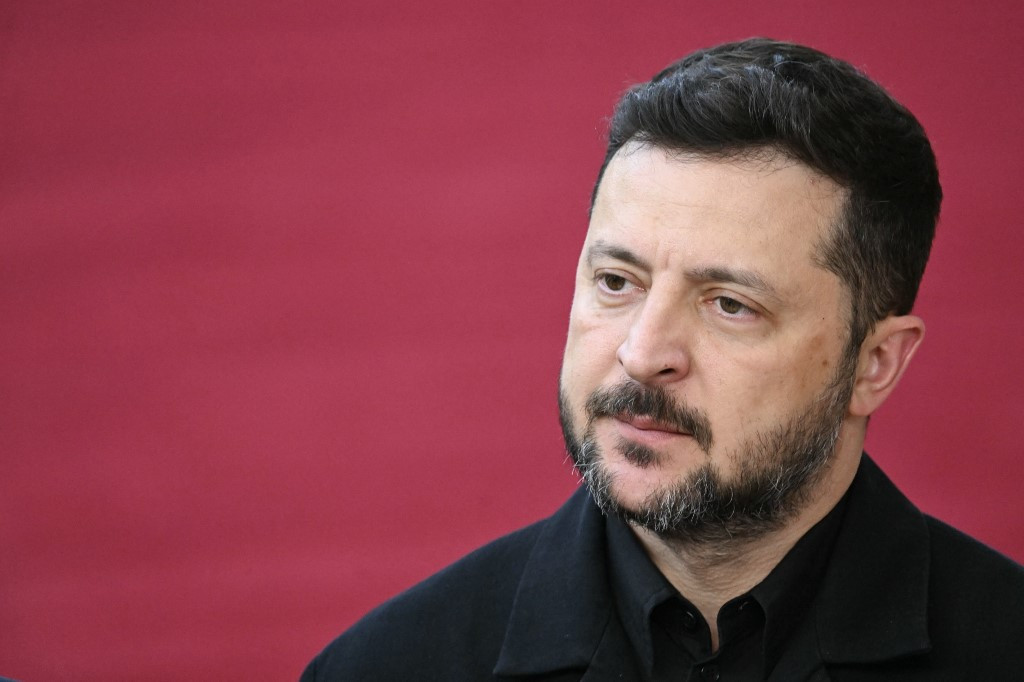
Ukrainian President Volodymyr Zelensky has sharply criticized his Polish counterpart, Karol Nawrocki, for revoking Poland's highest state honor, the Order of the White Eagle, which had been awarded to Zelensky in 2022. In an interview aired on Sunday, Zelensky characterized Nawrocki's action as a cynical political maneuver inspired by the playbook of former Hungarian Prime Minister Viktor Orbán. He warned that such conduct could severely damage the historically fragile relationship between Kyiv and Warsaw.
“I see this purely as an electoral process. President Karol Nawrocki is fighting for his party’s premiership against Prime Minister Tusk. It has nothing to do with us – it’s an internal matter for them,” Zelensky told the TSN television station, as reported by Ukrainska Pravda. He went further, stating that Nawrocki is “creating hostility towards Ukrainians for his own political gain. That’s what Orbán did. This is a bad business. I believe it will end badly.”
Context of the Diplomatic Row
The controversy erupted on Friday when Nawrocki announced he was stripping Zelensky of the Order of the White Eagle, a decoration that had been conferred by his predecessor, President Andrzej Duda, in recognition of Ukraine’s resistance against Russia’s full-scale invasion. The official reason given was Zelensky’s recent approval of a Ukrainian military unit named after the Ukrainian Insurgent Army (UPA), a nationalist organization that fought for Ukrainian independence during and after World War II. The UPA has been accused of committing the Volhynia massacre in 1943–44, during which it killed tens of thousands of ethnic Poles in territories that are now part of western Ukraine.
Zelensky, in his interview, disclosed that during their first meeting, Nawrocki had presented him with a book about the Volhynia tragedy. “I’d come to see him, and his gift to me as we shook hands was a book about the Volyn tragedy. I haven’t spoken about this. I didn’t tell people. I’ve been living with this calmly. We’re talking about it openly now because he is taking steps that I believe are wrong,” the Ukrainian leader said.
Historical Background: Volhynia and Polish-Ukrainian Relations
The Volhynia massacre remains one of the most painful chapters in Polish-Ukrainian relations. Estimates of the death toll vary, with Polish historians claiming between 60,000 and 100,000 Poles were killed by UPA units in 1943–44, while Ukrainian sources put the number lower. In retaliation, Polish forces killed several thousand Ukrainian civilians. The event continues to be a source of tension, with Poland demanding that Ukraine officially recognize the massacre as genocide. Ukraine, while acknowledging the tragedy, has resisted using the term genocide, arguing that the conflict was part of a broader, brutal war where both sides committed atrocities.
Since Russia’s invasion of Ukraine in February 2022, Poland has been one of Ukraine’s staunchest allies, providing military aid, accepting millions of refugees, and serving as a logistical hub for Western supplies. However, underlying historical grievances have periodically surfaced. In 2023, a dispute over Ukrainian grain exports caused a temporary rift, and some Polish politicians have expressed frustration over what they perceive as insufficient Ukrainian acknowledgment of the Volhynia events.
Domestic Political Calculus in Poland
Zelensky’s comments highlight the domestic political context in which Nawrocki’s decision took place. Poland is heading into a crucial election season. Nawrocki, a member of the conservative Law and Justice (PiS) party, is positioning himself for a potential leadership challenge against Prime Minister Donald Tusk of the centrist Civic Platform. By taking a tough stance on Ukraine, Nawrocki may be trying to appeal to nationalist and conservative voters who are skeptical of further concessions to Kyiv or who prioritize historical grievances over current strategic alliances.
The comparison to Viktor Orbán is particularly pointed. Orbán, the long-serving Hungarian prime minister, has built his political brand on a mix of nationalism, Euroscepticism, and cozying up to Moscow. He has also maintained warm relations with the Kremlin despite the war in Ukraine, often blocking or watering down EU sanctions against Russia. Zelensky’s implication is that by stirring anti-Ukrainian sentiment, Nawrocki risks following a path that isolates Poland from its allies and weakens the European front against Russian aggression.
“You can’t earn political dividends from hatred, because in the long run it will lead to bad relations between nations,” Zelensky stressed. “Poland is a democracy, not a monarchy. That’s why it should build relations with Ukraine, which is currently defending Europe, including Poland.”
The Order of the White Eagle and Its Symbolism
The Order of the White Eagle is the oldest and highest Polish state decoration, established in 1705 and restored in 1992 after the fall of communism. It is awarded to both Polish and foreign individuals for outstanding civil or military service to the Republic of Poland. By revoking the honor, Nawrocki has sent a strong symbolic message, one that critics say undermines the spirit of solidarity that has defined Polish-Ukrainian relations during the war.
Zelensky had received the award in April 2022, just two months after the Russian invasion, during a joint ceremony with Lithuanian President Gitanas Nausėda. At the time, President Duda praised Zelensky as a “fighter for freedom and democracy.” The revocation represents a dramatic reversal and underscores how quickly the political landscape can shift.
Broader Implications for European Unity
The dispute between Poland and Ukraine comes at a delicate moment for European security. With Russia’s war grinding on and Western support showing signs of fatigue, maintaining unity among frontline states like Poland and Ukraine is critical. Poland has been a key advocate for Ukraine’s NATO and EU membership, and any deterioration in bilateral relations could embolden Moscow.
Observers note that Nawrocki’s move may also strain relations within the European Union. Poland’s current government under Prime Minister Tusk has tried to mend fences with Brussels after years of friction under the previous PiS government. However, the historical memory issue remains a potent weapon for politicians seeking to rally a domestic base. Whether the revocation will have lasting consequences depends on how both sides manage the fallout.
Ukrainian officials have tried to downplay the dispute while also emphasizing that they will not bow to pressure on historical narratives. “We are open to dialogue, but we cannot allow the past to be weaponized against our present survival,” a Ukrainian diplomatic source told local media.
The episode also raises questions about the effectiveness of symbolic gestures in diplomacy. While stripping a state honor may resonate with domestic audiences in Poland, it is unlikely to change Ukraine’s stance on the UPA or the Volhynia massacre. Instead, it risks creating a cycle of recrimination that benefits neither country.
As Zelensky prepares for his next round of international diplomacy, including expected meetings with European leaders to discuss air defense systems and winter aid, the Polish dispute serves as a reminder that even the strongest wartime alliances are not immune to political storms. The question now is whether Nawrocki and Zelensky can find a way to de-escalate before the rift becomes permanent.
Source: Kyiv Post News