

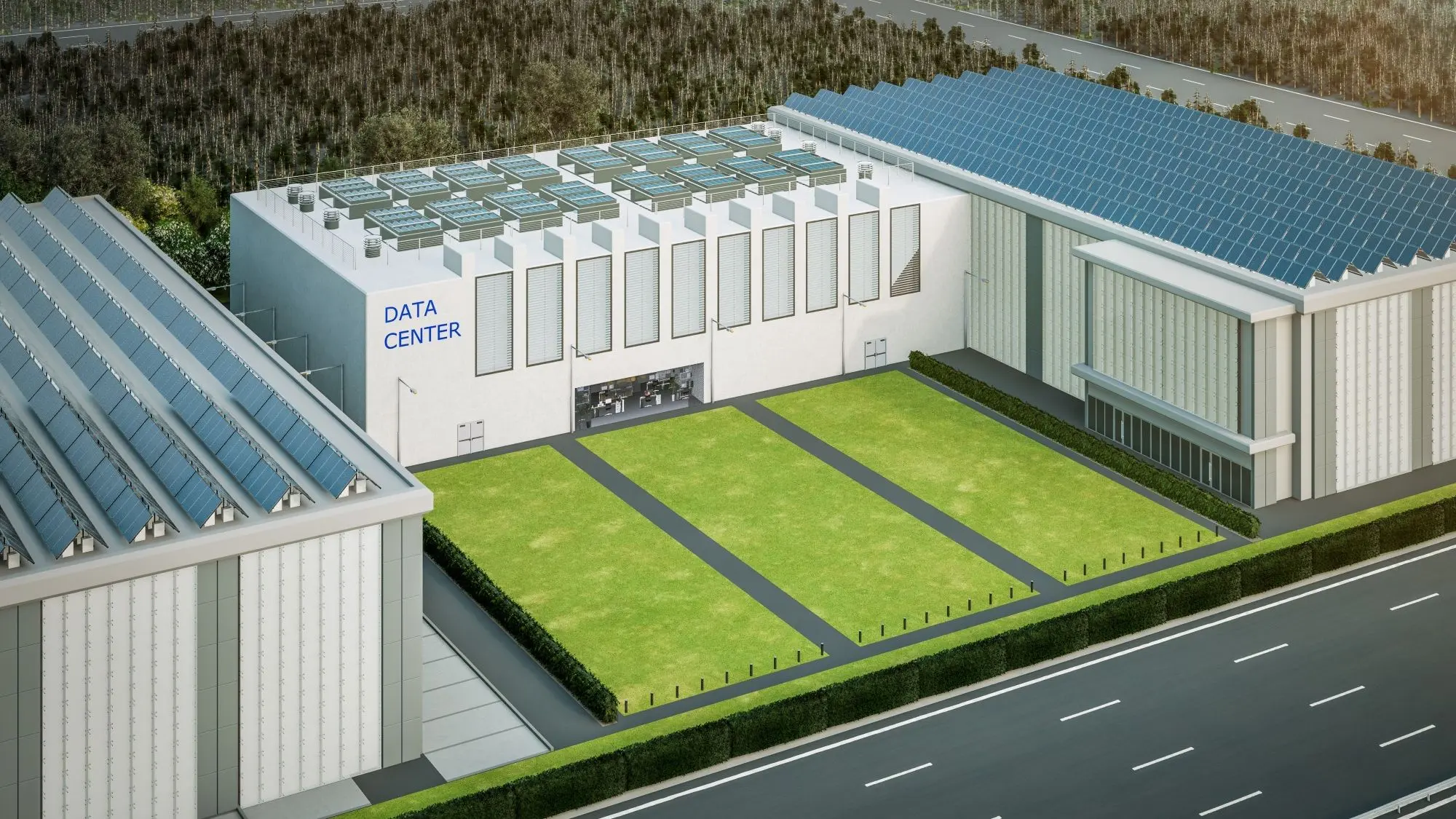
NVIDIA has made a bold claim that its next-generation AI infrastructure effectively solves one of the most pressing environmental challenges for modern data centers: water consumption. In a recent statement, the company asserted that "The water consumption challenge for data centers is largely solved" thanks to a combination of advanced liquid cooling technologies and system-level efficiency improvements. This declaration comes as hyperscale data centers, which power everything from cloud computing to large language models, face increasing scrutiny from regulators, environmental groups, and local communities over their soaring water usage.
The Scale of the Water Problem
Data centers are among the most water-intensive facilities in the world. According to recent studies, a single hyperscale data center can consume between 1 million and 5 million gallons of water per day, primarily for cooling. The water is used in evaporative cooling towers, where heat from servers is dissipated through the evaporation of water, or in chilled water systems that rely on external cooling sources. In regions where water is scarce—such as the southwestern United States, parts of India, and the Middle East—this demand creates direct competition with agriculture and municipal water supplies.
The issue has become especially acute with the explosive growth of AI workloads. Training large models like GPT-4 or NVIDIA's own AI foundation models requires thousands of GPUs running at full load for weeks or months. These chips generate enormous amounts of heat, and traditional air-cooling systems struggle to keep pace. As a result, more water is evaporated to dump that heat, pushing data center water consumption to record levels. A 2023 study by the University of California, Riverside found that training a single large AI model can consume up to 700,000 liters of water—enough to fill a small swimming pool.
NVIDIA's Solution: Direct Liquid Cooling
NVIDIA's answer to this problem is a comprehensive cooling architecture built around direct-to-chip liquid cooling. In its next-generation AI infrastructure, which includes the new H100 and B100 GPU platforms, NVIDIA has integrated cold plates that sit directly on the GPU packages. A dielectric coolant or water-glycol mixture is pumped through these cold plates, absorbing heat from the chips and carrying it to a heat exchanger outside the server rack. The coolant then recirculates in a closed loop, meaning no water is lost to evaporation.
According to NVIDIA's internal testing, this approach reduces water consumption by up to 95% compared to traditional air-cooled data centers. The remaining 5% comes from occasional system maintenance and minor leaks, but the overall impact is transformative. Moreover, the closed-loop design allows the waste heat to be repurposed for district heating or other uses, further improving the environmental footprint.
System-Level Efficiency Gains
Beyond the cooling loop itself, NVIDIA has also optimized the entire power delivery chain. The new GPU servers use higher-efficiency power supplies that generate less waste heat in the first place. Combined with advanced power management software that dynamically adjusts clock speeds based on workload demands, the overall energy consumption per AI model is reduced. Lower heat generation directly translates to lower cooling loads, and with liquid cooling, that heat is removed without evaporating water.
NVIDIA also emphasizes that its infrastructure supports free cooling in many climates. By using ambient air or ground-source heat pumps to cool the liquid in the heat exchanger, operators can often avoid running chillers entirely. In cool climates, this can eliminate auxiliary water use for condensation or evaporative towers.
Broader Industry Context
The announcement comes at a time when major cloud providers—including Microsoft, Google, and Amazon—are all racing to deploy liquid cooling solutions. Microsoft, for instance, has submerged entire server racks in non-conductive fluid, while Google has used a combination of air and liquid cooling in its TPU pods. However, NVIDIA's claim is particularly significant because it targets the entire AI infrastructure stack, from hardware to cooling to software.
Industry analysts note that the water savings are not just an environmental benefit; they also offer a business advantage. In water-stressed regions, obtaining permits for new data centers often hinges on demonstrating water-efficient designs. By adopting NVIDIA's liquid cooling, operators can build facilities in locations previously considered too dry, opening up new markets for AI compute capacity. Additionally, reducing water consumption can lower operational costs, as water prices continue to rise in many parts of the world.
Challenges and Skepticism
Despite NVIDIA's confident statement, some experts urge caution. The 95% reduction figure is based on controlled lab tests and may not fully account for real-world variations such as ambient temperature spikes, differing humidity levels, or the need for backup cooling systems. Moreover, the manufacturing of the liquid cooling hardware—pumps, cold plates, and piping—has its own environmental costs, including the water used in production processes.
Another concern is that solving the water problem might inadvertently shift attention to other environmental impacts, such as the electricity consumption of data centers. While water is saved, the energy required to run the pumps and the cooling system still must come from the grid. If that electricity is generated from fossil fuels, the carbon footprint remains significant. However, NVIDIA argues that its infrastructure is compatible with renewable energy sources, and that the overall energy efficiency improvement (measured in terms of power usage effectiveness, or PUE) also reduces the carbon footprint.
The Road Ahead
NVIDIA plans to deploy its next-gen AI infrastructure across several hyperscale partners later this year. The company also announced that it is working with cooling equipment manufacturers to standardize the connectors and pump designs, making it easier for data center operators to retrofit existing facilities. Over the next decade, the transition to liquid cooling is expected to become the norm for high-density computing, especially for AI training clusters.
In the meantime, regulators in the European Union and California are considering new water efficiency standards for data centers, which could accelerate adoption of technologies like NVIDIA's. The company's assertion that the water consumption challenge is "largely solved" may be optimistic, but it reflects a genuine shift toward more sustainable practices in an industry that has historically prioritized performance over environmental concerns. As AI continues to scale, the ability to train and deploy models without draining local water supplies will be a critical factor in the technology's long-term acceptance.
Other companies are also making strides. For example, Dell and Hewlett Packard Enterprise have both introduced liquid-cooled servers, and chipmakers like AMD and Intel are designing their processors to be more compatible with direct cooling. However, NVIDIA's integrated approach—coupling high-performance GPU clusters with a purpose-built cooling infrastructure—gives it a unique position in the market.
The environmental benefits are not limited to water savings. By eliminating evaporative cooling, data centers can also reduce their use of chemicals used to treat water and prevent bacterial growth. This further lowers the ecological impact of operations. Moreover, the waste heat captured from liquid cooling can be used to warm greenhouses, residential buildings, or even fish farms, creating a circular economy model for data center energy.
As the AI industry continues its meteoric rise, the demand for compute capacity will only intensify. NVIDIA's promise of essentially water-free data centers offers a path forward that balances growth with sustainability. Whether the claim holds up under independent scrutiny remains to be seen, but it undoubtedly sets a new benchmark for what is possible. The next few years will tell if the rest of the industry can follow suit.
Source: Windows Central News