

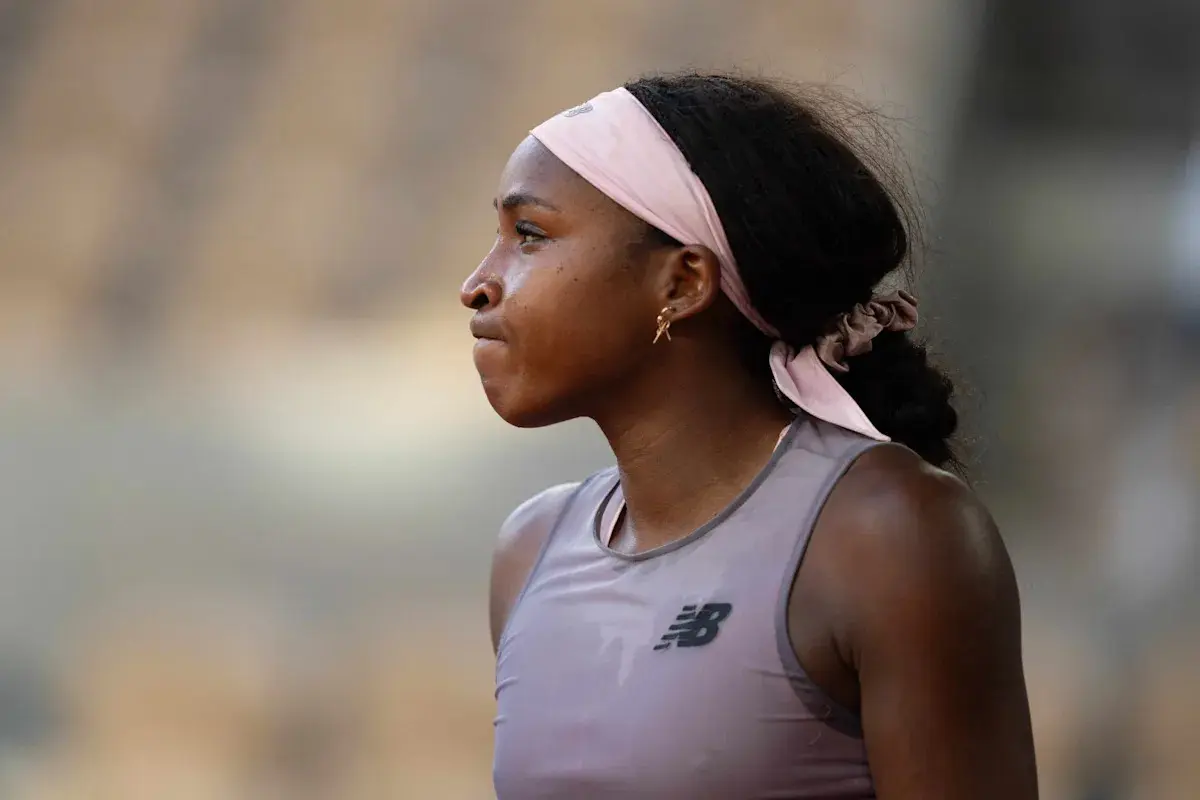
The Wimbledon Championships have taken a significant step to address player privacy concerns, sending a detailed email to competitors outlining the exact locations of cameras on the tournament grounds and how the captured footage will be utilized. This initiative comes in the wake of a highly publicized incident involving American tennis star Coco Gauff, who unknowingly had her frustration captured on camera during the Australian Open earlier this year.
In a move that underscores the growing tension between broadcast access and athlete privacy, the All England Club has committed to transparency by providing players with a comprehensive list of camera positions. According to tennis journalist Jon Wertheim, the email specified cameras in areas such as the gym within the Millennium Building, the Players' Lawn, player transport arrival points, tunnels, the Players' Restaurant, and outside the dressing rooms. A total of at least 11 cameras are placed across these designated zones, with four additional cameras at Aorgangi Player Lawn covering practice courts and warm-up areas.
Background: The Coco Gauff Fiasco
The catalyst for this reform dates back to the 2026 Australian Open, where Coco Gauff, a former US Open champion and consistent top-ten player, suffered a disappointing quarterfinal loss. In a moment of raw emotion, Gauff smashed her racket in a corridor she believed to be private, only to discover that the incident had been captured and broadcast by tournament cameras. The footage quickly went viral, sparking a broader conversation about the boundaries of media coverage in tennis.
Gauff publicly expressed her frustration, stating that players should have safe spaces to decompress without fear of being recorded. She was not alone in her criticism. Fellow stars Carlos Alcaraz, Novak Djokovic, Madison Keys, and Iga Świątek voiced similar concerns, with Świątek comparing the invasive coverage to being treated like animals in a zoo. The unified backlash prompted tournament organizers to reconsider their policies.
Wimbledon's Response: A Balanced Approach
Initially, in February, Wimbledon officials stated they had no plans to alter camera placements. However, the persistent outcry from players, coupled with the French Open's decision to ban cameras entirely from player areas, forced the All England Club to act. The email sent to players represents a middle ground: cameras remain, but their locations are disclosed, and their usage is strictly curated.
According to the communication, Wimbledon's broadcast team will carefully manage the footage, making it available to broadcast partners with the aim of showcasing players in a positive light while respecting their privacy and overall tournament experience. This approach seeks to maintain the behind-the-scenes access that fans crave without compromising the athletes' need for occasional solitude.
Historical Context: Player Privacy and Broadcast Rights
The relationship between tennis players and broadcasters has long been a delicate one. For decades, tournaments have relied on media rights deals to generate revenue, and exclusive behind-the-scenes content has become a valuable commodity. However, the line between compelling content and intrusion has blurred with the proliferation of cameras.
Past incidents, such as Serena Williams' heated exchanges with umpires or Andy Murray's expletive-laden tirades, were often captured and replayed, sometimes without the players' consent. But the Gauff incident marked a turning point because it occurred in a non-competitive area where players reasonably expected privacy. The fact that the camera was positioned in a corridor—a space not typically used for match play—raised questions about the extent of surveillance.
Wimbledon's new policy, while not as comprehensive as the French Open's outright ban, signals a willingness to adapt. By informing players of camera locations, organizers empower athletes to make informed decisions about where they vent their emotions or engage in personal conversations. This transparency could reduce the likelihood of future controversies.
Reactions from the Tennis World
The email has been met with cautious optimism. Coco Gauff, who has been at the forefront of the reform, acknowledged the change but emphasized that continued vigilance is necessary. In a statement via her representatives, she expressed hope that other Grand Slams would follow suit. Carlos Alcaraz, the world number one, praised Wimbledon's willingness to listen, while Novak Djokovic noted that the move sets a positive precedent for the sport.
However, some players remain skeptical. Madison Keys questioned whether the curated footage would still include unflattering moments, noting that the definition of 'positive light' could be subjective. Others, like Iga Świątek, reiterated that the ultimate goal should be to eliminate cameras entirely from private areas, not just to notify players of their presence.
Broadcast partners, meanwhile, have expressed concern that limiting camera access could reduce the appeal of their coverage. Grand Slam broadcasts have increasingly relied on intimate moments to tell compelling stories, and a ban on cameras in certain zones might force producers to rely on less engaging content. Wimbledon's compromise—disclosure rather than removal—attempts to balance these competing interests.
Broader Implications for Tennis Governance
The camera controversy is part of a wider debate about player welfare and tournament revenue sharing. Just days before Wimbledon's announcement, the French Open had faced a player protest over prize money distribution, leading to a 20% increase in the tournament's prize pool. Similarly, Wimbledon's prize money was raised significantly, partly in response to player demands for a fairer share of the growing revenues generated by media rights.
The intersection of privacy and economics is complex. Tennis players are independent contractors who rely on prize money and endorsements, but they also have limited control over the environments in which they work. Tournaments, on the other hand, invest heavily in infrastructure and media production, seeking to maximize returns. The challenge is to create policies that respect players' dignity without undermining the commercial viability of the events.
Other sports, such as basketball and soccer, have grappled with similar issues. The NBA, for instance, restricts camera access to locker rooms during games but allows behind-the-scenes footage during practices. Soccer's UEFA has guidelines for camera placements in tunnel areas. Tennis, with its individual nature and intimate stadiums, has unique challenges that require tailored solutions.
Technical Details of the Plan
The email detailed specific camera locations across the All England Club. One camera will be stationed on the Players' Lawn, mounted halfway up the southern steps. Another will capture the player transport arrival point at the Indoor Tennis Center. A camera in the tunnel connecting the Indoor Tennis Center to the Millennium Building will monitor player movement. Inside the Millennium Building, two cameras will be placed in the gym, one in the Players' Restaurant to the left of the serving area entrance, and one outside the Ladies' and Gentlemen's Members' Dressing Rooms. Additionally, four cameras at Aorgangi Player Lawn will cover practice courts and warm-up areas.
The email emphasized that the footage would not be used for sensationalist purposes but rather to offer fans a curated glimpse into the players' world. The broadcast team will select moments that display professionalism, camaraderie, and the human side of competition, while avoiding clips that could embarrass or distress the athletes.
Looking Ahead: The Impact on Wimbledon 2026
As the 2026 Wimbledon Championships approach, all eyes will be on how the new measures function in practice. The tournament, scheduled for late June and early July, will be the first major test of the policy. Players will have the opportunity to provide feedback after the event, which could lead to further adjustments.
Meanwhile, the French Open's outright ban on cameras in player areas sets a contrasting standard. It remains to be seen which approach—disclosure or prohibition—will become the norm in tennis. The Australian Open has not yet announced changes, though US Open officials have indicated they are reviewing their policies.
Coco Gauff, who won the French Open in 2024 and has been a vocal advocate for player rights, continues to use her platform to push for reforms. Her influence extends beyond her on-court achievements, as she has become a leader in the movement for greater athlete autonomy. Wimbledon's email, though a small step, represents a victory for her and her peers.
The evolution of camera policies at Grand Slams reflects a broader shift in sports media: the need to balance transparency with respect. As technology advances and cameras become smaller and more pervasive, the conversation will only intensify. Wimbledon's proactive approach—engaging with players directly and providing clear guidelines—may serve as a model for other tournaments seeking to navigate this terrain.
For now, the tennis world watches with interest as Wimbledon attempts to implement a system that satisfies both the players' desire for privacy and the broadcasters' demand for access. The success or failure of this experiment could have lasting implications for the sport's governance and its relationship with the media.
Source: Yahoo Sports News