

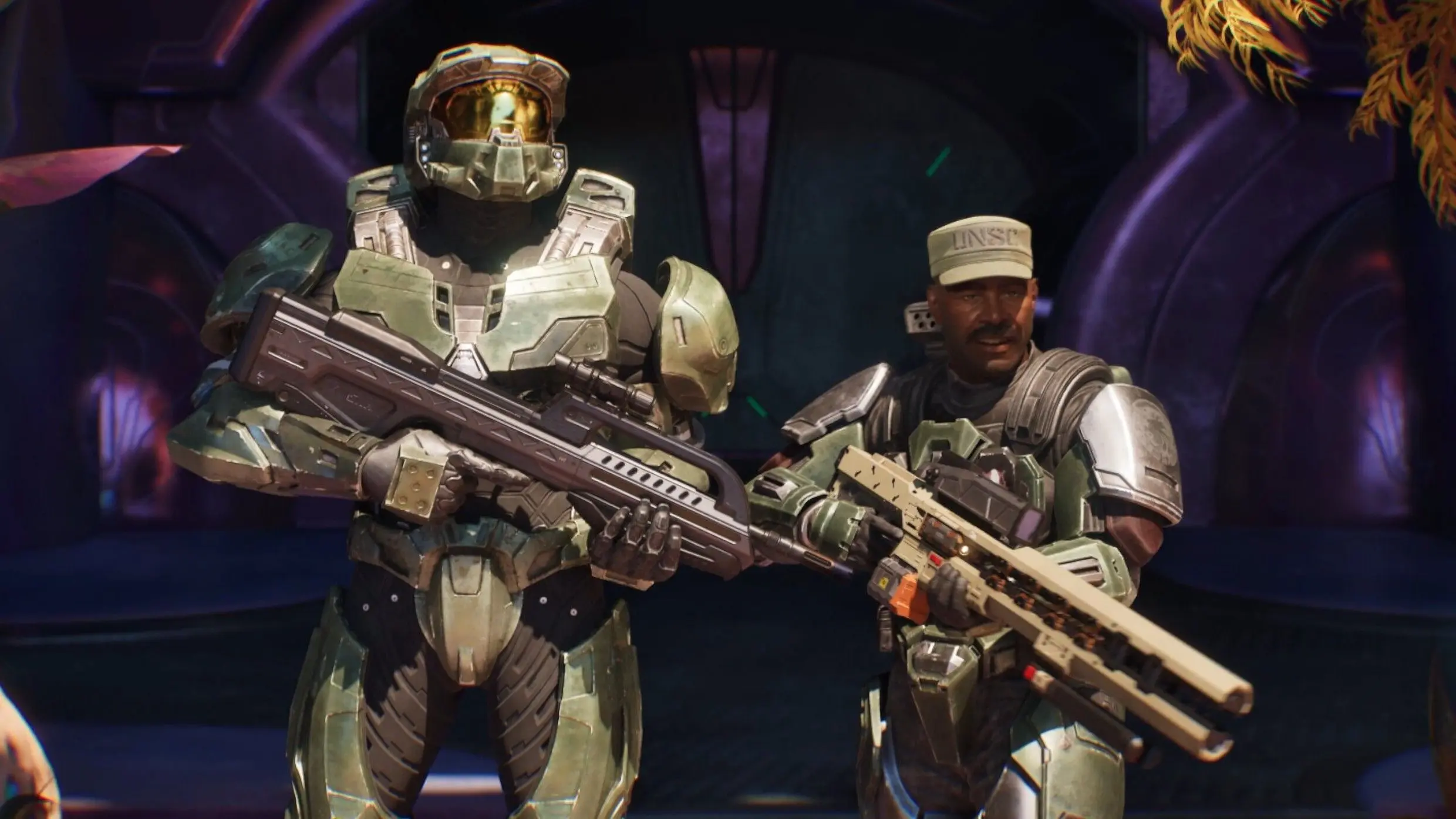
The Snapdragon X2 Elite Extreme is supposed to be the chip that finally makes Windows on Arm a serious platform for everyone, not just casual users. With a 12-core Oryon CPU, an Adreno GPU that promises desktop-class performance, and a Neural Processing Unit capable of 50 TOPS, Qualcomm has positioned this processor as the answer to Apple Silicon. Yet a recent test showing the classic PC game Halo: Combat Evolved running poorly on a flagship Snapdragon X2 Elite Extreme laptop tells a very different story. The headline, “It's not great news,” is almost an understatement: the machine barely holds 30 frames per second at 1080p with medium settings, and suffers from frequent frame hitches, texture popping, and occasional crashes. For a game released in 2001, this is deeply underwhelming.
This single data point is not an isolated incident. It reflects a systemic problem that has plagued Windows on Arm since its inception: the platform is still wrestling with x86 emulation overhead, immature GPU drivers, and a lack of native ARM64 game ports. While Snapdragon X2 Elite Extreme has the raw performance to run modern AAA titles natively, the software layer between the game and the hardware remains a bottleneck. The result is that even ancient games from two decades ago struggle to achieve playable performance, let alone the smooth 60+ FPS that PC gamers have come to expect.
The test: Halo: Combat Evolved on Snapdragon X2 Elite
The test in question involved the original Halo: Combat Evolved, not the 2020 Halo: The Master Chief Collection remaster. This is an important distinction because the original game shipped in 2001 as an Xbox exclusive and was later ported to Windows in 2003 by Gearbox Software. The PC version is well-known for being poorly optimized even on native x86 hardware, but it is still a DirectX 9-era title that any modern integrated GPU should run with ease. On the Snapdragon X2 Elite Extreme, the game requires the use of Microsoft's Prism emulation layer to translate the x86 instructions into ARM64 code. This translation process adds significant CPU overhead, and for a game that is bottlenecked by a single-threaded game loop, the cost is devastating.
According to the test, the average frame rate was only 28 FPS at 1080p with medium settings, and the frame time graph showed severe spikes that made the gameplay stutter. Lowering the resolution to 720p improved the average to around 40 FPS, but stutters persisted. Even more concerning, the game would occasionally freeze for several seconds when new areas loaded, suggesting that the emulation layer was struggling with memory access patterns and shader compilation. This is not the kind of performance that any gamer would accept for a two-decade-old title, and it is a far cry from the “desktop-class” experience that Qualcomm has promised.
The emulation tax: Why Prism is a double-edged sword
Microsoft's Prism emulator is the successor to the older Windows 10 on Arm emulation layer. It is designed to translate x86 and x64 code to ARM64 on the fly, with a focus on compatibility. Prism has improved significantly since its debut, and many productivity apps now run at near-native speed, but games remain a weak point. The reason lies in how emulation interacts with graphics APIs. When a game calls DirectX functions, the emulator must translate not only the CPU instructions but also the GPU driver interface. This often leads to GPU driver overhead that is far higher than on native x86 hardware. The Adreno GPU driver for Windows is still immature, and it lacks the extensive optimization that NVIDIA and AMD have built into their drivers over decades.
Furthermore, Prism does not support certain legacy x86 instructions efficiently. Halo: Combat Evolved was compiled with an older compiler that uses SSE and MMX instructions, which are not natively supported on ARM64. Prism must micro-encode these into equivalent ARM64 instructions, adding more overhead. The result is that CPU-bound games, which rely on heavy per-frame logic and physics, take a massive hit in performance. Halo is exactly this type of game: the single-threaded game loop handles AI, collision, and scripting, and the emulation overhead directly translates to lower frame rates.
GPU driver immaturity: The Adreno problem
Even if Prism were perfect, the Adreno GPU driver would still hold the platform back. Qualcomm's Adreno GPUs have been used in smartphones for years, but the Windows desktop driver is a relatively new endeavor. The driver supports DirectX 12, Vulkan, and OpenGL, but its performance varies widely depending on the application. In Halo, the driver fails to properly handle some legacy DirectX 9 shader instructions, leading to graphical glitches and poor rendering. The test noted that the game's water surface was rendered incorrectly, with missing reflections and flickering textures. These are obvious driver bugs that would have been fixed long ago on NVIDIA or AMD hardware.
The immaturity of the Adreno driver also affects shader compilation. In many games on Windows on Arm, the first time a shader is encountered, the driver spends a significant amount of time compiling it, causing a visible stutter. This is the same problem that Valve has tackled in Proton on Linux with DXVK and shader pre-caching. Microsoft and Qualcomm have not yet implemented a robust solution for this on Windows on Arm, so games that do not pre-cache shaders are prone to repeated stutters. For Halo, a game with many unique shaders per level, this is a dealbreaker.
Comparison to Apple Silicon and Proton
The contrast with Apple Silicon is stark. Apple's M-series chips use a unified memory architecture and a tightly integrated GPU driver stack that is designed in-house. While Apple does not offer a full x86 emulation solution for games, it does have Rosetta 2, which translates x86_64 code to ARM64. Rosetta 2 is highly optimized for CPU workloads, and Apple's GPU drivers are mature enough to run many DirectX and Vulkan games through translation layers like CrossOver and Wine. In fact, some Mac users report that older games like Halo run better under Rosetta 2 and CrossOver than they do on native Windows on Arm hardware. This is because Apple's GPU driver is far more efficient at handling D3D9 calls, and Rosetta 2 has less instruction translation overhead.
Similarly, Valve's Proton on Linux has shown that a thin compatibility layer can deliver excellent gaming performance on AMD and NVIDIA GPUs. Proton uses DXVK and VKD3D-Proton to translate DirectX to Vulkan, and it achieves near-native performance in most games. This works because Vulkan drivers are mature and the translation happens at a high level, not through CPU instruction emulation. On Windows on Arm, the lack of a mature Vulkan driver is another missing piece. Qualcomm's Vulkan driver exists, but it is nowhere near as complete or optimized as the drivers from AMD, NVIDIA, or Intel. The potential is there, but the execution is lacking.
What this means for the future of Windows on Arm gaming
The poor performance of Halo on the Snapdragon X2 Elite Extreme does not mean that Windows on Arm is doomed, but it does mean that the platform is not yet ready for mainstream gaming. Productivity users may not care about playing old games, but the lack of gaming compatibility is a major barrier to adoption. Gamers are a huge market, and if they cannot play the titles they want, they will not switch to an Arm-based laptop. This is especially problematic for Qualcomm, which is aiming the X2 Elite Extreme at premium laptops that are often purchased by enthusiasts.
There is a path forward, but it requires work from both Qualcomm and Microsoft. Qualcomm must invest heavily in its GPU driver team, focusing on compatibility with legacy DirectX versions and improving shader compilation behavior. Microsoft, for its part, could create a game-specific emulation mode that combines Prism with a translation layer like DXVK, bypassing some of the driver overhead. The company could also encourage game developers to release ARM64 versions of their games, particularly for popular multiplayer titles. The success of the Nintendo Switch, which uses an NVIDIA GPU and an ARM CPU, shows that ARM hardware can run games well if the software is designed for it.
Qualcomm's promises vs. reality
Qualcomm has been claiming for years that its Snapdragon chips are capable of gaming on Windows. The company often cites benchmarks showing competitive frame rates in esports titles like Fortnite and Valorant, but these benchmarks are usually run with native ARM64 versions or with layers of optimization that consumers will never see. This is the same criticism that was leveled at the original Snapdragon X Elite, and the X2 Elite was supposed to fix that. Yet the Halo test reveals that the promise of “playable” gaming is still a moving target. While the chip's raw performance is undeniably strong, the software ecosystem is the weak link.
The issue is not unique to Qualcomm. Microsoft has a legacy problem: Windows has been an x86-centric operating system for over 30 years, and the vast majority of games are compiled for x86. Even with a powerful ARM chip, the translation layer will always impose a cost. The best solution is to move the translation closer to the hardware, perhaps by integrating hardware-assisted emulation features into the chip itself. Intel and AMD have been working on such features for their own x86-64 chips, but Arm-based processors have different instruction sets and cannot easily accelerate x86 translation. This makes the software solution all the more critical.
A closer look at Halo's campaign and technical demands
Halo: Combat Evolved is a landmark game that defined the first-person shooter genre on consoles. In its campaign, players take on the role of Master Chief, a cybernetically enhanced super-soldier, as he battles the alien Covenant on the ringworld of Halo. The game was praised for its large outdoor environments, advanced AI, and vehicle combat. On a technical level, it was one of the first games to make heavy use of dynamic lighting, shadows, and particle effects. These features were demanding in 2001, and they remain non-trivial for emulation layers because they rely on complex draw calls and state changes.
On a modern x86 system, even an entry-level laptop can run Halo at 60 FPS with ease. The fact that a flagship Snapdragon X2 Elite Extreme cannot sustain that is a clear indictment of the platform's current state. Some may argue that the game is old and not representative of modern workloads, but the same emulation issues will affect today's games. A modern game like Cyberpunk 2077 requires enormous CPU and GPU resources, and if the emulation layer cannot handle a simple DirectX 9 game, it has no chance with a DirectX 12 title. This is why testers use old games like Halo as a baseline for compatibility; it is a low bar that the platform is failing to clear.
Microsoft's role in Windows on Arm gaming
Microsoft has a unique opportunity to shape the future of Windows on Arm. The company controls the operating system, the DirectX API, and the Prism emulator. It can also leverage its cloud gaming infrastructure, xCloud, to stream games to Arm devices. However, Microsoft's track record on Arm development has been inconsistent. Windows on Arm was originally rushed to market, and it took years for Microsoft to release a proper 64-bit emulator. Even now, many system components run natively, but the transition is incomplete. Microsoft also has a mixed relationship with gaming on Arm, as it continues to promote its own xbox games on native hardware.
The biggest step Microsoft could take is to allow and encourage the use of Vulkan-based translation layers. Vulkan is a low-level API that can be translated more efficiently than DirectX. Projects like DXVK have proven that Vulkan is a powerful translator of DirectX 9, 10, and 11 games. If Microsoft were to integrate DXVK into Prism, or at least optimize Prism to use Vulkan for graphics, the performance boost could be significant. Qualcomm's Adreno GPU also supports Vulkan natively, and the hardware is capable of running modern games if the driver is good enough. The problem is that Microsoft has been slow to adopt Vulkan, preferring to push its own DirectX 12 Ultimate. This strategy may have worked for x86, but on Arm it is a liability.
The broader ecosystem: Driver support and developer interest
Another factor is the lack of interest from game developers in porting their games to ARM64 Windows. The potential market is tiny compared to x86 PCs, and there is no clear financial incentive. Many developers have never even tested their games on Windows on Arm, so compatibility is a happy accident rather than a goal. This is why emulation remains the primary way to play games on the platform, and why the quality of emulation is so critical. The Halo test is a wake-up call, but it is unlikely to change the minds of major studios. Instead, the pressure must come from hardware and software vendors who want to see the ecosystem grow.
For consumers, the message is simple: do not buy a Windows on Arm laptop for gaming yet. The Snapdragon X2 Elite Extreme is a fantastic processor for productivity, battery life, and AI workloads, but it is not a gaming chip. If you play games, even old ones, you will be disappointed. If you are willing to wait, the potential is there. Qualcomm is making progress, Microsoft is making progress, and eventually the gap will narrow. But as of right now, Halo on the Snapdragon X2 Elite Extreme is a reminder that the journey is far from over.
Final observations on the state of Windows on Arm
The Snapdragon X2 Elite Extreme is a powerful chip that deserves a better software ecosystem. Its CPU performance rivals the best x86 processors, and its energy efficiency is outstanding. However, the dream of playing your entire PC game library on a thin, fanless laptop running on Arm is still just that: a dream. The technology is evolving, and every year brings improvements in both hardware and software. The Halo test may be discouraging, but it is also a valuable data point that shows exactly where the bottlenecks lie. With continued investment from Qualcomm, Microsoft, and independent developers, Windows on Arm might one day become a legitimate gaming platform. Until then, gamers should temper their expectations and keep their x86 PCs close at hand.
Source: Windows Central News