

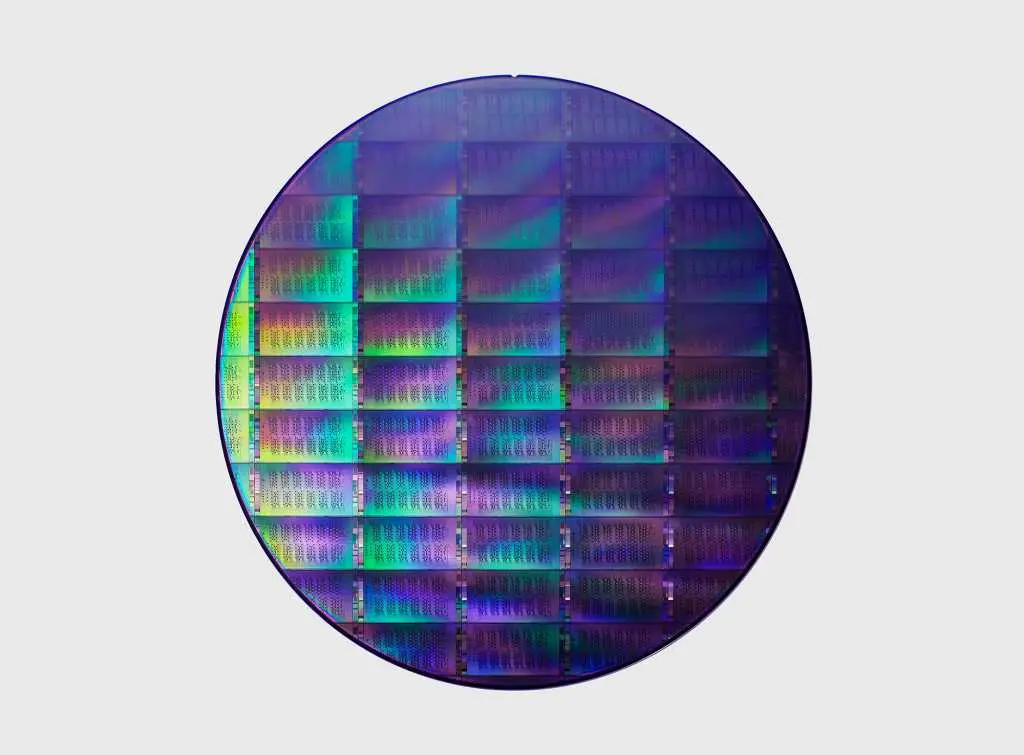
The US government has awarded IBM $1 billion to help establish the first purpose-built quantum chip fabrication unit in the country. The Trump administration's investment is being matched by IBM itself and will result in the creation of a new company called Anderon. The new business will build its factory in Albany, New York, leveraging the region's existing semiconductor ecosystem.
IBM has pioneered quantum computing for decades. Anderon will, with IBM's help, develop quantum wafers for a number of hardware vendors. This move signals a concerted effort to scale quantum technology from laboratory research to commercial manufacturing. The US government also invested in several other companies in the quantum area, including GlobalFoundries, D-Wave Quantum, and Rigetti Computing, reflecting a broader push to secure American leadership in next-generation computing.
Quantum computing harnesses the principles of quantum mechanics to process information in ways that classical computers cannot. Unlike traditional bits, which are either 0 or 1, quantum bits (qubits) can exist in multiple states simultaneously, allowing for parallel computation. This enables quantum computers to solve certain problems—such as factoring large numbers, simulating molecular interactions, and optimizing complex systems—exponentially faster than classical machines. However, building stable qubits and scaling them to useful numbers has been a monumental engineering challenge.
IBM's history with quantum computing dates back to the 1980s, when researchers at the company's Thomas J. Watson Research Center began exploring the concept. In 2016, IBM made its first quantum computer available via the cloud, democratizing access to this nascent technology. Since then, the company has released several generations of quantum processors, from the 5-qubit system to the 127-qubit Eagle processor in 2021 and the 433-qubit Osprey in 2022. IBM's roadmap aims to surpass 1,000 qubits by 2026 and 100,000 qubits by 2030. The new foundry is a critical component of that plan, as current quantum chips are often fabricated in facilities designed for classical semiconductors, limiting their performance and scalability.
The Anderon facility will focus on producing wafers that integrate the specialized materials and structures required for quantum processors. These include superconducting circuits, ion traps, or silicon-based spin qubits, depending on the vendor's architecture. By offering foundry services to multiple companies, Anderon aims to reduce the barriers to entry for quantum hardware startups and accelerate the development of a robust quantum supply chain. This model mirrors the successful approach of semiconductor foundries like TSMC, which fabricate chips for a wide range of clients.
The US government's investment in quantum technology is part of a broader national strategy to maintain competitiveness in emerging technologies. In recent years, China has invested heavily in quantum research, filing over twice as many quantum-related patents as the US. The National Quantum Initiative Act of 2018 allocated $1.2 billion over five years to accelerate quantum research and development in the United States. The Anderon project builds on that foundation, adding manufacturing capabilities that are essential for translating research breakthroughs into practical applications.
Quantum chip fabrication involves several unique processes that differ from classical semiconductor manufacturing. For instance, the need to maintain extremely low temperatures (near absolute zero) to preserve qubit coherence requires specialized packaging and cryogenic infrastructure. The wafers themselves must be free of impurities and defects that could introduce noise, which can cause qubits to lose their quantum state. IBM's expertise in silicon wafer fabrication, honed over decades of developing advanced microprocessors, provides a strong foundation for these challenges.
Other companies benefiting from the government's quantum push include GlobalFoundries, which has its own quantum initiatives based on silicon photonics; D-Wave, which focuses on quantum annealing for optimization problems; and Rigetti Computing, a fabless quantum processor designer. The coordinated investments suggest that the US is aiming for a diversified quantum ecosystem, rather than relying on a single approach.
Commercial applications of quantum computing are still in their infancy, but progress is accelerating. Financial services firms are exploring quantum algorithms for portfolio optimization and risk management. Pharmaceutical companies are using quantum simulations to model drug interactions. Logistics providers are researching quantum-enhanced route planning. And energy companies are investigating quantum methods for discovering new catalysts and materials. Each of these applications will require reliable, scalable quantum hardware that can be manufactured at volume.
The $2 billion Anderon foundry represents a significant commitment to making that future a reality. By combining federal funding with corporate investment, the project mitigates the enormous cost of building advanced fabrication facilities, which can run into the billions of dollars. Albany was chosen for its existing semiconductor infrastructure, including the SUNY Polytechnic Institute's College of Nanoscale Science and Engineering, which provides a skilled workforce and research partnerships.
IBM CEO Arvind Krishna stated that the company's work in silicon wafer fabrication has been key to its success and will be critical to enabling a broader quantum technology landscape. He expressed confidence that Anderon will be well-positioned to fuel America's fast-growing quantum technology industry. The new foundry is expected to begin operations within two years, creating hundreds of high-tech jobs and strengthening the region's position as a hub for advanced manufacturing.
Critics note that quantum computing still faces fundamental scientific hurdles. Error correction remains a major challenge; today's quantum processors require thousands of physical qubits to create one logical qubit of practical use. However, recent advances in error-correcting codes and fault-tolerant architectures offer hope that these obstacles can be overcome. The Anderon facility will also likely support research into more robust qubit designs, further advancing the state of the art.
International competition in quantum technology is intensifying. The European Union, Japan, and the United Kingdom have all launched national quantum initiatives with substantial funding. By establishing a dedicated quantum chip foundry, the United States aims to secure its position as a leader in the field. The Anderon project is a concrete step toward turning quantum computing from a scientific curiosity into a pillar of the global economy.
Source: Network World News