

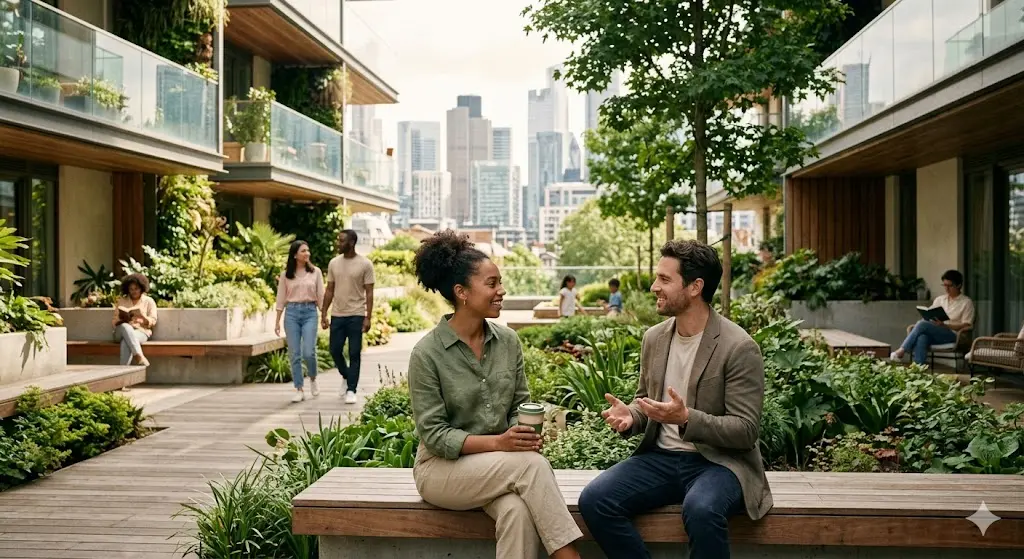
Mental health is transforming real estate investment by changing what tenants, buyers, and investors value most. Properties that support emotional well-being through better design, green space, natural light, and community features are increasingly attracting stronger demand, longer tenant retention, and more stable returns.
How mental health is transforming real estate investment comes down to one simple shift: people are willing to pay more for spaces that help them feel calmer, healthier, and more connected. Investors who recognize this trend are finding new opportunities in wellness real estate, mental health-friendly housing, and human-centered property development.
If you want to understand how mental health is transforming real estate investment, you need to look beyond square footage and cap rates. Investors are no longer focused only on location and rental income. They are paying close attention to how a property affects the people who live and work there.
That change is bigger than many realize.
Mental health has moved from being a personal issue to a market force. Buyers want peaceful homes. Tenants seek buildings with natural light and quiet spaces. Employers lease offices that reduce burnout. Developers are redesigning communities around emotional well-being.
In my experience, this is one of the most significant shifts in property investing over the past decade. And we're only at the beginning.
What Is Mental Health-Centered Real Estate Investment?
Mental Health-Centered Real Estate Investment: A property investment strategy that prioritizes design, amenities, and environments that improve emotional well-being and reduce stress.
This approach falls under the broader category of wellness real estate, where buildings are intentionally designed to support healthier lifestyles.
That might include:
Abundant natural light
Green spaces and gardens
Soundproofing
Walkable neighborhoods
Community gathering areas
Air quality improvements
Quiet zones
Fitness and mindfulness spaces
Here's the thing: these features are no longer "nice extras." They're becoming core investment drivers.
A family searching for a home isn't just asking, "How many bedrooms?" They're asking, "Will we feel good living here?"
That question is reshaping the market.
Why Mental Health Matters in Real Estate Investment
In 2026, mental wellness has become a measurable economic factor.
The global experience of stress, anxiety, and burnout has changed consumer behavior. People are spending more time at home and expect their environment to help them recharge rather than overwhelm them.
What most people overlook is that mental health influences almost every major real estate metric.
Tenant Retention
Residents who feel comfortable and emotionally secure are more likely to renew leases.
Premium Pricing
Properties with wellness amenities often command higher rents and stronger resale values.
Reduced Vacancy
Buildings designed for well-being attract tenants faster and keep them longer.
Institutional Interest
Large investors increasingly favor ESG and wellness-focused developments.
Community Stability
Neighborhoods that support mental health tend to experience stronger long-term demand.
I've seen investors dismiss wellness upgrades as cosmetic. That usually turns out to be a mistake. Tenants notice how a space makes them feel, even if they can't explain it in technical terms.
Why Buyers and Renters Are Changing Their Priorities
A few years ago, granite countertops might have closed the deal.
Today, many buyers care more about sunlight, outdoor access, and noise levels.
That's a profound shift.
After years of remote work and increased awareness of emotional health, people have become more selective about where they live. Small details matter.
Can they walk to a park? Is there enough daylight? Does the building feel safe? Are there places to connect with neighbors?
These aren't soft concerns. They directly affect housing demand.
Real-World Example
Imagine two apartment buildings in the same neighborhood.
Building A offers basic units and limited amenities.
Building B includes landscaped courtyards, fitness facilities, meditation rooms, excellent acoustics, and superior air filtration.
Even if rents are 10 percent higher, Building B often attracts stronger occupancy and lower turnover. Over time, that difference can significantly improve net operating income.
How to Invest in Mental Health-Focused Real Estate Step by Step
If you're wondering how mental health is transforming real estate investment and how to benefit from it, here's a practical roadmap.
1. Identify Wellness-Oriented Markets
Look for cities and suburbs where demand for healthier living is increasing. Areas with parks, walkability, and community infrastructure often outperform over time.
2. Evaluate Environmental Quality
Assess noise levels, natural light, air quality, and access to outdoor spaces. These elements have a surprisingly large impact on resident satisfaction.
3. Upgrade Existing Properties
Simple improvements can make a major difference.
Add better lighting, improve ventilation, create outdoor seating, and reduce noise transmission between units.
4. Incorporate Community Features
People want connection. Shared gardens, lounges, and coworking areas can boost both occupancy and tenant loyalty.
5. Market Emotional Benefits
Don't just advertise the number of rooms. Highlight how the property supports focus, relaxation, and work-life balance.
6. Measure Performance
Track lease renewals, tenant reviews, vacancy periods, and rent premiums to quantify returns.
Expert Tip: In most cases, modest investments in soundproofing and lighting deliver better tenant satisfaction than expensive cosmetic renovations.
The Counterintuitive Truth: Smaller Spaces Can Feel Better
Many investors assume bigger always means better.
That's not necessarily true.
A thoughtfully designed 700-square-foot apartment with great daylight, quiet interiors, and access to greenery may feel more livable than a much larger unit in a noisy, poorly planned building.
This is where wellness real estate challenges old assumptions.
People don't just buy square feet. They buy peace of mind.
And peace of mind has real financial value.
Wellness Real Estate and the Rise of Human-Centered Development
Wellness real estate is growing because developers are responding to a simple market reality: healthy environments perform better.
Residential communities now include walking trails, gardens, and social spaces. Office buildings add relaxation rooms and biophilic design. Mixed-use projects focus on reducing isolation and improving convenience.
In my opinion, this trend is more durable than many short-term property fads. Mental health isn't a marketing slogan. It's tied to how people choose where to live, work, and invest.
A Personal Anecdote and Hot Take
Years ago, I toured two multifamily projects with nearly identical financial projections.
One felt sterile and noisy.
The other had sunlight pouring into common areas, trees in the courtyard, and places where neighbors could naturally interact.
The numbers looked similar on paper, but my gut said the second property would outperform.
It did.
Occupancy remained high, tenants stayed longer, and the property developed a reputation as a genuinely pleasant place to live.
My hot take? Investors who ignore emotional experience are probably underestimating one of the strongest drivers of future value.
Mental Health-Friendly Housing and Affordable Communities
Mental health-focused design isn't only for luxury developments.
That's an important point.
Affordable housing can benefit tremendously from features that reduce stress and strengthen social connection. Safe outdoor areas, quiet interiors, and community spaces can improve quality of life while supporting stable occupancy.
What most guides miss is that emotional well-being can be enhanced without extravagant spending. Good design choices often matter more than expensive finishes.
Risks and Challenges for Investors
Not every wellness feature guarantees higher returns.
Investors should avoid adding trendy amenities that tenants don't truly value.
The most successful projects focus on fundamentals:
Light
Air
Noise control
Safety
Greenery
Community
Another challenge is measuring mental health outcomes directly. Since emotional benefits can be hard to quantify, investors should rely on operational indicators such as occupancy, rent growth, and resident satisfaction.
Expert Tip: If you're renovating on a budget, prioritize daylight, ventilation, and acoustics before decorative upgrades.
How Institutional Investors Are Responding
Large funds and real estate trusts are increasingly integrating mental health considerations into acquisition and development strategies.
They see clear links between wellness and financial performance.
Properties that promote emotional well-being often align with ESG goals, attract quality tenants, and maintain stronger reputations.
When institutional capital starts moving in one direction, smaller investors should pay attention.
The Future of Real Estate Investment
How mental health is transforming real estate investment is not a temporary trend. It reflects a broader rethinking of what makes property valuable.
For decades, real estate was judged primarily by location, price, and size.
Those factors still matter, of course.
But emotional impact is becoming just as influential.
Buildings that help people sleep better, feel safer, and connect with others are likely to outperform in the years ahead.
That may sound a bit soft to traditional investors, but the market is speaking clearly.
And the market usually gets the last word.
People Most Asked About How Mental Health Is Transforming Real Estate Investment
How does mental health affect property values?
Properties designed to reduce stress and support well-being often attract stronger demand, lower vacancy, and higher rents, which can improve both cash flow and resale value.
What is wellness real estate?
Wellness real estate refers to homes, offices, and communities intentionally designed to support physical and mental health through better environments and amenities.
Are mental health-focused properties only luxury investments?
No. Affordable and mid-market properties can benefit from thoughtful design choices such as improved lighting, quieter interiors, and access to green space.
Do tenants really pay more for wellness features?
In many markets, yes. Renters often accept higher rents when properties provide comfort, convenience, and healthier living conditions.
Which features matter most?
Natural light, air quality, noise reduction, safety, walkability, and shared community areas tend to have the greatest impact.
Is this trend likely to continue in 2026 and beyond?
Yes. Growing awareness of emotional well-being and changing lifestyle priorities suggest this shift will remain a significant force in real estate.
What is mental health-friendly housing?
It refers to residential properties designed to reduce stress and improve emotional well-being through features such as natural light, quiet spaces, and access to nature.
Why are investors paying attention to mental health?
Because tenant preferences are shifting toward healthier living environments, which can increase occupancy and rental performance.
Can small investors benefit from this trend?
Absolutely. Even modest property upgrades can enhance tenant satisfaction and financial returns.
Is wellness real estate a long-term opportunity?
At least from what I've seen, yes. The demand for healthier spaces appears to be growing rather than fading.
Final Thoughts
How mental health is transforming real estate investment is changing the way investors evaluate opportunity. The most successful properties are no longer defined solely by location or finishes. They are defined by how people feel inside them.
From wellness real estate to mental health-friendly housing, the future belongs to environments that reduce stress, encourage connection, and support healthier lives.
If you invest with human experience in mind, you're not just building better properties. You're building assets that are more resilient, more desirable, and more profitable over time.
Our network helps businesses, startups, and SEO professionals build brand visibility and organic traffic through PR Wires and Web Info Matrix. With expert press release distribution services, digital marketing services, and high authority backlinks, you can strengthen SEO ranking, gain wider media coverage, and benefit from instant publishing that puts your brand in front of the right audience.