

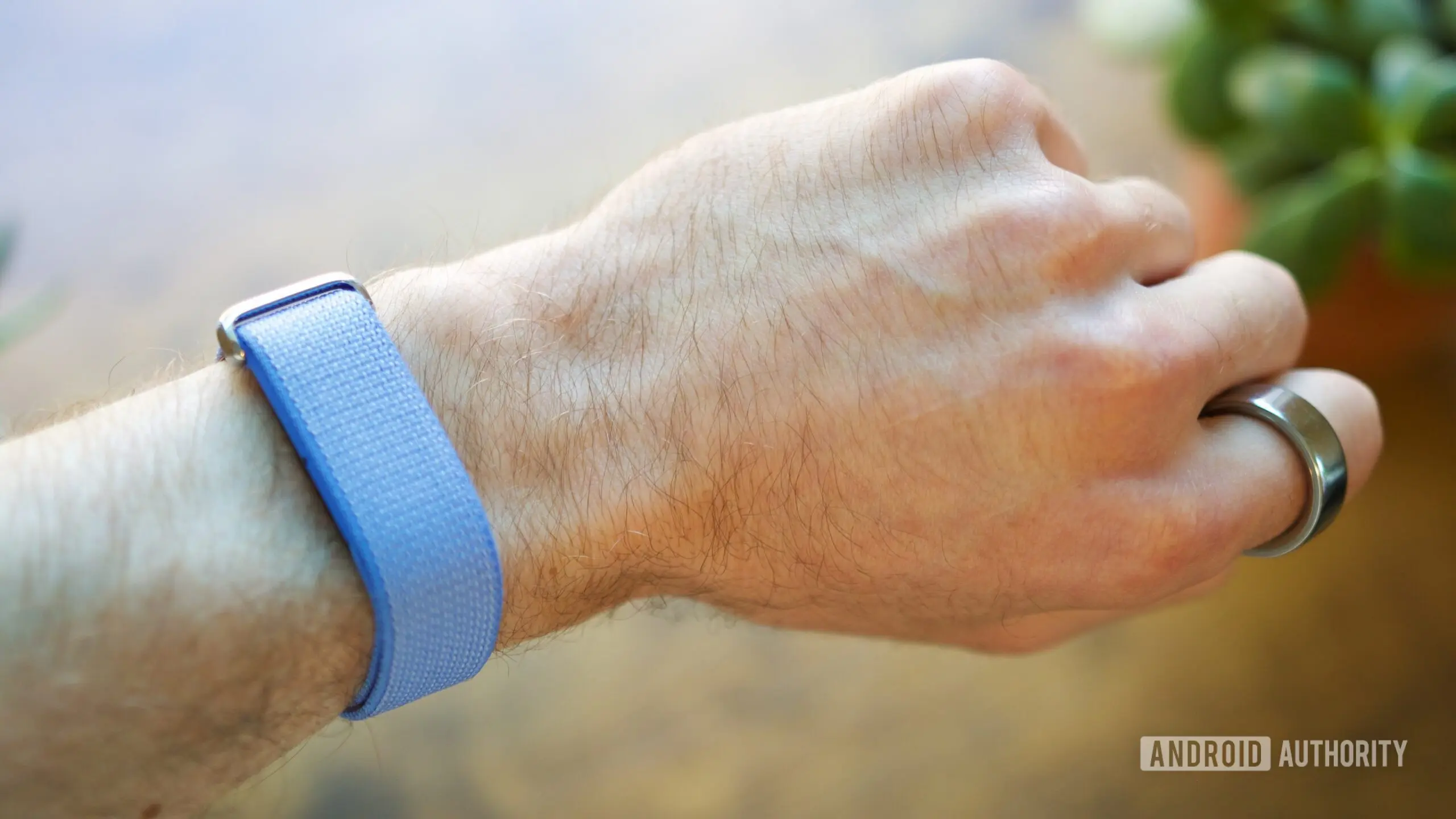
Google has started rolling out the very first firmware update for the Fitbit Air since its launch. This update, arriving as version 20001.253.2 on iOS and 67.20001.253.2 on Android, primarily delivers bug fixes and general performance improvements. However, it also hints at a significant enhancement to one of the tracker's biggest early pain points: automatic workout detection.
The version numbers appear slightly different depending on the operating system, but both packages contain the same update. As with other Fitbit devices, users will see a notification inside the Google Health app when the firmware is available for their tracker. The rollout is gradual, meaning not all Fitbit Air users will receive the update immediately. Availability is expected to expand over the next several days.
Addressing the Biggest Early Complaint
Google has not been forthcoming with detailed release notes, sticking to the generic description of “bug fixes and general improvements.” However, the company had already hinted at this change last month when it announced it was working to expand the range of exercises the Fitbit Air can detect automatically. If that is indeed part of this update, it could finally resolve a major frustration for early adopters.
A fitness tracker should, at its core, know when you are working out — and just as importantly, when you are not. The last thing anyone wants is a device that logs a workout while they are sleeping, but they also should not have to manually tell it every time they go for a walk, hop on a bike, or squeeze in a quick gym session. Reliable automatic workout detection makes the difference between a seamless user experience and a constant source of annoyance.
Early reviews and user feedback on the Fitbit Air consistently pointed out that the automatic workout detection was inconsistent. Some activities were not logged at all, while others were incorrectly categorized. This update aims to fix those inconsistencies, making the tracker a more intuitive companion for daily fitness routines.
The Fitbit Air's Role in Google's Health Ecosystem
This firmware update comes at a notable time for Google's health ambitions. The company recently expanded its Google Health platform with new wellness features, including nap tracking, additional health metrics, and more granular controls over health data. While those additions focus on the broader ecosystem, this firmware update is squarely aimed at making the Fitbit Air itself a more reliable everyday fitness tracker.
The Fitbit Air sits in the mid-range of Google's wearable lineup, positioned between the basic trackers and the more advanced smartwatches like the Pixel Watch. It was designed to offer core fitness tracking features in a lightweight, accessible form factor. Since its launch, the device has won praise for its comfortable design, excellent battery life, and integrated Google services. However, the automatic workout detection weakness has been a persistent blemish on an otherwise solid product.
How Automatic Workout Detection Works
Automatic workout detection uses a combination of sensors — accelerometer, gyroscope, and sometimes heart rate monitoring — to identify physical activities without manual input. The tracker's onboard algorithms analyze movement patterns, duration, and intensity to categorize exercises such as walking, running, cycling, swimming, and more. For the Fitbit Air, this feature is crucial because it allows users to focus on their activity without constantly interacting with the device.
When automatic detection works well, it logs workouts in the background and provides a seamless experience. When it fails, users either get extra steps logged at rest or miss tracking sessions entirely. With this update, Google aims to fine-tune the detection thresholds and improve the accuracy of activity recognition algorithms.
Expanding Beyond the Initial Set of Exercises
At launch, the Fitbit Air could automatically detect a limited set of exercises: walking, running, outdoor cycling, elliptical, and swimming. The company promised to expand this list, and the update could add recognition for activities like biking, indoor cycling, rowing, yoga, and strength training. Users have been particularly vocal about the lack of automatic detection for common gym activities. With this update, Google is likely addressing several of those requests.
Improving detection for activities such as biking is especially important for a device that is marketed to active individuals. Many users use their fitness tracker throughout the day, and manual logging can quickly become a chore. By making detection more comprehensive, Google enhances the overall value proposition of the Fitbit Air.
Performance and Battery Life Considerations
One major concern with automatic workout detection is its impact on battery life. Constantly monitoring for activity requires processing power and sensor usage, which can drain the battery faster. Fitbit devices have historically managed battery life well, and the Fitbit Air offers up to seven days of use on a single charge. The new update is expected to maintain or even improve battery efficiency while delivering better detection accuracy.
Google's engineers likely optimized the algorithms to use less power while still reliably identifying workout patterns. This balance is critical for a device that needs to last through the week. Users can expect the update to install quickly and not degrade battery performance.
Other Bug Fixes and Improvements
The update also includes unspecified bug fixes. Early adopters have reported minor issues such as syncing glitches, occasional screen freezes, and inaccurate step counts under certain conditions. This firmware aims to resolve those issues, making the overall experience smoother. Google has a track record of iterative improvements through firmware updates, and the Fitbit Air will likely receive more updates in the future to further refine its capabilities.
How to Update Your Fitbit Air
To get the update, ensure your Fitbit Air is charged to at least 50% and is within Bluetooth range of your paired phone. Open the Google Health app, navigate to your device settings, and check for available updates. If the update is available, follow the on-screen instructions to install it. The process typically takes around 10–15 minutes. During the update, keep the Fitbit Air close to your phone and avoid using it.
If the update does not appear immediately, do not worry — Google is rolling it out in phases. It can take a few days for all users to receive it. You can also try refreshing the app or restarting your phone to prompt the update.
Competitive Landscape
The Fitbit Air competes with other mid-range fitness trackers from brands like Xiaomi, Samsung, and Garmin. Automatic workout detection has become a standard feature in this segment, and Google needs to deliver a competitive experience. Competitors like the Xiaomi Mi Band 8 and Samsung Galaxy Fit 3 offer robust auto-detection features, often including many exercise types. The Fitbit Air's first update aims to bring it on par with or even exceed these rivals.
Google's advantage lies in its deep integration with the Google ecosystem. Users who rely on Google Fit, Google Health, and other Google services will find the Fitbit Air an attractive option. Improving the core tracking feature makes the entire package more compelling.
Looking Ahead: Future Updates and Ecosystem Expansion
This first firmware update sets a positive tone for the Fitbit Air's future. Google is committed to improving its wearables through software updates, and users can expect additional features down the line. Community forums have requested specific enhancements like sleep stage tracking improvements, GPS integration for pace tracking, and more detailed health metrics. While not all of these are confirmed, Google's recent expansion of Google Health shows a willingness to invest in the platform.
Meanwhile, the Fitbit Air remains a solid choice for those seeking a straightforward, reliable fitness tracker. With this update, it becomes an even more capable device. The improved automatic workout detection, combined with bug fixes and performance optimizations, addresses the most significant criticisms. As the rollout continues, early feedback is expected to be positive.
For now, users should keep an eye on their Google Health app notifications. The update marks an important milestone in the device's lifecycle, proving that Google is listening to user feedback and working to make its wearables better over time.
Source: Android Authority News