

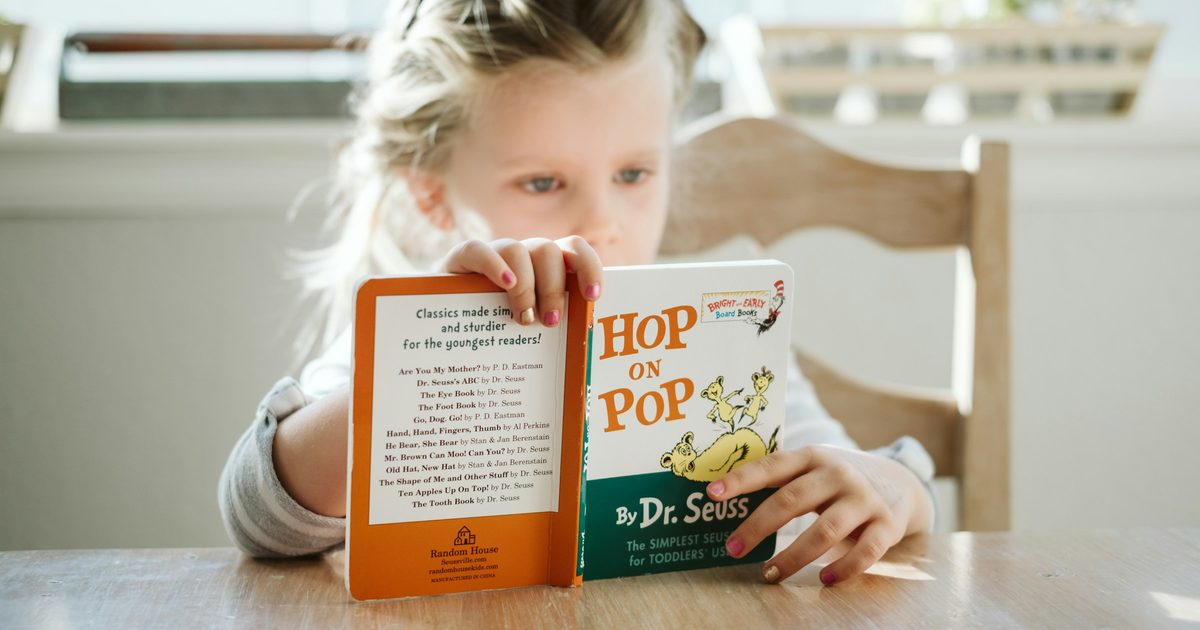
Artificial intelligence was supposed to open a new era of creativity, but it has also produced a tidal wave of low-effort, algorithmically generated artifacts. That tidal wave, often called “AI slop,” is now crashing into one of the most intimate corners of cultural life: the children’s bedtime story. Grandparents and older relatives are using generative AI chatbots to assemble personalized picture books for young children, weaving in family names, familiar physical traits, and plotlines drawn from real shared experiences. On the surface, it looks like a modern love letter. Beneath the surface, parents say, it is a troubling new chapter in the AI-saturation story.
The practice has become common enough that it has already triggered alarm among parents, educators, and child-development observers. In a widely shared online forum post, one parent described how their mother was using AI to create storylines based on experiences with the child, modeling characters to resemble family members and using real first names so the child would “see her family reflected.” The parent was not charmed. They were unsettled.
That reaction is not unusual. Parents who have spoken to journalists about receiving AI-generated books from grandparents or older relatives have variously described the gift as inauthentic, manipulative, and “morally reprehensible.” Some worry that the books are not made for the child at all, but for the adult’s own emotional satisfaction. Others worry that a personalized AI story will become a permanent, easily shared piece of digital misinformation about the family’s actual history.
Key facts
- AI slop is low-effort, mass-produced AI content spreading across music, publishing, research, software, and tech support.
- Grandparents are using AI tools to generate personalized storybooks based on their grandchildren’s real lives and family names.
- Parents have called the trend “morally reprehensible” and worry about its psychological and emotional effects.
- Amazon, Google, and Meta are both hosts of AI slop and producers of AI tools that fuel it.
- Amazon’s Kindle store has been flooded with AI-written books, and Alexa has features for generating bedtime stories and podcasts.
What is AI slop?
AI slop is a colloquial term for low-effort AI-generated content, produced at volume and designed primarily to occupy attention, generate engagement, or exploit a trend rather than to offer genuine insight or craft. It has become a structural problem across many industries. Music labels are fighting streaming services over the need to label AI-generated tracks. Publishing houses are growing skeptical of unsolicited AI-written manuscripts. Research journals are drowning in synthetic papers. Software companies are confronting “vibe-coded” apps filled with security flaws. Apple has reportedly capped the number of bug reports researchers can keep open because AI-generated submissions are overwhelming its review queue.
The common thread is that generative AI has made content production effectively free, and the absence of thoughtful gatekeeping means a huge volume of that content is mediocre, misleading, or worse. Children’s books are a particularly cruel frontier because children are among the least equipped to question what they read. A child who receives a story that says “Grandma wrote this just for you” is unlikely to ask whether it was edited, fact-checked, or even read by a human before being printed.
A new gift, an old problem
Parents have described receiving AI-generated books for birthdays, holidays, or just because. Older relatives see these tools as a way to stay relevant and affectionate, especially when they live far away. Many may not realize that the AI system has no way of verifying the memories it incorporates, or that it might mix real names with invented events. The result can be a gift that feels deeply personal but is actually assembled from prompts and predictive text.
One mother told journalists that her child had received an AI-generated book in which the characters had the same names, hair color, and dog as her family, but the story contained an incident that never happened. The child began asking questions about the incident, and the mother had to explain that the book wasn’t real. That kind of confusion may seem minor, but child-development specialists argue that early exposure to uncorrected falsehoods can shape how children trust information. When a book looks like a published product and uses the child’s own family as characters, the boundary between reality and fantasy becomes blurry.
There is also a privacy dimension. AI storybooks built by grandparents often include details about a child’s life, family members, routines, and private jokes. Those details are typed into third-party AI systems and may be stored, reused, or fed into future model training. The grandparent may intend a one-off gift, but the data trail can last far longer. Few grandparents are reading the fine print of AI services before they start a prompt.
Amazon’s double role
The market for children’s books has not been spared by the AI gold rush. Online marketplaces, including Amazon, are full of AI-generated titles aimed at young readers. In many cases, the books use clichéd prompts, repetitive structures, and bland illustrations, but they still rank high because they are cheap and can be published in minutes. As far back as 2024, reports highlighted the scale of the problem. More recently, a well-known technology journalist discovered that someone had used AI to write and sell her biography on Amazon without permission. The book was still listed until she publicly complained.
Amazon is also one of the biggest producers of consumer AI tools. In 2022, the company released “Create with Alexa,” which guided users through making bedtime stories with visuals and animations. More recently, it expanded into AI-generated podcasts. This creates a peculiar conflict: Amazon is both the host of an AI-slop book market and the creator of features that encourage more AI-generated storytelling. The company has offered some guardrails, but it has not established an industry-leading policy to stop AI-generated books from being passed off as human-authored works.
Amazon’s Kindle platform makes the problem worse by making self-publishing frictionless. Anyone can produce a book in a single afternoon, upload it, and make it available to millions of readers. The store’s recommendation engine does not reliably distinguish between a lovingly crafted children’s story and a slab of AI-generated filler. A child does not care about the difference in production methods, but the quality of the story matters enormously to their development.
YouTube and social media are also at fault
Amazon is not alone. YouTube has become a staging ground for “brainrot” videos aimed at children, many of them created with AI. These videos often feature repetitive, loud, and absurd scenarios designed to maximize watch time rather than teach anything. They can be psychologically addictive, and their production pipeline is so cheap that there appears to be no upper limit to the number of videos produced. Google, YouTube’s parent, is also one of the leading developers of AI technologies, which puts it in a position of both enabling and profiting from the problem.
Meta, the company behind Facebook and Instagram, has similarly made AI tools widely available to users and has been criticized for allowing AI slop to spread across its platforms. Personalized AI poems, songs, essays, and storybooks are shared and celebrated in senior communities before the children in their lives ever see them. The result is a generation of grandparents being conditioned to believe that algorithmic output is a meaningful form of family memory-making.
Why children are especially vulnerable
Picture books are often a child’s first encounter with narrative structure. They help develop empathy, vocabulary, and emotional comprehension. When those books are generated by a model that does not understand human relationships, the stories may be visually appealing but developmentally empty. AI-generated narratives tend to flatten complexity, resolve conflicts too quickly, and avoid the kind of emotional ambiguity that helps children learn. In a personalized book, that flatness is even more striking because it pretends to be about the child’s own life.
There is also the question of authorship. A child should be able to trust that the book in their hands was written by someone who cares about them. An AI model is not a person. It has no relationship with the child, no memory of a shared afternoon, and no reason to tell the truth. A grandparent who uses an AI tool is outsourcing an act of love and labor to a machine. The child might not see the difference immediately, but the absence of human judgment becomes visible in strange details, false events, and weirdly generic language.
The phrase “morally reprehensible” might seem harsh, but for many parents it is an accurate description of the phenomenon. They see it as a way of performing grandmotherly affection without doing the work that grandmotherly affection traditionally requires. The trend also reveals a generational gap in technological literacy. Older people often assume that AI tools are harmless digital assistants. They do not always realize that the AI has no emotional intelligence even when it produces words that sound emotional.
No easy solution
Fixing the AI-slop problem in children’s publishing is not simple. A blanket ban on AI-assisted books would punish legitimate uses, such as helping a dyslexic parent write a story or creating a personalized book for a child with a specific sensory need. But it is reasonable to demand transparency. A book that is marketed as personalized and illustrated with AI should say so. A platform like Amazon should not allow AI-generated books to be listed under the same category as traditionally authored children’s books without a clear label.
Parents, too, can play a role by asking questions before a book is purchased. If a relative says they made a book with AI, it is fair to ask what the input prompts were, what data was used, and whether the story was reviewed by a human. It is also fair to ask whether the relative has permission to use the child’s name and likeness in a third-party app. Those conversations are awkward, but they are better than allowing a flawed AI product to become a permanent part of a child’s literary foundation.
The long-term damage may not be visible in a single bedtime story. But as AI tools grow more sophisticated and more embedded in daily life, the line between assistant and replacement will only become harder to see. Children deserve books that are made with care, not just generated with speed. If the adults who love them choose convenience over craft, the childhood landscape will be poorer for it.
Source: Digital Trends News