

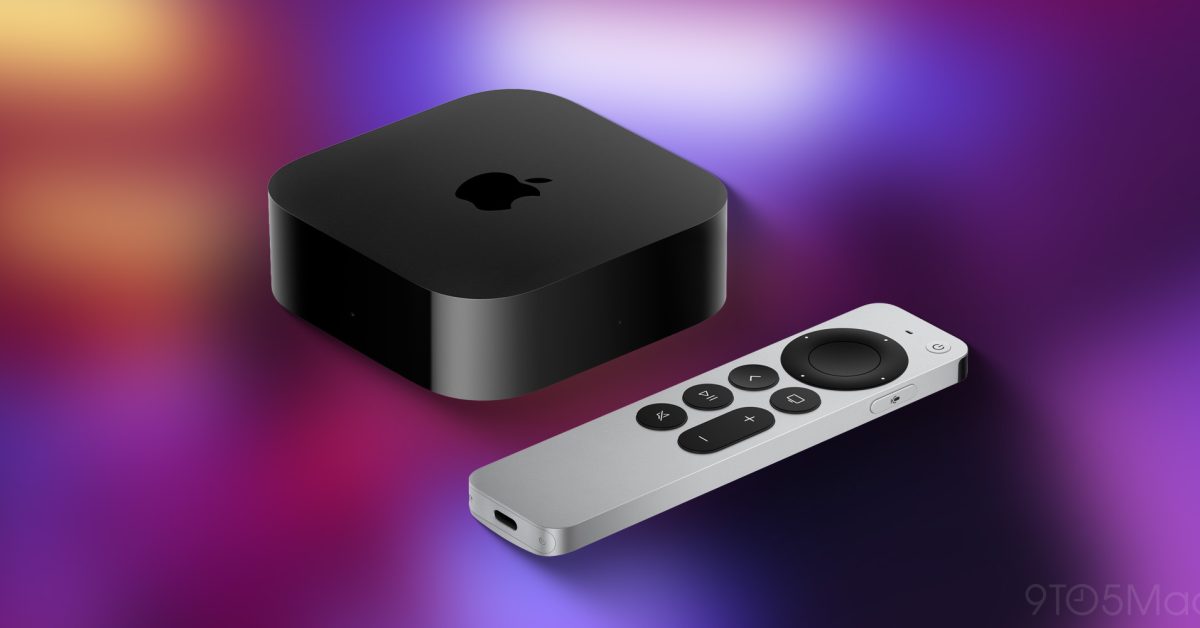
Apple has introduced the fourth-generation Apple TV 4K, a significant refresh of its streaming and smart-home hub. The new model replaces the third-generation Apple TV 4K that arrived in 2022, and it brings changes across performance, voice control, audio, storage, and connectivity. For anyone weighing an upgrade, the differences between the new Apple TV 4K and the previous model are substantial enough to matter.
The headline change is the processor. The fourth-generation Apple TV 4K uses an A19 chip, the same silicon that debuted in the iPhone 17. The 2022 Apple TV 4K uses the A15 Bionic, which first appeared in the iPhone 13. That means the new box skips several generations of chip development, not just a modest annual bump. Apple says the A19 delivers up to 50 percent faster CPU performance and up to twice the GPU performance of the previous model. In practice, that should translate into faster app launches, smoother navigation, more responsive games, and generally snappier animations throughout tvOS.
Performance: A19 chip vs A15 Bionic
The A19 also adds a dedicated AV1 decoder. AV1 is a newer, more efficient video codec that can deliver high-quality streaming with less bandwidth than older formats. For viewers with slower internet connections or data caps, that can mean fewer buffering interruptions and better picture quality at the same bitrate. The previous A15 Bionic did not include hardware AV1 decoding, so this is a meaningful generational improvement for streaming apps that adopt the codec.
Beyond raw speed, the A19 should help the Apple TV 4K handle more demanding workloads. That includes richer games, faster switching between apps, and more advanced on-device processing for features such as Siri AI. The A15 Bionic was already more than capable for video playback, but the new chip gives the platform more headroom for future tvOS updates and new capabilities.
Siri AI and hands-free interactions
Siri AI makes its debut on the new Apple TV 4K, but Apple says it will also come to the second- and third-generation Apple TV 4K models. That is good news for existing owners, because they will not have to buy new hardware just to get the new Siri experience. On the latest model, however, Siri AI should be more responsive thanks to the A19 chip and the dedicated microphone array.
Apple describes Siri AI as supporting personal context understanding, broad world knowledge, and the ability to take more systemwide app actions. Examples of queries include asking which Apple TV shows won Emmy Awards this year, where a specific series was filmed, whether a movie is appropriate for a 15-year-old, or asking Siri to play a show that a friend recommended. These requests go beyond simple playback commands and point to a more conversational assistant that can draw on broader information and user context.
One feature exclusive to the fourth-generation Apple TV 4K is a three-microphone array with voice isolation built directly into the box. This enables hands-free Siri interactions. You can say Siri or Hey Siri without pressing a button on the remote, though the Siri Remote button remains an option. The far-field microphones are designed to pick up commands from across the room, even while content is playing. Voice isolation helps separate the user's voice from background audio and ambient noise, which should make hands-free control more reliable in real living-room conditions.
Upgraded Siri Remote with Precision Finding
The Siri Remote has been updated with Find My support and Precision Finding. Anyone who has used Precision Finding to locate a lost AirTag or another Apple device knows how helpful guided directions can be. With the new remote, losing it no longer means tearing apart couch cushions without a clue. The remote can provide step-by-step directions to its location, helping users narrow down where it is hiding.
The new Siri Remote also includes a built-in speaker. That means you can play a sound on the remote to help find it, similar to how you can ping an iPhone or AirTag. The remote is available separately for $59, and it is compatible with older Apple TV 4K models. That compatibility is important because it lets existing users get one of the most practical new features without replacing their entire streaming box.
For households that frequently misplace remotes, Precision Finding could be a bigger quality-of-life upgrade than any performance specification. It addresses a common frustration and brings the Siri Remote more closely in line with the Find My ecosystem that Apple has built around its other devices.
Four-speaker surround sound with HomePods
The fourth-generation Apple TV 4K adds a new four-speaker surround sound feature for homes with multiple HomePods. Using either HomePod mini 2 or HomePod 2, the Apple TV 4K can support a four-speaker surround sound experience. Apple says the four speakers work together with the Apple TV 4K to intelligently recognize their position in the room, so audio timing and levels are automatically calibrated to the space.
Users can also mix and match HomePods as long as they are in matching pairs. For example, a HomePod 2 front pair can be combined with a HomePod mini 2 rear pair, or all four speakers can be the same model. This flexibility makes the feature more accessible for people who already own some HomePods and want to expand gradually. It also strengthens the Apple TV 4K's role as a home theater hub within the Apple Home ecosystem.
The previous Apple TV 4K could already pair with HomePods for stereo audio and use them as TV speakers, but the new four-speaker surround feature goes further. It turns multiple HomePods into a more immersive system, with automatic calibration that accounts for where each speaker sits in the room. For users who have invested in HomePod hardware, this is a significant addition that could rival dedicated soundbars in convenience, if not always in raw audio power.
Storage: 128GB becomes standard
Apple previously sold the Apple TV 4K in two storage configurations: a 64GB base model and a more expensive 128GB model. With the fourth-generation Apple TV 4K, 128GB is now the standard storage capacity. There is no higher-tier option to pay more for additional space, and there is no 64GB version at the bottom of the lineup.
That change simplifies the buying decision and gives every new owner more room for apps, games, screensavers, and downloaded content. It is still unclear how necessary the extra storage is for typical users, since streaming relies heavily on the cloud and many Apple TV apps are relatively small. However, a larger standard capacity provides more headroom for future features, including smart downloads and offline viewing. If tvOS 27 or later versions reintroduce or expand Smart Downloads, the extra space could become more valuable.
Connectivity upgrades
The new Apple TV 4K also brings several connectivity improvements. On the wireless side, it supports Wi-Fi 7, up from Wi-Fi 6 on the previous model. Wi-Fi 7 can offer higher throughput, lower latency, and better performance in congested networks, especially when paired with a compatible router. For streaming high-bitrate video or cloud gaming, that extra headroom can help reduce buffering and improve consistency.
Bluetooth has also been upgraded from Bluetooth 5.0 to Bluetooth 6. The newer standard can improve connection reliability and efficiency for accessories such as controllers, headphones, and remotes. Thread networking is now included across the lineup, whereas it was previously limited to the 128GB model. Thread is important for smart home devices because it provides a low-power, mesh networking protocol that can improve reliability and responsiveness. The new Apple TV 4K can serve as a Thread border router, making it a more capable smart home hub.
These wireless upgrades are expected to be enabled by Apple's N1 wireless chip, though that has not been officially confirmed. On the wired side, Gigabit Ethernet is now included standard on all models. Previously, the base 64GB model that most people bought did not include Ethernet, leaving users to rely on Wi-Fi or buy the higher-tier model. With Gigabit Ethernet standard, the new Apple TV 4K offers a more reliable wired connection for streaming, gaming, and smart-home duties.
Price, availability, and what the changes mean
The new Apple TV 4K is available for pre-order at $299. That price positions it as a premium streaming box, but it also reflects the expanded storage, upgraded chip, new remote features, and broader connectivity. The previous third-generation model launched in 2022 and has remained capable for video playback, but it lacks the A19's performance headroom, the dedicated AV1 decoder, the far-field microphone array, and the four-speaker HomePod surround feature.
For existing owners, the decision to upgrade depends on which features matter most. If you use your Apple TV primarily for streaming and already own a third-generation model, Siri AI will still arrive on your device, and the new Siri Remote is available separately for $59. If you want hands-free Siri, the fastest performance, 128GB storage as standard, Wi-Fi 7, Bluetooth 6, Thread, and Gigabit Ethernet, the fourth-generation model is the clear step up. For smart-home users with multiple HomePods, the new surround sound feature could be the most compelling reason to upgrade.
Source: 9to5Mac News